
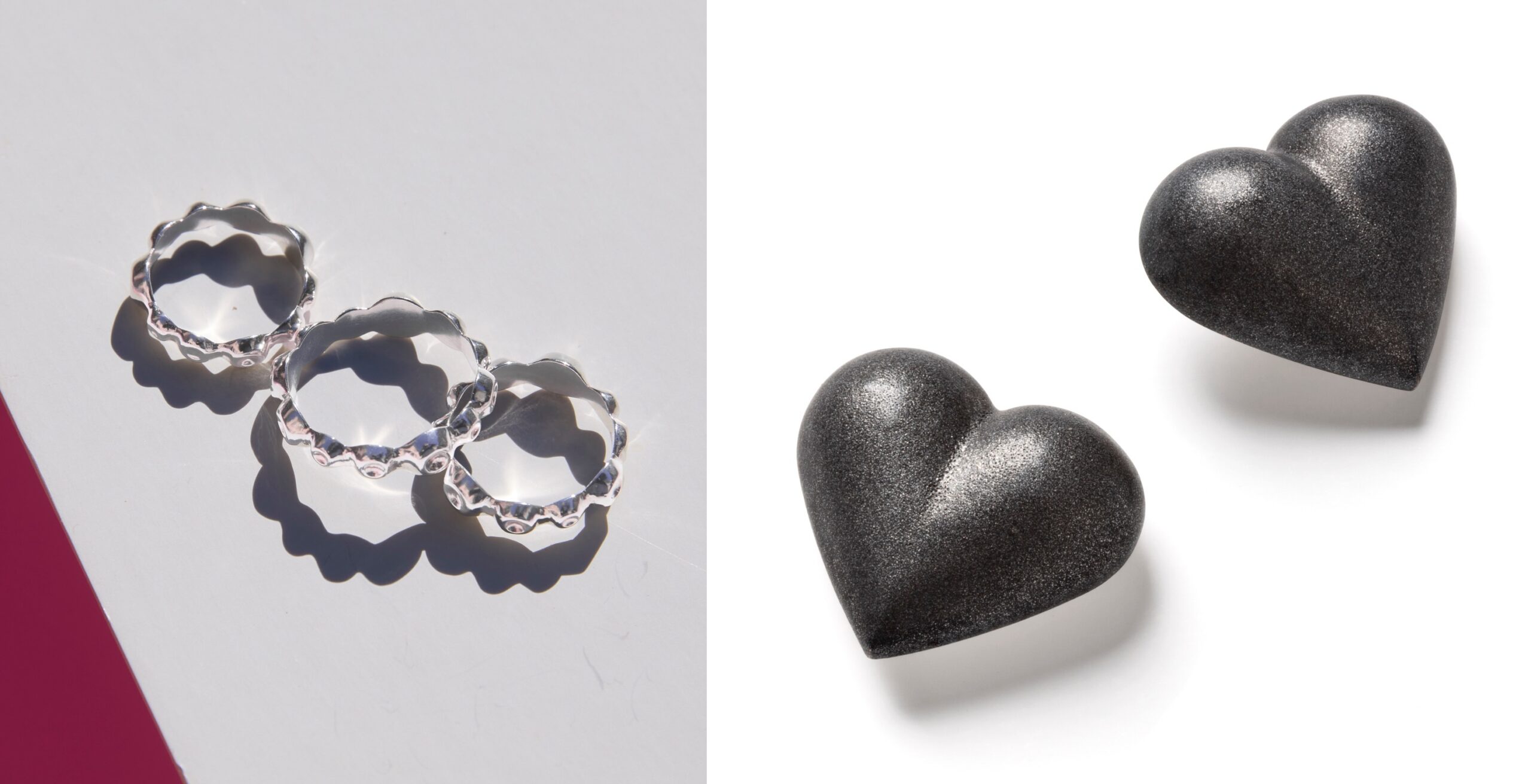
Their initials are both K. and B. They both make jewellery and both have shops just a few kilometres apart in Copenhagen. Yet they describe themselves in very different ways.
‘On paper, I have no title,’ says 31-year-old Klara Bloch, pausing for a moment: ‘Sometimes I say that I conjure the jewellery up.’
Sitting next to her is 69-year-old Kim Buck, who in many ways finds himself on the opposite side of the fence:
‘I call myself a goldsmith. Quite consistently. Everything I do stems from the craft, and if I can’t create it myself, then I don’t do it.’
Kim Buck trained as a goldsmith in the early 1980s, whilst Klara Bloch took a foundation course and then started at Design School Kolding less than ten years ago – though without completing the course. She started out in a world where everyone was selling jewellery on Instagram, and it’s sometimes ‘more about marketing than craftsmanship,’ whilst Kim Buck finds social media from the workshop ‘bloody stressful.’
We have just settled down on stools with legs painted in shades of pink and green, and wheeled stools found in the bulky waste. All around us are pastel-coloured walls, and although the place is crammed with tools and jewellery-making materials, it feels just like a living room.
‘Welcome to my back room,’ says Klara Bloch in her shop on Gl. Kongevej.
Until now, they’ve never sat face to face. But despite their differences in background and generation, they nod eagerly at each other’s words about always having known that they wanted to do their own thing. To be their own bosses and have their hands in craftwork.
For Kim Buck, it began as early as childhood, growing up in his father’s metal goods factory and constantly being in the workshop. And Klara Bloch has never been able to resist having something between her fingers.
‘Whether it’s wood, fabric or metal. If I didn’t have something in my hands, I’d be climbing the walls,’ she says.
From object to relationship – and vice versa
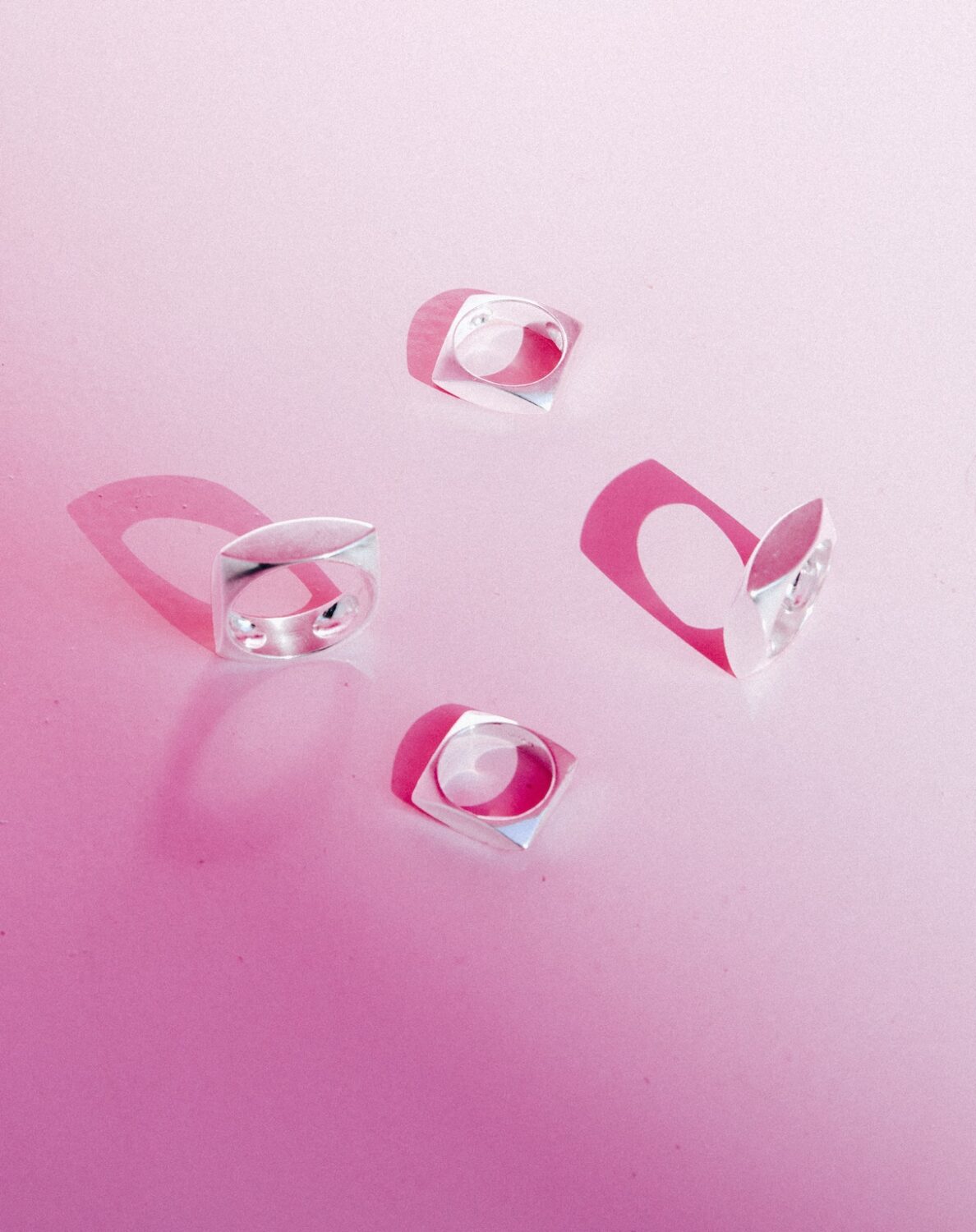
When asked to describe her style, Klara Bloch’s answer comes straight away: bright, playful and optimistic silver jewellery. Kim Buck takes a moment to think.
‘I’m not entirely sure. I experiment a lot. With techniques, materials, and styles. I’m constantly exploring what things can say,’ he says after a moment.
Whereas he initially focused exclusively on the design, through conversations with his customers he gradually began to see jewellery beyond its form, technique, aesthetics and surfaces. That what matters most is what happens when the jewellery leaves the shop.
‘It is there – in the encounter with people – that they take on meaning and layers of stories. And it is only then that they become truly interesting. When I realised that, it actually changed the way I work,’ he explains.
One example is the Kopi ring. A customer wanted to repair her grandparents’ wedding ring and its opal, which had worn completely to pieces and cracked at the base. For many years, the family had used the ring as a good-luck charm, taking turns to carry it in their pocket for exams, births and dentist’s appointments.

‘Objectively speaking, the ring was ruined, but it struck me that its value no longer had anything to do with its physical condition.’
Kim Buck was allowed to make a 1:1 replica, exhibited it alongside the original, and shed light on what it is we actually value: the material and the craftsmanship – or the life lived with the object?
‘Over time, I’ve moved from being purely a craftsman to something more… reflective. But I don’t find it getting any easier. Quite the opposite. If I’m making a diamond ring for a client, that’s easy enough. But when I’m making jewellery that says something about the world – that requires something completely different,’ he explains.
Klara Bloch sits beside her and listens. For her, relationships have always been an integral part of the process, she explains.
Both through her fascination with Pandora’s bracelet systems, where people return, add to their collection and grow alongside the jewellery – and by adapting inherited pearl necklaces that are no longer worn to suit each individual customer.

‘And that means I need to understand them. So I often spend a long time talking to my clients, finding out what their dog’s name is, where they’ve been on holiday, how they move, and what they feel comfortable in. Because I want to create a space where they feel at ease, and where I’m allowed to follow their journey over time,’ she says, adding:
‘Whether I’m cleaning their grandmother’s pearls, adding gemstones and adjusting the length to suit them perfectly – or selling a new piece of jewellery to their partner.’
The idea that jewellery extends beyond itself is, therefore, a phenomenon they both work with.
‘I move from the object and into the relationship,‘ says Kim Buck, whilst Klara Bloch nods and replies:
‘And I move from the relationship and into the object.’
Teflon heart and silver bubbles
Above his right breast, there is a small heart on Kim Buck’s shirt. It’s made with silver on the inside and has a Teflon coating on the outside, he explains, and he always wears it when he’s feeling a bit nervous. For an interview, for example.
“’t’s non-stick, and that can sometimes be very nice. At the same time, the smooth surface, where nothing sticks, creates an interesting contrast to the heart. And it is precisely these shifts between form and materials that I’m very interested in,’ he says.
‘I actually see you as almost scientific when it comes to materials,’ interjects Klara Bloch.
‘Yes, perhaps. In any case, I always try to find out what they mean – because all kinds of materials carry a certain significance,’ he replies, mentioning that he has, for example, bought both a meteorite and amber from the excavation site at the Gammel Strand metro station.
Perhaps his fascination stems from the mid-1980s, when Kim Buck attended the Department of Precious Metals at the School of Goldsmiths. Back then, a materials revolution was underway, he explains. Things were no longer supposed to have value based on what they were made of, but because of the work and the idea behind them – and Kim Buck worked with aluminium, steel, rubber and plastic. Since then, however, he has started working more with materials that last longer, he explains.
‘It’s funny, because I’m the complete opposite and have always worked in silver. Not because it’s precious in itself, but because I simply love it. I always have. At the same time, it’s cheap enough that I can go straight from an idea to intuitively experimenting and playing around,’ says Klara Bloch.
She is wearing large earrings with round silver bubbles, and her wrist is adorned with silver bracelets in various bubble shapes. These are still designs that she wears and tests herself – and she always does, she emphasises.
‘These earrings have been at the bottom of my bag because I needed to find out what they can withstand, how thick the sheet metal needs to be, and how they bend. I mean… I almost have to abuse my designs a bit to understand them. Perhaps a little too harshly at times.’
‘You learn the material by working with it. That’s precisely what craftsmanship is all about,‘ remarks Kim Buck.
Klara Bloch takes off one of her bracelets and explains that she has been experimenting with how large the opening should be. Kim Buck watches – and seems almost unable to contain himself. Finally, he reaches for the bracelet and demonstrates how the edge should be pressed against the soft side of the forearm and then twisted round so that it sits securely on the wrist.
‘Thank you, that’s a great trick,’ she exclaims, adding a moment later:
“’That’s why I wish I’d been an apprentice for longer and absorbed more techniques. Instead, I’m learning by doing it myself.’
‘But that’s exactly how you learn,’ says Kim Buck.
Future plans in different directions
The most important thing for Klara Bloch is to create the kind of everyday jewellery you simply always wear. Her series featuring bubbles in various sizes are created with that in mind. At the same time, the bubbles on her rings, for example, can be filled with stones and thus grow with their owner, she explains.
‘Ultimately, I want to create something simple and beautiful that will outlive me. But as the years go by, I’m also becoming more interested in creating something recognisable. Something you look at and know is mine,’ she says, picking up her oversized black-and-white pearl necklace.
In the centre is a prominent clasp. Her signature clasp, which is not meant to be hidden away at the nape of the neck, but is designed to be visible.

“Jeg ville lave noget, jeg kunne tilføje, når jeg istandsætter og omdanner andres smykker. Og hvor jeg stadigvæk sætter mit eget præg på.”
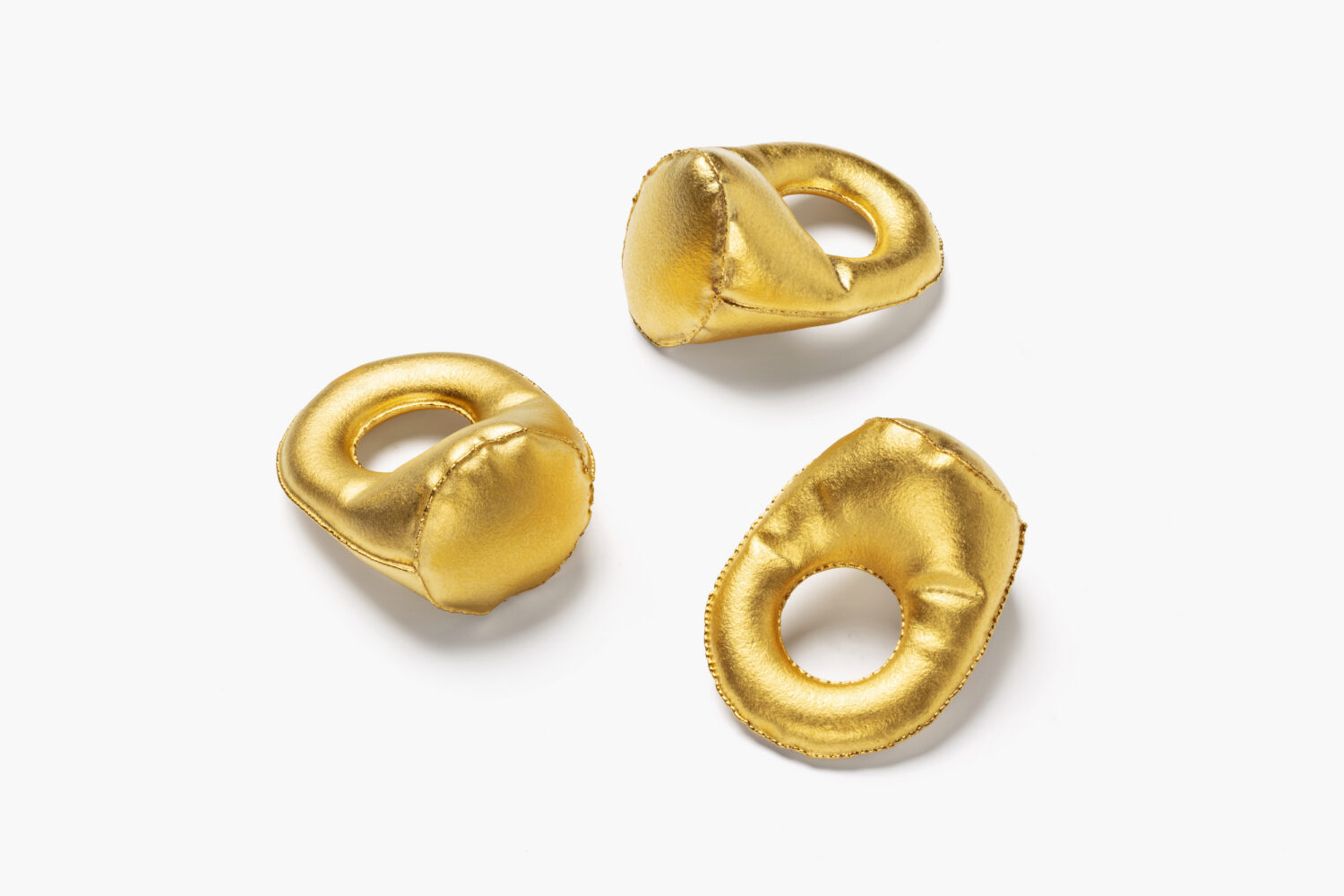
Kim Buck genkender følelsen af at lave værker, der stadfæster ens navn – og i øvrigt sætter en masse andre ting i gang. For eksempel hans opblæste ringe, som får buler, skrammer og bliver mere beskedne, når man bruger dem.
“Jeg elsker, at de ser helt anderledes ud 14 dage efter, de har forladt butikken. Den idé – at værket først rigtigt eksisterer, når det bliver brugt – har betydet meget for mig. Og har fulgt mig i mange år,” siger han.
Efter adskillige årtier i branchen er det så småt tid til at drosle ned, tror Kim Buck. Lige nu arbejder han på højtryk på en stor udstilling på Designmuseet.
‘Og når den er færdig, er jeg 70 år. Så jeg ved ikke rigtig… lige nu har jeg det sådan, at jeg godt kunne tænke mig noget helt andet. Måske tage på en lang tur i bilen,’ siger Kim Buck.
Når han bliver spurgt, om han kunne forestille sig slet ikke at have et værksted, lyder svaret dog lynhurtigt:
‘Nej, det ville jeg aldrig kunne.’
Ved siden af er Klara Bloch lidt splittet. Hun vil gerne lave færre, men større og mere tydelige værker.
‘Samtidig vil jeg også gerne lege mere og sætte mere tid af til at eksperimentere. I virkeligheden handler det måske om at kombinere de to og samtidig kunne lave en fornuftig forretning,’ siger hun.
Netop som vi rejser os og gør klar til at tage afsked, smiler Klara Bloch og vender sig mod Kim Buck:
‘Jeg har forresten tænkt, at jeg ville søge dig som mentor.’
Klara Bloch
All of Klara’s jewellery is designed and handmade in KLARA BLOCH’s workshop at Gl. Kongevej 39L in Copenhagen. She has been working with jewellery since 2015 and has, among other things, attended the Textile School, completed the foundation course in goldsmithing, and studied Accessory Design at Design School Kolding.
Kim Buck
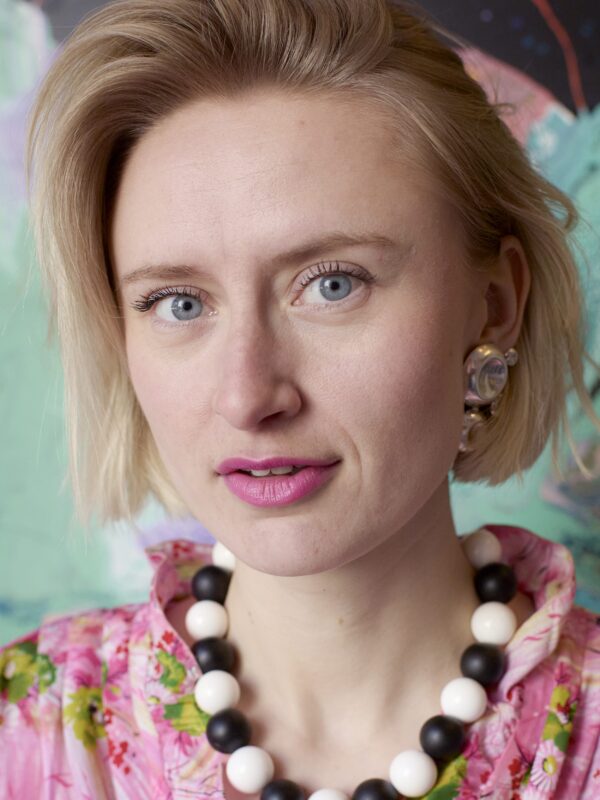
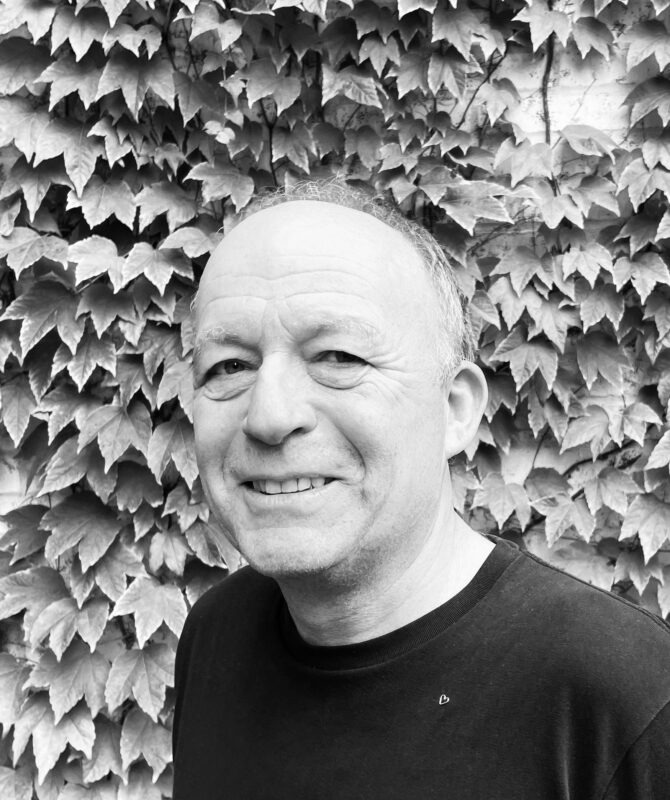
Kim Buck qualified as a goldsmith in 1982, studied at the Institute of Precious Metals from 1983 to 1985, and from 1999 to 2001 he was a professor at the School of Design and Crafts, Department of Jewellery Art, at the University of Gothenburg in Sweden. He has exhibited at a wide range of Danish and international museums and biennials. He sells his jewellery from the Wang & Buck gallery and shop at Vesterbrogade 183, Frederiksberg.
The history of jewellery training in Denmark
The Goldsmiths’ College, established in 1951 as a two-year gold and silver design course under the auspices of the Technical Society’s Schools. It was based at the School of Arts and Crafts in Copenhagen and moved to Valby in 1971, where the subject’s apprenticeship and further training programmes, as well as the gold and silver design course, were brought together under the name Guldsmedehøjskolen. In 1989, the design course was renamed the Institute of Precious Metals.
The Institute for Precious Metals closed in 2016.
The Copenhagen Goldsmiths’ Guild has subsequently established a mentoring programme. Read more
Source:
Dahlerup, Jørgen: Guldsmedehøjskolen in Lex on lex.dk. Retrieved 1 June 2026 from https://lex.dk/Guldsmedeh%C3%B8jskolen
Theme: Legacy Reimagined
What defines contemporary craft and design? How is a practice shaped by the era in which it emerges? How does it endure as times change?
Every generation of designers and craft artists works at the intersection of heritage and innovation. They inherit techniques, ideals and institutions from those who came before, yet must simultaneously engage with their own era: its values, crises, technologies and visions of the future.
In this issue of Formkraft, we explore how crafts moves through generations, , and how the times leave their mark on methods, materials and mindset.