
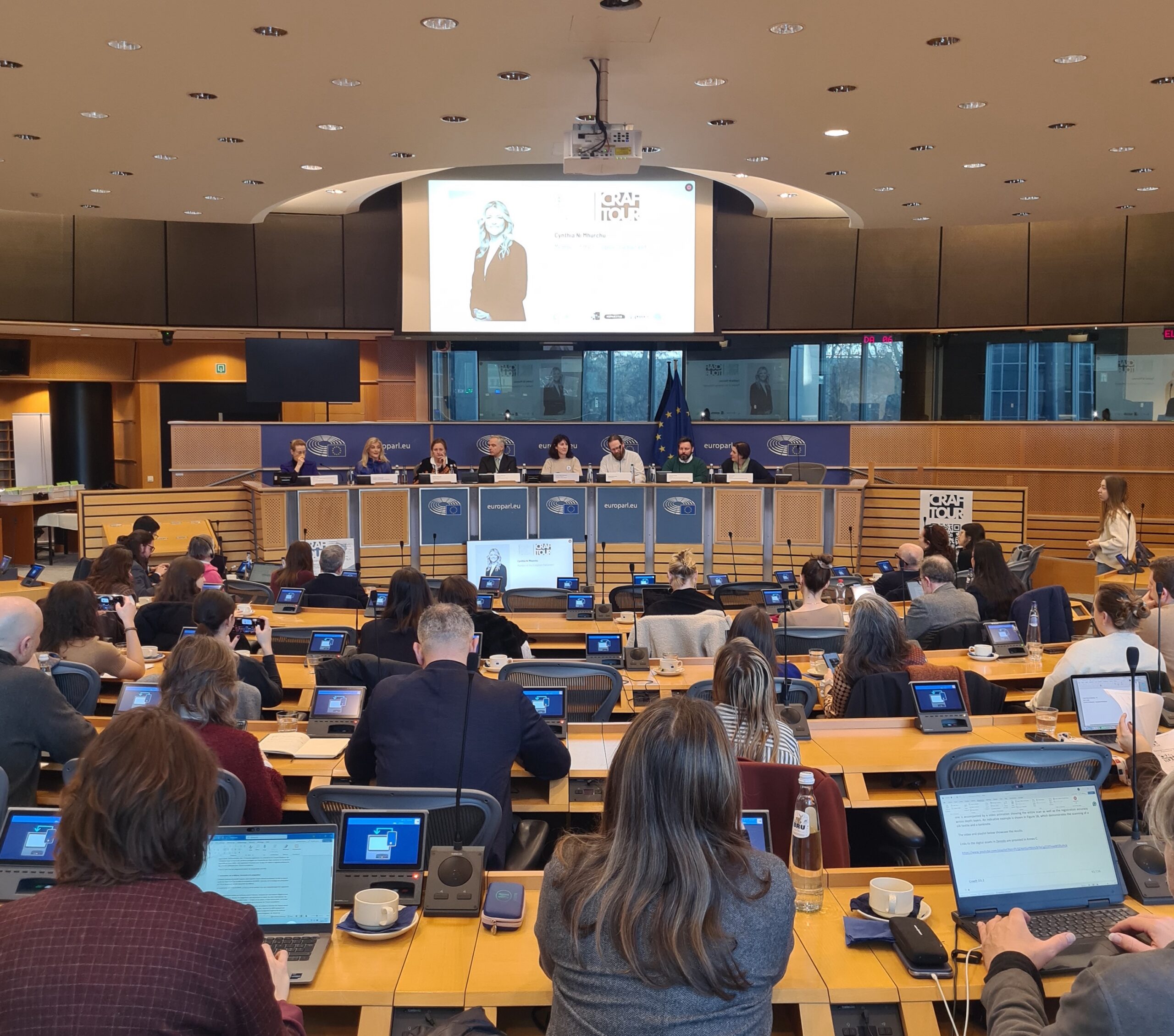
The debates were part of the CRAFTOUR collaboration, supported by the EU’s Horizon and Erasmus+ programmes. The network brings together 75 partners from 21 countries who have chosen to join forces because fragmentation is currently one of the biggest barriers to craftsmanship being taken seriously in European politics.
I was invited to participate in a Knowledge Exchange Programme organised by the European Crafts Alliance, and here I present a condensed selection of points from the debates:
From marginal note to political issue
One point was repeated in the presentations: as long as crafts are perceived as something peripheral, Europe will lose knowledge, jobs and cultural cohesion. The lack of common data and uniform definitions means that the sector is largely invisible in political decision-making processes. Without figures, there can be no policy.
Therefore, there was a clear demand for better mapping and monitoring of arts and crafts across national borders. Only with comparable data can targeted efforts be made in the areas of education, mobility, innovation and sustainability.
Authenticity under pressure
Another key theme was authenticity. In an age of mass production and imitation, the authenticity of crafts is a cultural, social and economic resource – but also a vulnerable one. Several presentations pointed to the need for much stronger protection against copying and dilution if artisans are to continue to make a living from their craft.
Who will carry on the craft?
The shortage of skilled professionals is already noticeable. Not only in workshops, but also in the fields of building heritage, sustainable construction and local economies. Without systematic knowledge transfer and recognition of crafts education, Europe risks losing crucial skills. That is why strengthening training and the transfer of craft skills was highlighted as an urgent political responsibility.
Business, anchoring and future
At the same time, it was emphasised that crafts are an important part of the business community and can be both economically sustainable and locally anchored if the right framework is in place. It was argued that the focus should be on tailor-made funding opportunities that can support innovation without major bureaucratic obstacles.
A European observatory for crafts
The conference’s main recommendation brought everything together: the creation of a European observatory for crafts. A joint knowledge centre based on a common classification and terminology that can produce data, monitor skills needs and support targeted initiatives. Above all: to recognise arts and crafts as a genuine economic sector at EU level.
In Brussels, it became clear that the fight for crafts is not just about tradition, but about Europe’s future resilience. About knowledge, materials, sustainability – and about the value of working with your hands in a high-tech age.
With support from:
Statens Kunstfond
Ny Carlsbergfondet
European Crafts Alliance – Co-funded by the European Union