For decades, we have known him primarily as a prolific industrial furniture designer, always engaged in well-considered and forward-looking processes. And regardless of the somewhat inflationary tone of the words, Boris Berlin must be counted among the most experimental and innovative figures in the contemporary Danish and international furniture arena. This is strongly substantiated by Boris Berlin. Dialogues on form.
Conversations with Boris Berlin
The book is structured as a stylised roundtable discussion, in which Berlin himself and the two editors have joined forces with a number of prominent figures in the field, both foreign and Danish. Each of them has their say in the form of an article or engages in fruitful conversations with the designer about his views and positions and about both the big and the more tangible questions about art, design and form:
industrial designer David Geckeler (Germany), art historian Mirjam Gelfer-Jørgensen, museum curator and art and design historian Christian Holmsted Olesen, architecture and design specialist Marie-Louise Høstbo, the late director of Die Neue Sammlung in Munich Florian Hufnagel (Germany), designer Jasper Morrison (UK), industrial designer Mike Keller (DE), critic and curator Deyan Sudjic (UK) and art historian and editor Vibeke P. Gether herself.
Facts
Title: Boris Berlin. Dialogues on Form. Editor Vibeke P. Gether. Graphic design Rasmus Koch.
The book was published in June 2025 by arnoldsche Art Publishers.

Infinite diversity
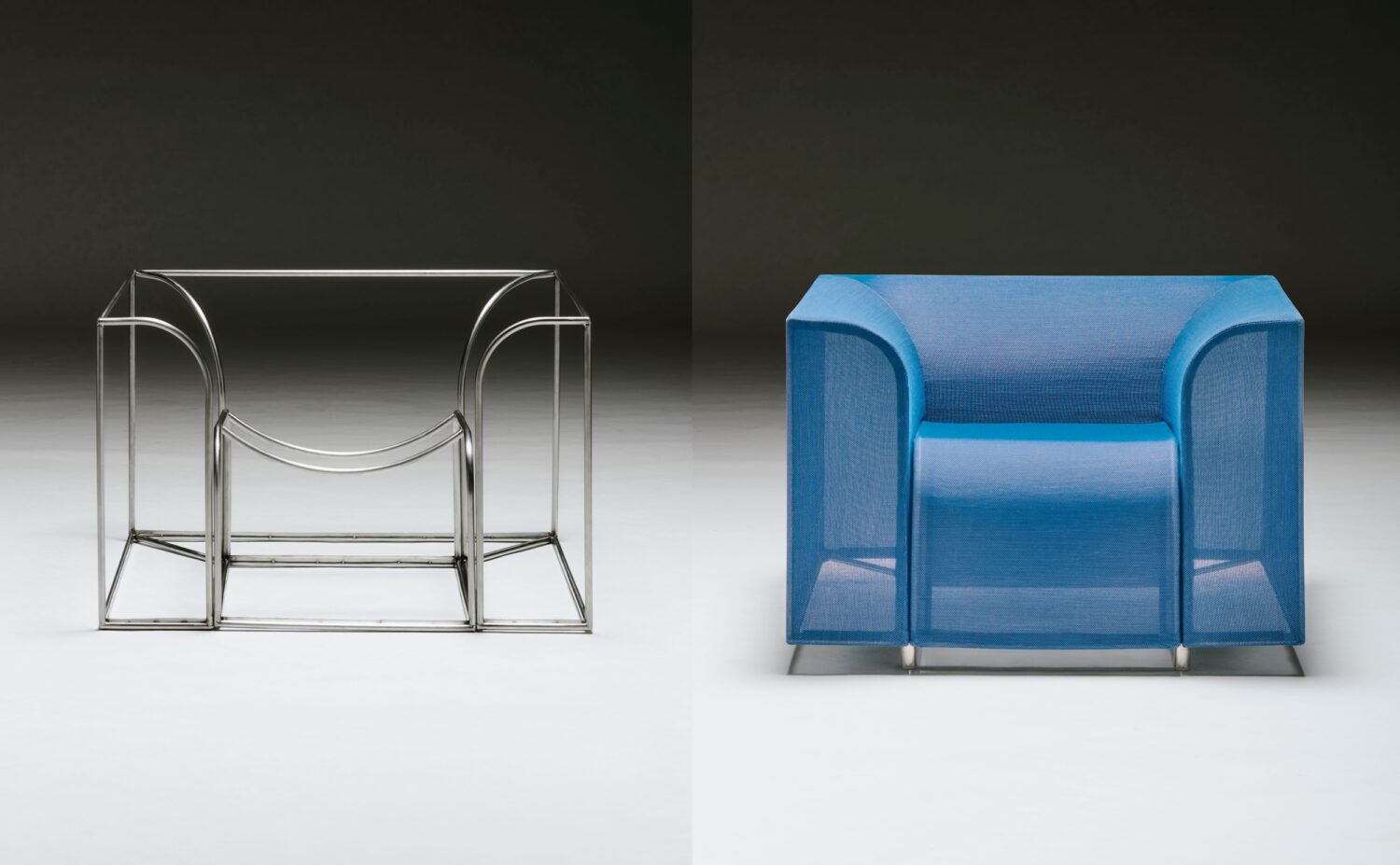
If you haven’t sat on anything else, you’ve sat in café windows, bars, at dining tables, in lounges and offices on Boris Berlin’s iconic and globally sold Gubi Chairs (Komplot Design, 2003-2005) with their physically welcoming seats in veneer, refined and moulded using the then-new 3D technology.
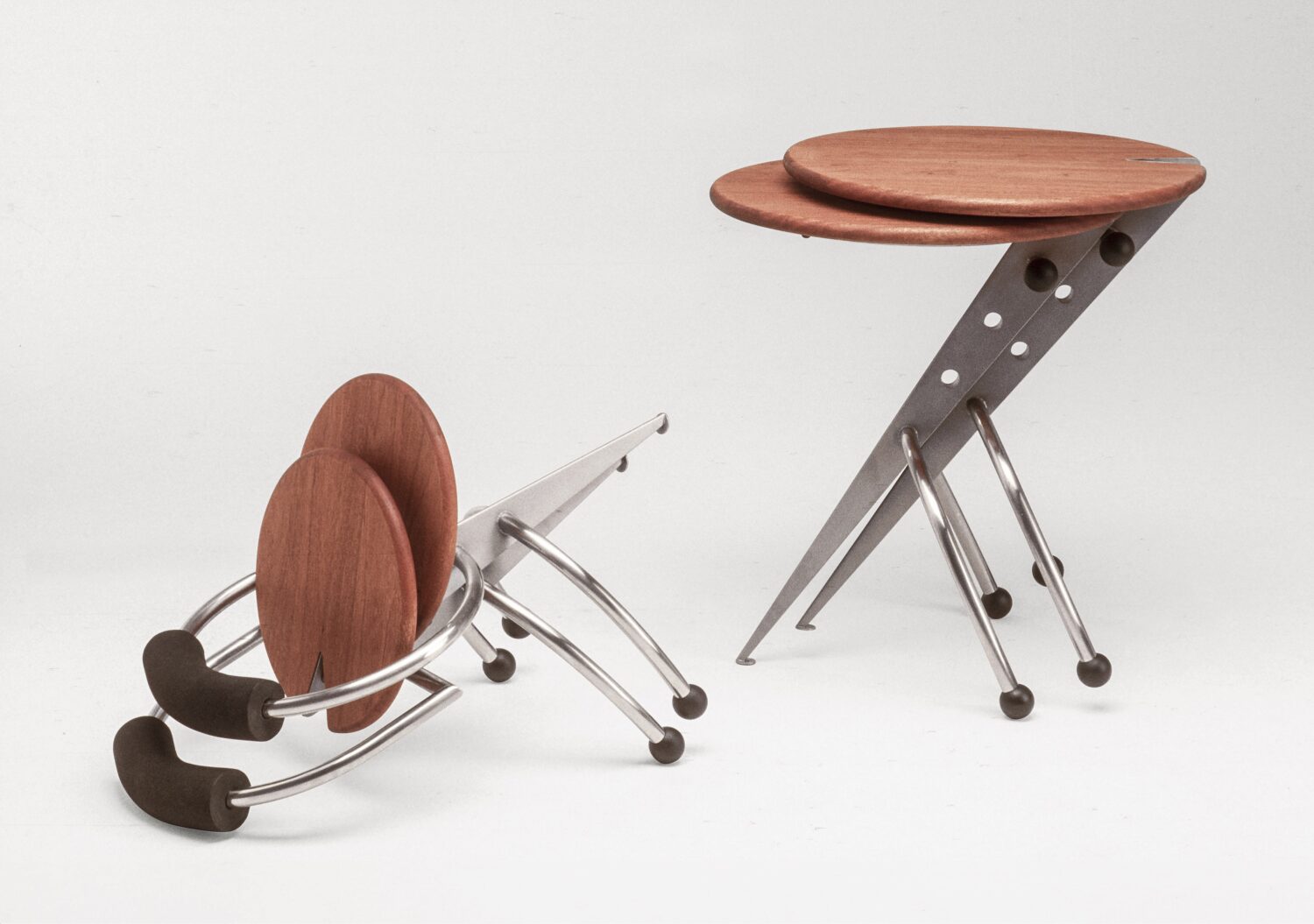
Since the late 1980s, when Boris Berlin joined forces with Poul Christiansen in Komplot Design and later in ISKOS–BERLIN, and then went solo, Berlin’s hundred or so pieces of furniture have displayed a diversity in expression, materials and construction that can only be hinted at here in a few keywords and significant chair examples.
Postmodernism manifests itself both in expressive, sharp form and material approach (Café, 1988) and in organic elasticity (Antilope, 1993), a frictionless interplay between computer-controlled machining and carpentry unfolds at a high level (Low Grid 2000), the designer combines geometric rigour and minimalism with striking “anonymity” and a pioneering spirit in challenging materials (NON, 2000), and sustainability and recycling are fundamental parameters (Nobody, 2007).
Humour adds extra quality to the overstuffed and voluminous zoomorphic (Bunny, 2011), and free references to historical chair types and Midcentury Modern are explored without traditionalism (Klismos, 2003 and Fiber lounge, 2024).

Industrial, graphic and exhibition installations
But this attractive book also provides powerful visual documentation of Berlin’s involvement in his three other areas of expertise: industrial product design, graphic design and exhibition installations in Denmark and abroad.
His technologically advanced apparatus designs up until 1983 in Leningrad (St. Petersburg), primarily cameras and reproduction and slide equipment, appear both soft-touch and geometrically ‘cynical’.

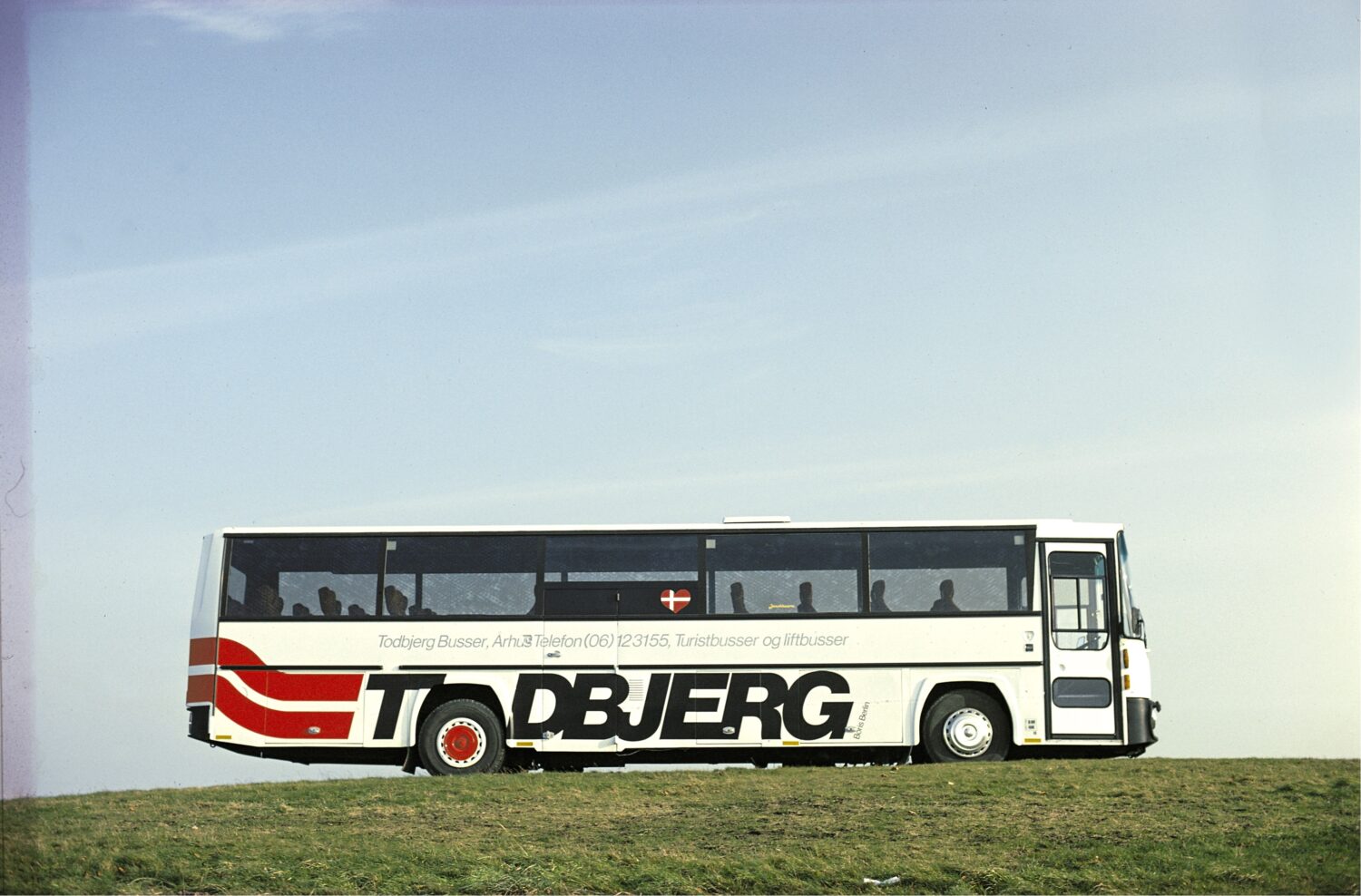
The posters, book covers and illustrations from his time in Aarhus in the 1980s in particular are humorous and/or sharp-witted. Berlin’s identity programme for Todbjerg Busser also dates from this period – the O becomes the wheel of the bus, and remains so 40 years on.
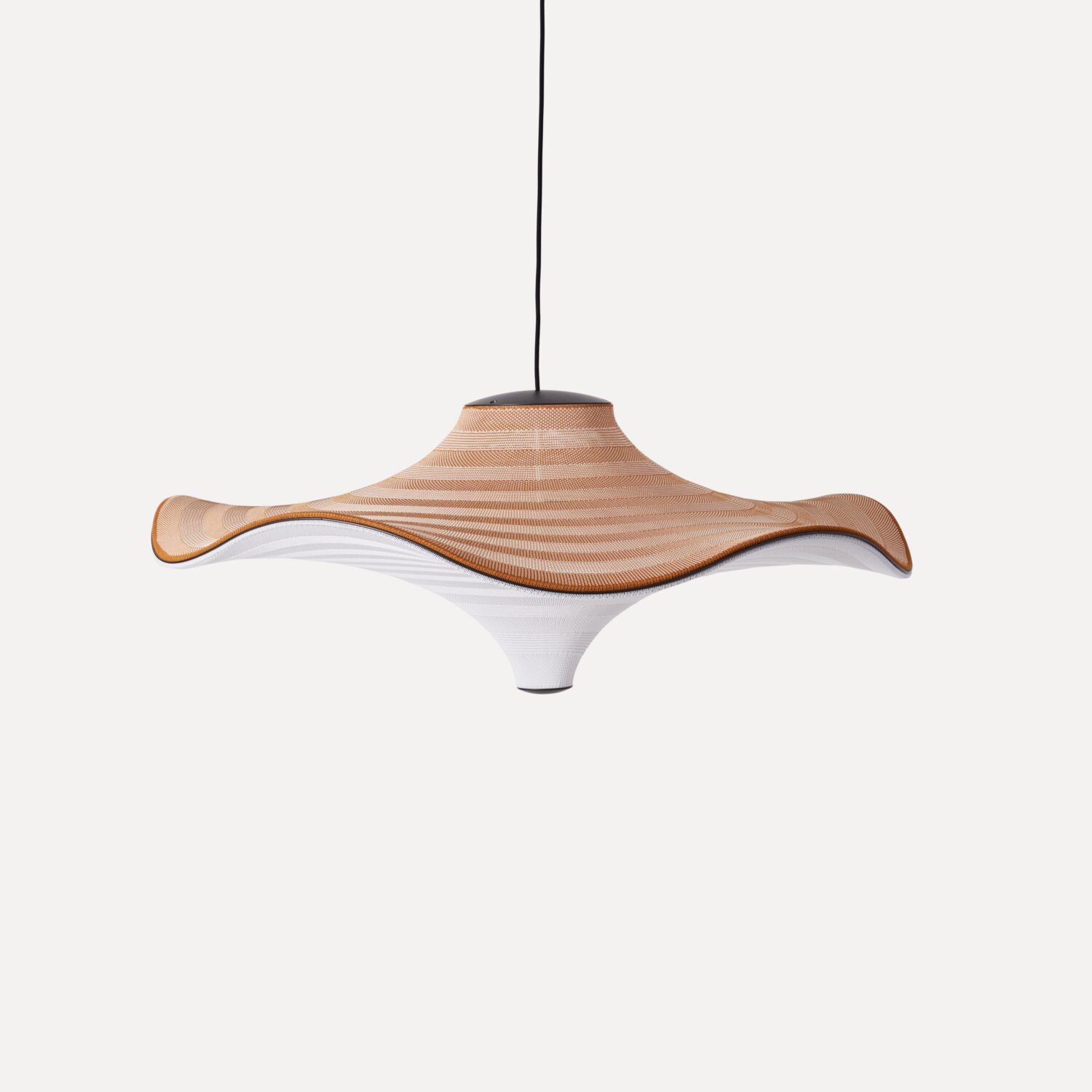
In his masterful design of the book, graphic designer and co-editor Rasmus Koch uses paper of varying weights and textures. Boris Berlin’s wide range of works is presented on smooth, matte white pages in numerous well-composed photographs, accompanied by Berlin’s own captions in red.
In the lively layout, other papers signal the intervals and transitions to the articles, and the “dialogues on form” consist of marginal notes to the individual articles by Boris Berlin and other “round table participants”.
– The book is an excellent argument for a formidable Boris Berlin solo exhibition.