
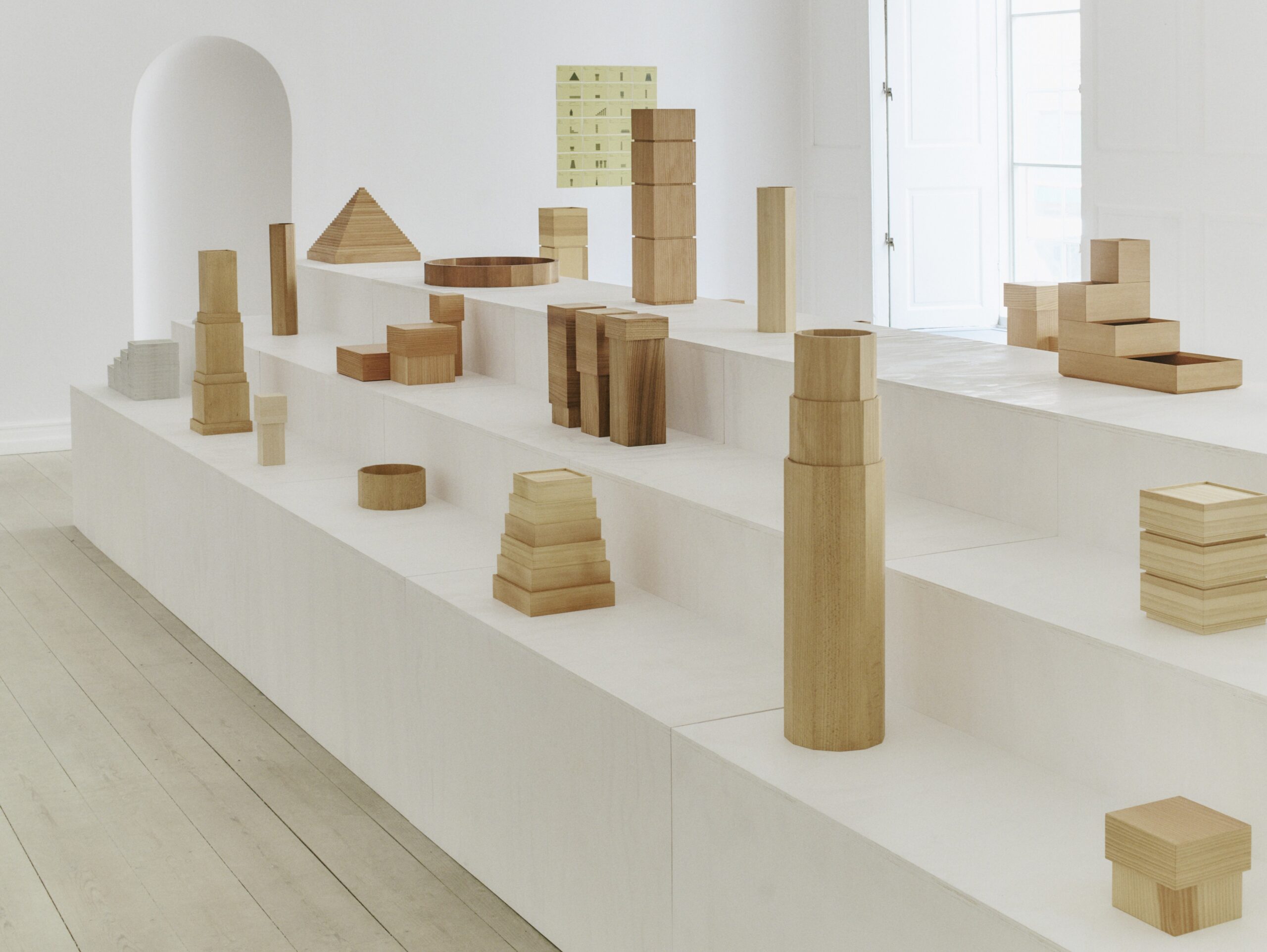
Søren Kierkegaard wrote that those who marry the spirit of the times quickly become widowed. A quote that is both sharp and melancholic – and disturbingly accurate in an age where our homes are increasingly shaped by what is currently popular, visible and shareable.
When I moved away from home as a young man and started at the Royal Academy, I also worked for a design gallery. I quickly learned that furniture and objects are not just functional – they are narratives, positions, small personal statements. I spent my first month’s salary on what I considered at the time to be the ultimate: a Superellipse table designed by Piet Hein and Bruno Mathsson, with an edge designed by Arne Jacobsen. Around the table stood six white 3107 chairs, also designed by Arne Jacobsen. I brought the PH5 lamp, created by Poul Henningsen, from home.
The staging
I had set my heart on getting this particular set. It was no coincidence. I was greatly inspired by Nikoline Werdelin’s comic strips in Alt for Damerne and Politiken, where furniture and people, clothes and interiors merged in little stories about visual identity.
This was in the 1990s – before online social media, before algorithms. Inspiration came from magazines, books and exhibitions, from conversations and slow discoveries. My home became a mirror of the knowledge I gathered and the professionals I consulted.
The three-piece set, the superellipse table, the chairs and the lamp above were precisely what we today refer to as statement design. Objects that serve as signals. Not just about taste, but about knowing what to choose.
The use of English words for a Danish concept is telling. In Danish, we would say status markers for products that show that you have understood the code. But who actually wrote the code – and when will it change?

Statement design refers to deliberate, often eye-catching design choices that aim to communicate identity, attitudes or affiliation. It is not about function or aesthetics in the traditional sense, but about the product’s ability to send a signal – a statement – to its surroundings.

In this understanding, design becomes a form of visual communication and social marker: certain brands, shapes, materials and styles are associated with economic capacity, cultural capital and acceptance of what is perceived as ‘good taste’ at the time.
The product is valued not only for its utility value, but equally for its symbolic significance. An iconic design object can function as a cultural code word that signals, but does not necessarily embody, knowledge of design history, access to certain environments and a certain lifestyle. In this way, design becomes part of self-expression in modern consumer society.
Spirit, hand and thought
My own curiosity grew rapidly back in the 1990s. I travelled and visited places where interior design was not a repetition and recording of unspoken positioning, but a consequence – a result of reflection, needs and lifestyle.
Travelling and meeting international designers and architects opened up a different world: a world where design is less about recognisability and more about necessity, function and perception. I also expanded my knowledge of the work behind craftsmanship – the slow, the conscious, the man-made, which does not bow to a season, but to a thought and a hand, as a solution to a functional challenge.
I swapped my iconic set for other historical furniture from the 1920s onwards. My home became a workshop, and today my dining table no longer stands as a symbol of a particular design period, but as a piece of history: designed for card games in the 1920s. The tabletop bears traces of life, not fashion trends. Here I can spend hours with people and with magazines and books written by professionals, people with both knowledge and opinions about what makes a good home – and how it can be shaped.
Historically, interior design has been closely linked to necessity, later supplemented by architectural and design traditions, where function, understanding of materials, ergonomics and spatial qualities became key parameters. Interior design was considered an integral part of the architectural whole and a professional matter that required expertise and craftsmanship.
Consider Ellen Key and her thoughts on beauty in the home, Emma Gad’s work through the magazine Vort Hjem, or architects and designers who published books on housing, function and spatial understanding. These were not just pictures, but arguments. Not trends, but thoughts and attitudes.

Visual appeal
Today, housing ideals are greatly influenced by visual media and digital platforms, where homes are primarily experienced through images and short video formats. The focus has shifted from the physical and sensory experience of the space to what looks good on a screen.
Algorithms have taken over the editorial process. They do not sort by professional quality, function or innovation, but by what catches the eye. Interior design is optimised for photographic visibility rather than long-term functionality. As a result, interior design is no longer a professional discipline, but rather a matter of visual perception and personal branding. The home is not just a place to live – it is a stage to be seen, shared and recognised digitally.
I was recently made aware of the term ‘Kählerkvarteret’: streets with uniform terraced houses, where many windows are adorned with the same vase. As a code word, the vase says: ‘I am keeping up. I understand what is correct.” Status is marked in the windows by placing the statement design of the moment there. It is, in essence, a fragile approach to interior design. For what happens when the code changes? When the next wave rolls in and reveals how closely we were following something that quickly became a thing of the past?
Statement design reimagined
A room should be experienced. It should contain sound and silence, texture and memory. Remember that aesthetics are more than what we see – they are everything we sense that is beautiful. Perhaps this is where statement design can be reimagined. Not as an object that shouts ‘I’m here’, but as a work that quietly shows that we have made a conscious choice. That we have not married ourselves to the spirit of the times, but can see beyond the latest interior design trend that went viral and ourselves.
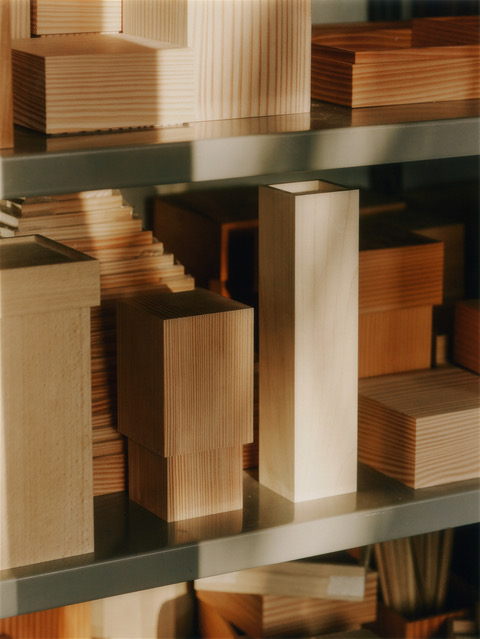
Imagine if we once again pursued what lasts. What is created to be used – not merely displayed.
Imagine if we listened again to the designers whose hands understand the resistance of clay, the fibres of wood, the necessity of metal. If we chose a teapot not because it looks like something we’ve seen hundreds of times online, but because it feels right in our hands. Because its shape is a response to a need – and an expression of the designer’s attitude.
Imagine if we could walk through a residential neighbourhood where the houses are designed based on the planet’s limits and people’s actual needs, and instead of repetition, we are met with diversity. Windows that don’t just show what’s popular, but what’s needed, what we care about. Objects that don’t signal, but embody presence and meaning.
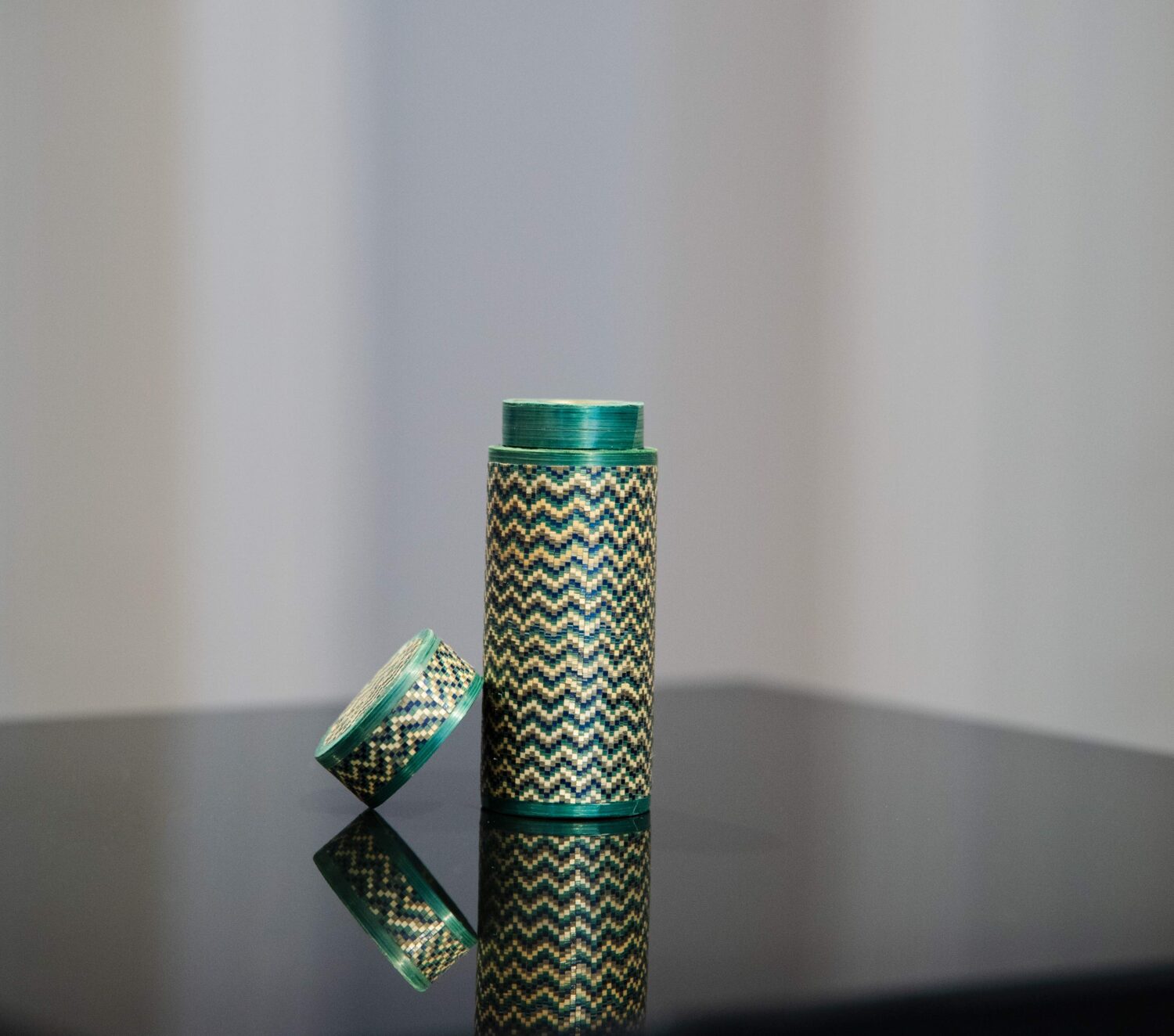
We need to consume less – and live more sustainably – and therefore we must take a different approach to how we furnish our homes, what we wear and how we decorate ourselves. Here, designers and architects can once again play a central role. They are trained to work with space, function and materials from a holistic perspective, where durability, use and meaning are intertwined.
These are not statements in the traditional sense. They belong somewhere. In a home. In a life. In a time that extends beyond the present, where we can shape our interiors based on professional knowledge, based on our needs and with respect for the planet.
The spirit of the times is changing. But good craftsmanship – and conscious choices – remain. Perhaps it is in this quiet break with the ephemeral that the most radical statement actually lies.
Colophon
Writer: Marie-Louise Høstbo
Managing editor: Helle Dyrlund Severinsen
Editorial Board: Lars Dybdahl, Annette Svaneklink Jakobsen, Ane Fabricius Christiansen, Peter Moëll Dammand, Anne Louise Bang, Pernille Anker Kristensen.
Translation: This article has been translated using AI. The original text is written in Danish.
Publisher: Danish Crafts & Design Association
Theme: Statement Design & Crafts
‘There is a forward-looking vision in critical design, in thought-provoking statement design. Here, common assumptions are challenged,‘Lars Dybdahl, design researcher, author and member of Formkraft’s editorial board.