
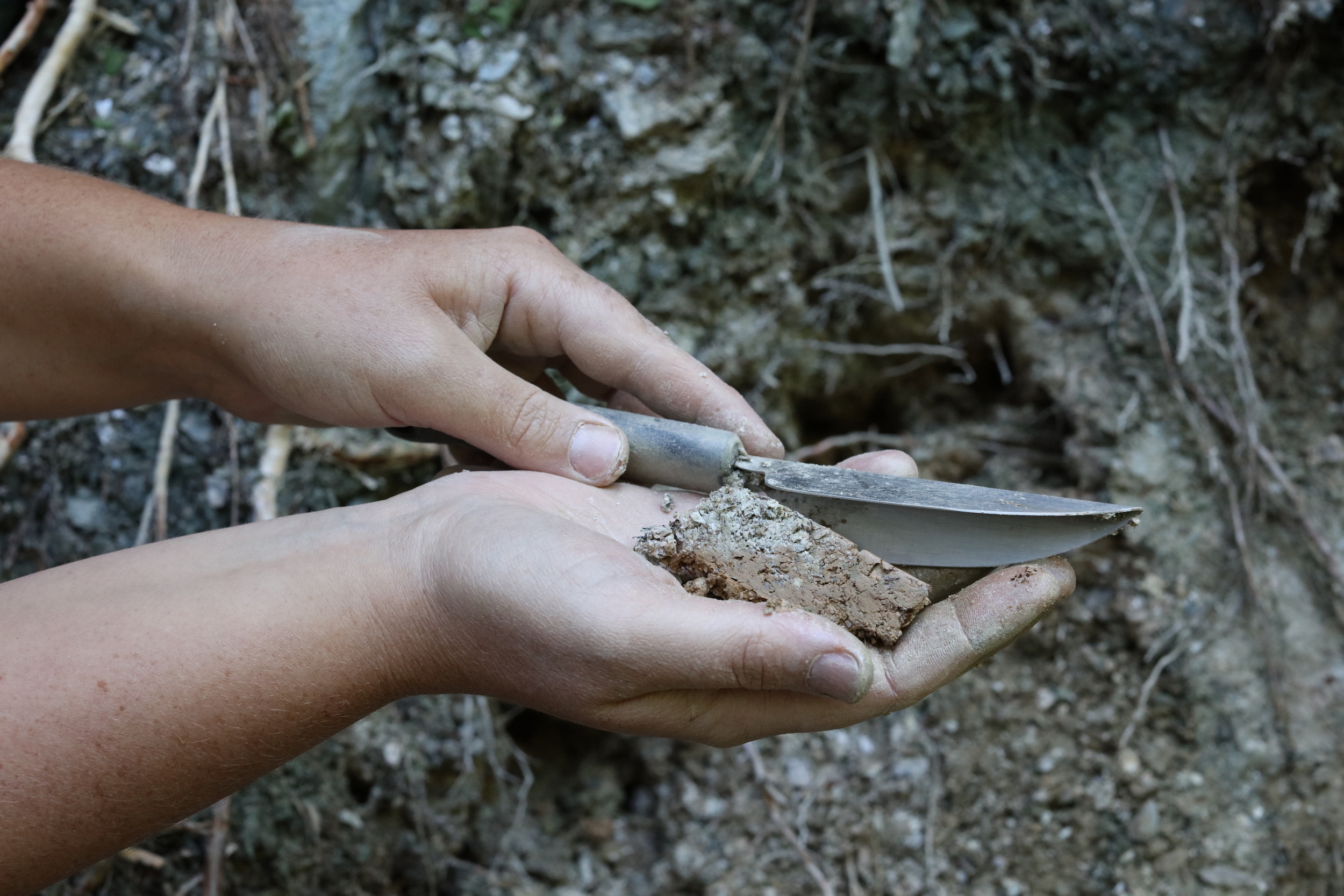
Is it even possible to make ceramics if we’re to protect nature?
That was one of many big questions raised at the GenJord Symposium 2026, where ceramic artists gathered to listen, discuss, and find inspiration to explore how the concept of sustainability fits into the ceramics studio.
The main theme was wonder at nature, and among the other big ideas in the air were plant blindness, storytelling, and the shame of the creator.
The GenJord network was founded at the Aarhus Academy of Fine Arts in 2023 and focuses on knowledge sharing within ceramic practice and sustainability. This takes place through workshops, a website, and an annual seminar, among other things. The 2026 symposium brought together 60 ceramic artists at the State Workshops for Art in Copenhagen, where they were introduced to ideas far beyond firing temperatures and glazes.
Limited resources
The program for GenJord’s symposia is put together by rotating curators. This year, the responsibility fell to the ceramicist and glass artist duo Rick Gerner and Johanne Jahncke.
Rick Gerner set the tone in his welcome remarks, noting that ceramicists work with clay, which is excavated from the earth, leaving holes and scars in the landscape. We know these materials are in short supply. Is that okay? Or should ceramicists feel guilty about taking resources from the planet without replacing them?
‘At the same time, through our work we can bring joy and tell stories about nature. It’s a sustainability paradox. We use clay particles and transform them into works that can inspire wonder and curiosity,’ explained Rick Gerner.
He emphasized that he does not believe a ceramist must dig up their own materials to be sustainable, but that knowledge of the landscape and nature should be a central part of the work.
‘We experience a longing to be connected to something greater than ourselves, to get to know nature, clay, and plants better.’
To delve deeper into questions of ethics, shame, and possible solutions, three speakers were invited to present different ways of approaching both the craft and what it means to be human on this planet in 2026:
Bioethicist Mickey Gjerris, visual artist Camilla Berner, and award-winning Scottish ceramicist Jennifer Lee.
We must allow ourselves to be amazed
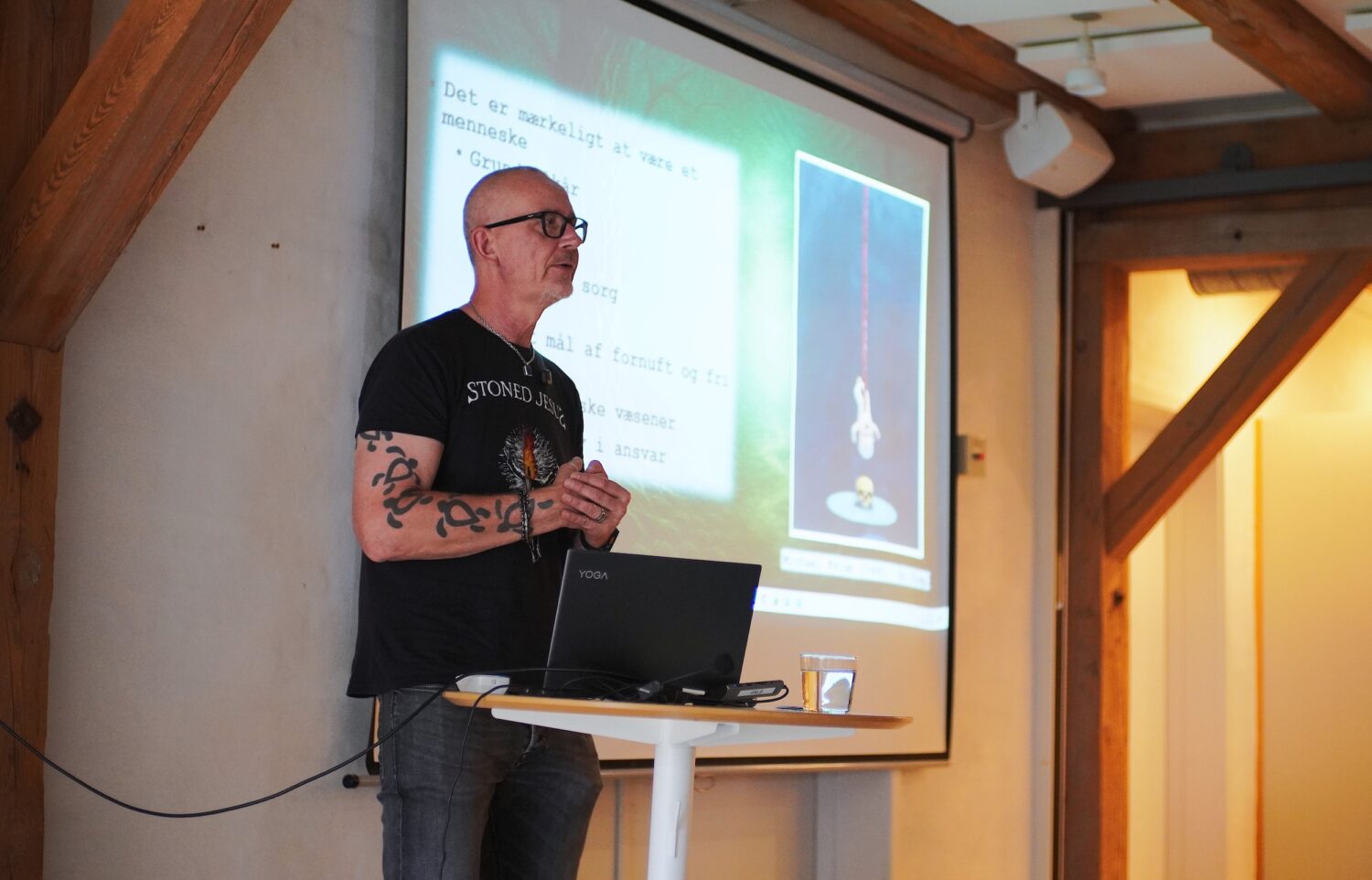
Mickey Gjerris is an associate professor of bioethics at the University of Copenhagen. He is a trained theologian, and a single “from dust you came, to dust you shall return” slipped out when he spoke to the people of clay.
Gjerris is concerned with the state of the planet and the dilemmas this poses for the individual. For what can I do about it when the pH levels of the world’s oceans are falling, temperatures are rising, and the albatross is going extinct? His point is that humanity, as a species, wields enormous power over the future of other species. That power must be managed with greater care, he said, quoting Pippi Longstocking:
‘When you’re extra strong, you have a special obligation to be kind to others.’
The bioethicist has observed how humans (men) have placed themselves above all other beings on the planet, and this has created a worldview in which one can allow oneself to exploit the Earth without considering others or anything other than production, consumption, and growth. So what does this have to do with ceramics?
‘The world needs politics and science, but we must remember to let ourselves be amazed. This is where art comes into the picture. Art can do what I, as an academic, cannot. It can persuade and strike a chord with those you communicate with.’
Mickey Gjerris pointed out that storytelling plays an important role if you want to bring about change. He presented three specific questions about our relationship with the planet that artists and craftspeople can ask themselves in their work:
What should we cherish—and how can your work express this?
What virtues should leave their mark on the clay you borrow from the more-than-human community?
How do you put your ideals into practice in your daily lives?
And then Mickey Gjerris urged us to view humanity as an element of the world and not as the supreme being:
‘When we go out and dig our holes, we must approach them with humility and knowledge, and not simply take the clay as if it were our right.’
And then Mickey Gjerris urged us to view human beings as an element of the world and not as the supreme being:
‘When we go out and dig our holes, we must do so with humility and knowledge, and not just take the clay as if it were our right.’
Plants are neglected
The idea of using ceramics or other art forms to tell stories about nature and the surrounding environment was explored in greater depth by Camilla Berner. She is a visual artist who, among other things, incorporates specific landscapes and plants into her works.
She observes that many people in the modern world suffer from “plant blindness.”
‘They lack awareness of and knowledge about plants. There is a tendency to view humans and other animals as superior and to overlook plants.’
The artist presented a number of her works and explained, for example, how she created the roof for the cabin that was featured in the 2018–19 exhibition Earth Connections—Danish Painting 1780–1920 and the Anthropocene Landscape.
The hut was inspired by one found in the Svanninge Hills on Funen, and the roof was replaced each time the exhibition traveled around the country. At Faaborg Museum, it was made of dried broom, which is abundant in Svanninge Bakker. At Fuglsang Art Museum, the roof was thatched with reeds harvested from the water’s edge near the museum; at Ribe Museum, rose hips were chosen, and so on.
All of these site-specific plants are considered a kind of weed, and that is part of Camilla Berner’s point: ‘Who decides which plants are good and which are weeds?’
A shelter made of pollen
One of the ways to combat nature blindness is through a sense of wonder at nature—letting oneself be captivated by what nature creates. And it was hard not to be amazed when Camilla Berner presented her work, PollenLY.
PollenLY is a shelter for spending the night outdoors, and its visual inspiration comes from pollen. The artist has magnified tiny pollen grains from a variety of plants, and when the images appeared on the big screen, a surprised “ah” escaped from the designers in the audience.
Camilla Berner has fallen particularly in love with dandelion pollen, which, when magnified, resembles a sea urchin or perhaps a Pokémon character. The idea is for the shelter to be built in the same shape, so that you can sleep inside a “pollen” while surrounded by nature. PollenLY will be 3D-printed and will be four meters tall! Work on prototypes is ongoing, and funding is being sought.

A hands-on approach to nature
By linking a work of art with nature, Camilla Berner hopes to captivate viewers and bring the stories of the landscape to life, just as the art of painting has helped shape our view of nature.
She is currently working to make that connection tangible. A plot of land in Ballerup is awaiting development as part of the new Kildedal urban area. In the meantime, “weeds” such as hogweed, curly dock, and other plants are growing on the site. The plants bloom and wither away, and the following year the process repeats itself. Berner’s idea is to use stems of hogweed and other plants as the base material for doorknobs. She calls the project Hånd om landskabet (Caring for the Landscape).
Local nature is to be incorporated into a new product or artwork that future residents of the area’s homes can purchase. However, it’s not easy to create a material that is sustainable, ethically sound, and stable—and that can withstand water and cleaning agents. It only becomes durable when some form of plastic is added.
So what does the nature-conscious artist do? It’s time to think about what’s most important in the work. Is it ethics or practicality?
‘I came to the conclusion that the most important thing about the doorknob is the story. That as a resident, you grasp a handle and connect with nature as it existed before the development. The handle doesn’t work without the story. It becomes obsolete through history,’ explained Camilla Berner.
The design of the handles is inspired by the Zeppelin handle from the 1920s. It was made of Bakelite, which was the world’s first industrially manufactured plastic. Part of the story is that it can now be made from (almost) exclusively natural materials.
Vessels bearing traces of landscapes
Following the philosophical reflections and challenges presented by Mickey Gjerris and Camilla Berner, the focus shifted to ceramic processes and great beauty when Jennifer Lee took the microphone at the symposium. The 70-year-old Scottish ceramicist took the audience into her studio and showed photos of her works, landscapes, and other sources of inspiration.
Nature, in particular, has left its mark on her work. From her upbringing in the countryside near Aberdeen, Scotland—where rivers, mountains, and beaches feature raw and beautiful edges and surfaces—to her travels in Egypt and the United States. She has a keen eye for deserts, and photos of, for example, salt formations in Death Valley and the endless sky over Tucson, Arizona, have deeply influenced her.
‘I don’t consciously think about landscapes when I work, but they’re part of me. I’m fascinated by the fact that while landscapes and nature change, my landscapes are preserved when the clay is fired.’
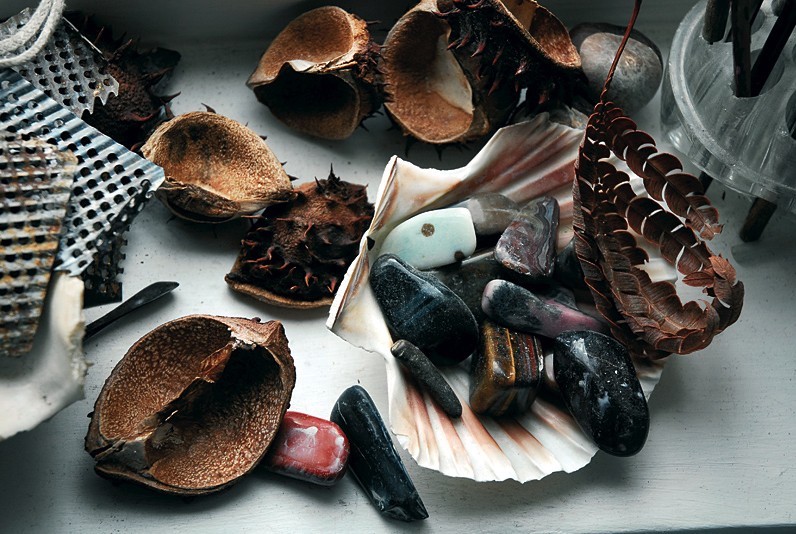
Jennifer Lee builds her vessels with rings of clay and is fascinated by how different oxides can create patterns and color nuances. Her photos of everything from rusty metal cans and beautiful stones to shops selling tools drew nods of recognition from the audience. After the presentation, there were many questions about technique, firing, and oxidation.
Japan plays a significant role in Jennifer Lee’s art. She regularly works in studios throughout the country. There, she has noticed that the distinctive red and cherry-blossom-colored clay she is so fond of is becoming scarce. The clay has simply been used up.
No one has clean hands
And so we’re back to the question of whether we should even continue digging holes in the ground to make more ceramics for this world?
Bioethicist Mickey Gjerris had this to say:
‘Ethics isn’t about being good, but about knowing that there’s a cost to everything you do. So what’s the lesser of two evils? We all end up in this ethical quagmire. None of us come out of this with clean hands—and certainly not ceramists, ‘ he said, drawing laughter from the participants at Symposium 2026.
GenJord
GenJord is a development and networking project based at the Aarhus Academy of Fine Arts.
It also serves as a knowledge hub and organizes presentations and workshops for ceramic artists.
GenJord’s website features videos and articles on sustainability and other topics.
It also includes recordings from the symposia.
Symposium 2027 will take place on October 4, 2027, at the Clay Museum in Middelfart.
You might also be interested in these articles:
A laboratory for future green solutions
Maker’s Island Bornholm has entered into a new, strong partnership with an EU-based research project and BOFA (Bornholm’s Waste Sorting). The goal is to create a crafts laboratory to conduct experiments related to sustainability, in a broad sense of the word that includes economic, environmental, social and cultural aspects.
Published: 28-06-2024
GenJord – Sustainable Ceramic Practice
The GenJord (literally: re-earth) project has sparked huge interest among ceramic makers and artists, both in Denmark and abroad. In this article, ceramic artist and project head Helle Bovbjerg presents the ideas behind the project, which has developed into a movement for a more sustainable ceramic practice.
Published: 04-06-2024
