
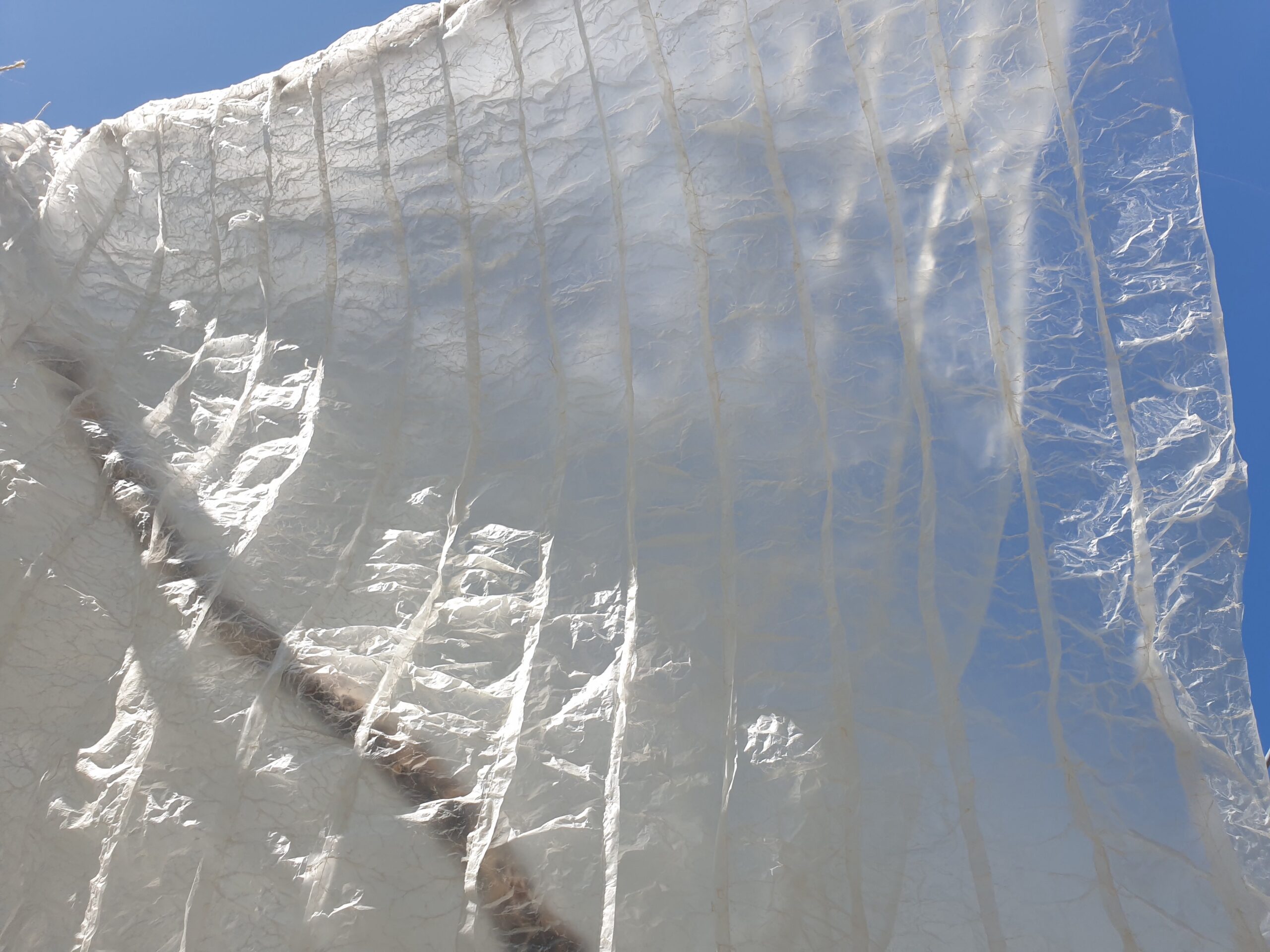
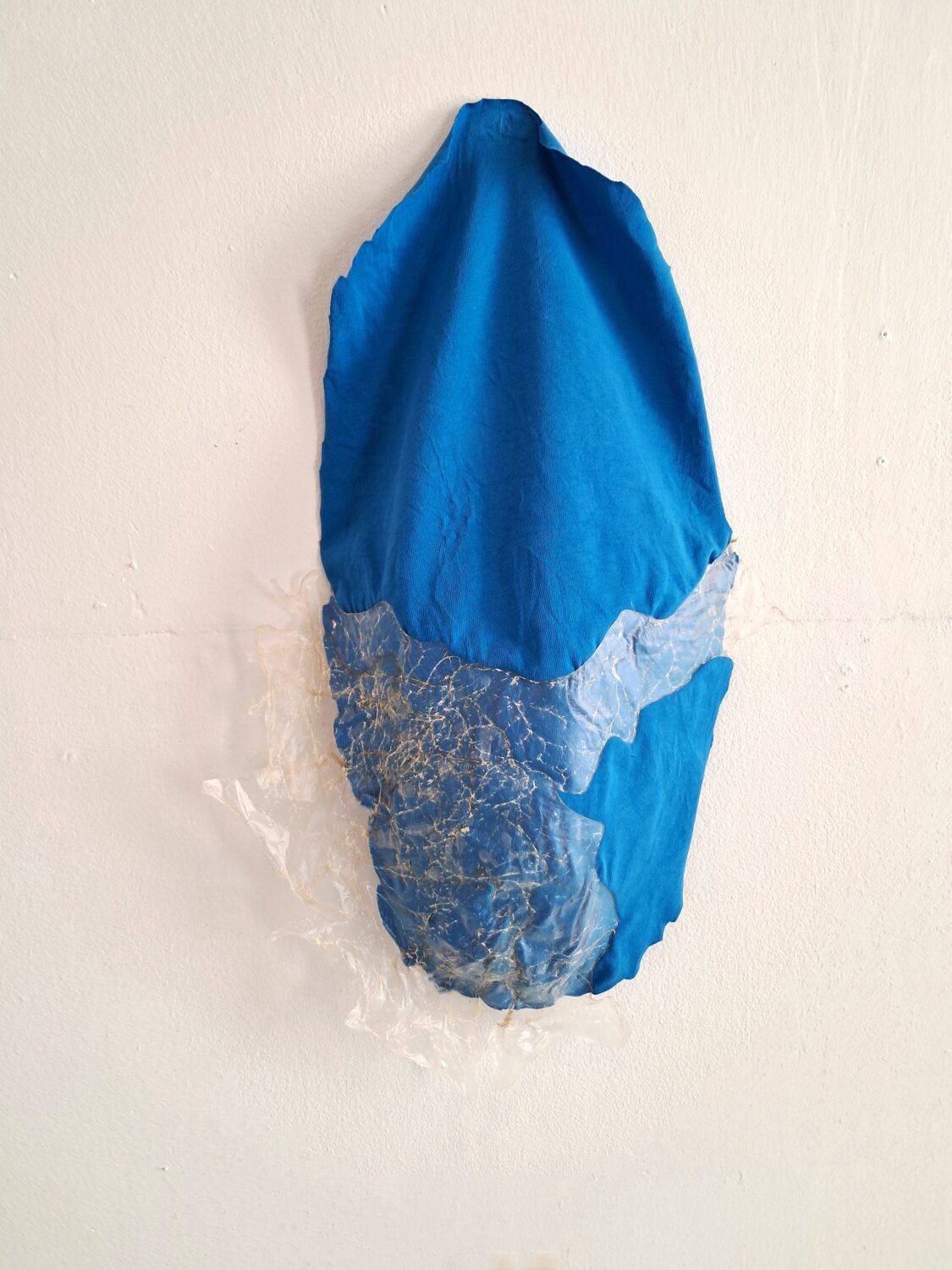
Materiality is essential and an integral part of any craft artist. Through the use of materials, a physical work is created, but also an expression and meaning – an aesthetic that affects the way a work is experienced. Visual and tactile experiences can be created with layers of meaning that open up new ways of seeing and understanding the world around us. This is evident in the work of textile artist Julie Bach, who is currently working on a new exhibition ‘Breathing Membranes’, in which she uses what most people would consider an unconventional, highly symbolic material: intestinal skin.
Beauty in a field of tension
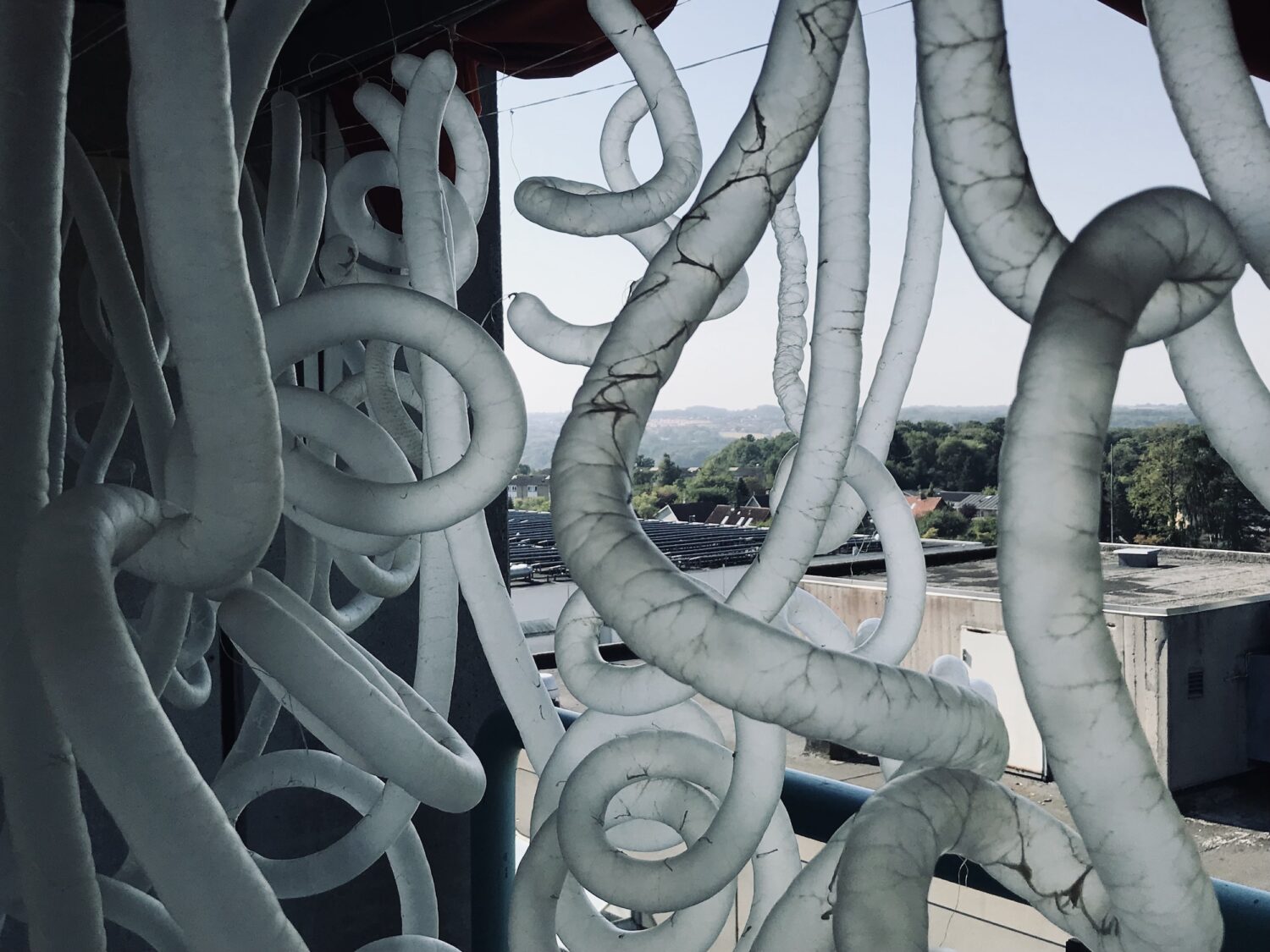
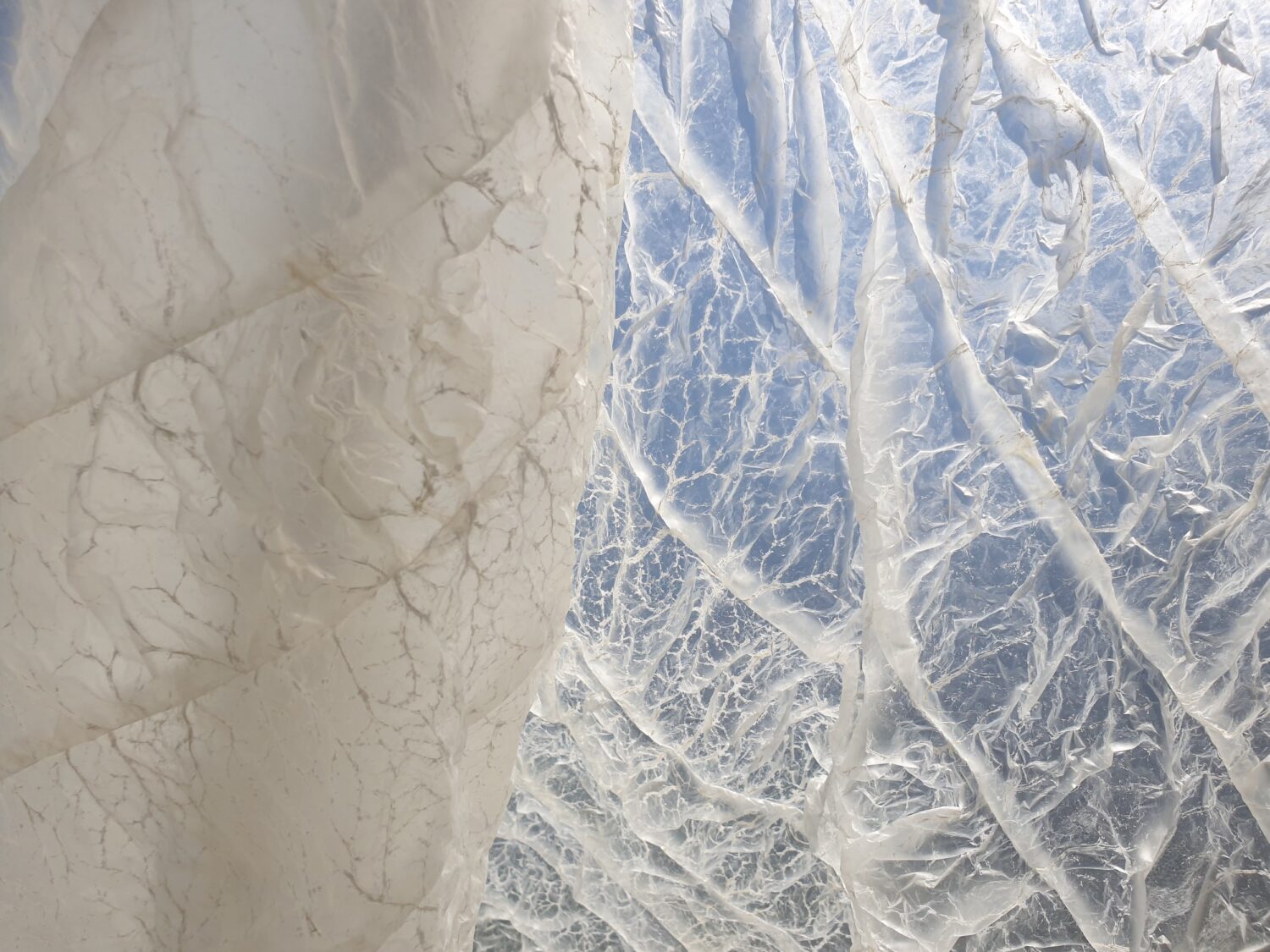
At first glance, the works of Julie Bach are aesthetically alluring and beautiful in their form and expression. The tactile materials, natural colour spectrum and voluminous presence embrace and create an instinctive bodily presence, connectedness and closeness simply in its sensuality. Diving deeper into the works and discovering the reality of the material, they are felt and experienced more strongly and deeply. The body’s relationship with materiality becomes present and relevant in a different way, and you are confronted with a field of tension where the beautiful and the disturbing meet. Artist Julie Bach herself expresses this as an interesting dualism:
‘I think it’s quite funny when my works become hyper aesthetic on the one hand, but at the same time have a layer of something disturbing. I think it’s interesting that the works are kind of teetering in that tension.’
Connectedness
Julie Bach is fascinated by gut leather as an artistic material, which has manifested itself in several art projects and exhibitions in recent years. The artistic, conceptual and ideological aspects have been on her mind since she was a fashion design student at the Design School in Kolding. Today, she has made the combination of textiles and art her life’s work. Having lived in Greenland as a child and through several artist residencies in the country, she feels a strong personal connection and affinity with Greenland.
‘The physical and the spherical is often what I’m interested in – the body and sensuality through the material. I’ve been very interested in the focus on Greenland and our knowledge of Greenlandic society. My approach to this is through my passion for the sewing craft, where Inuit have a strong tradition of aesthetics and craftsmanship. I really want to help share some of the exciting and powerful stories from Greenland. Both from the past and the present.’
That’s why she took the initiative for the upcoming exhibition, which runs from September 2025 to February 2026 at the Greenland National Museum in Nuuk.
Creative synergies
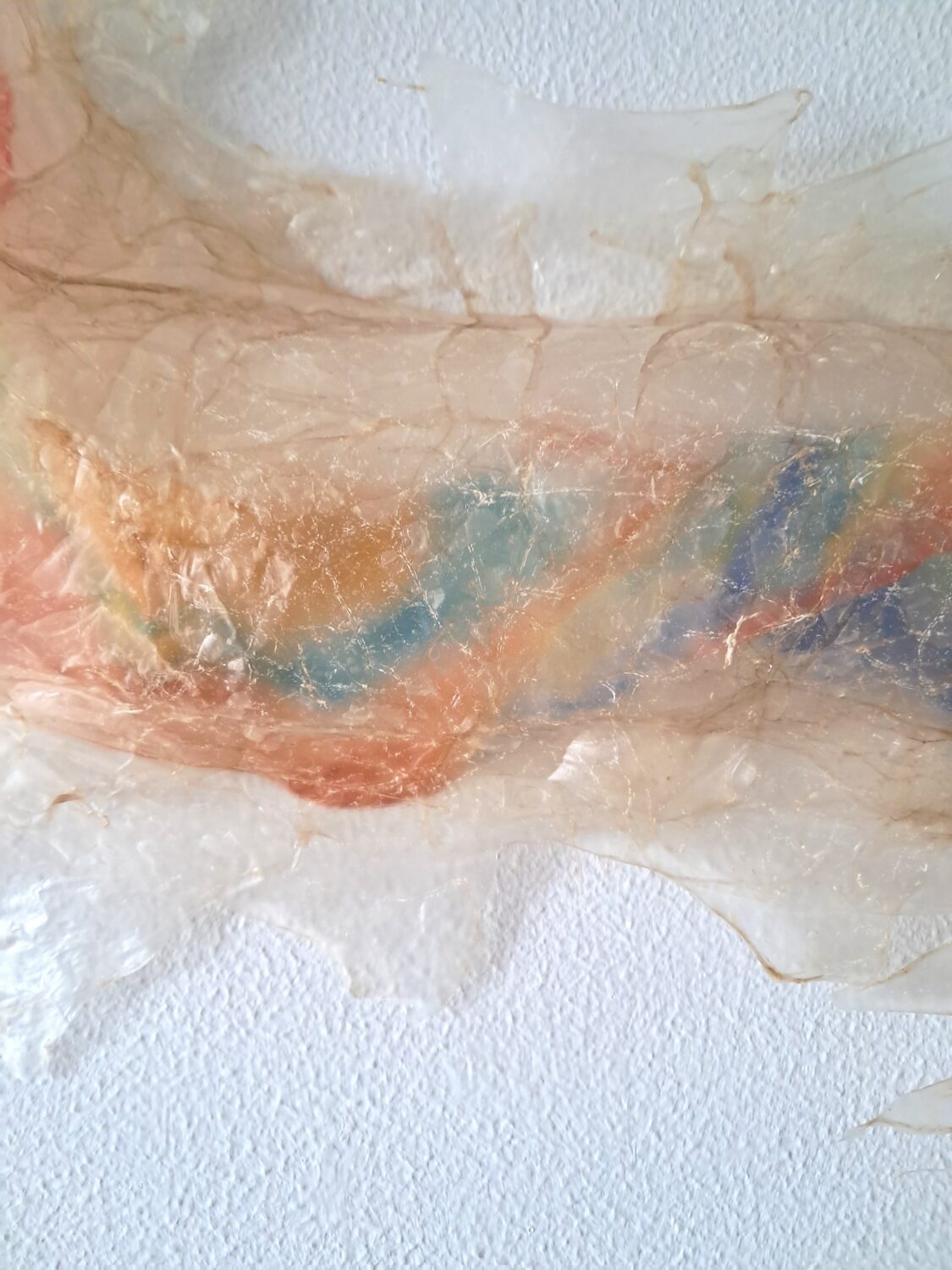
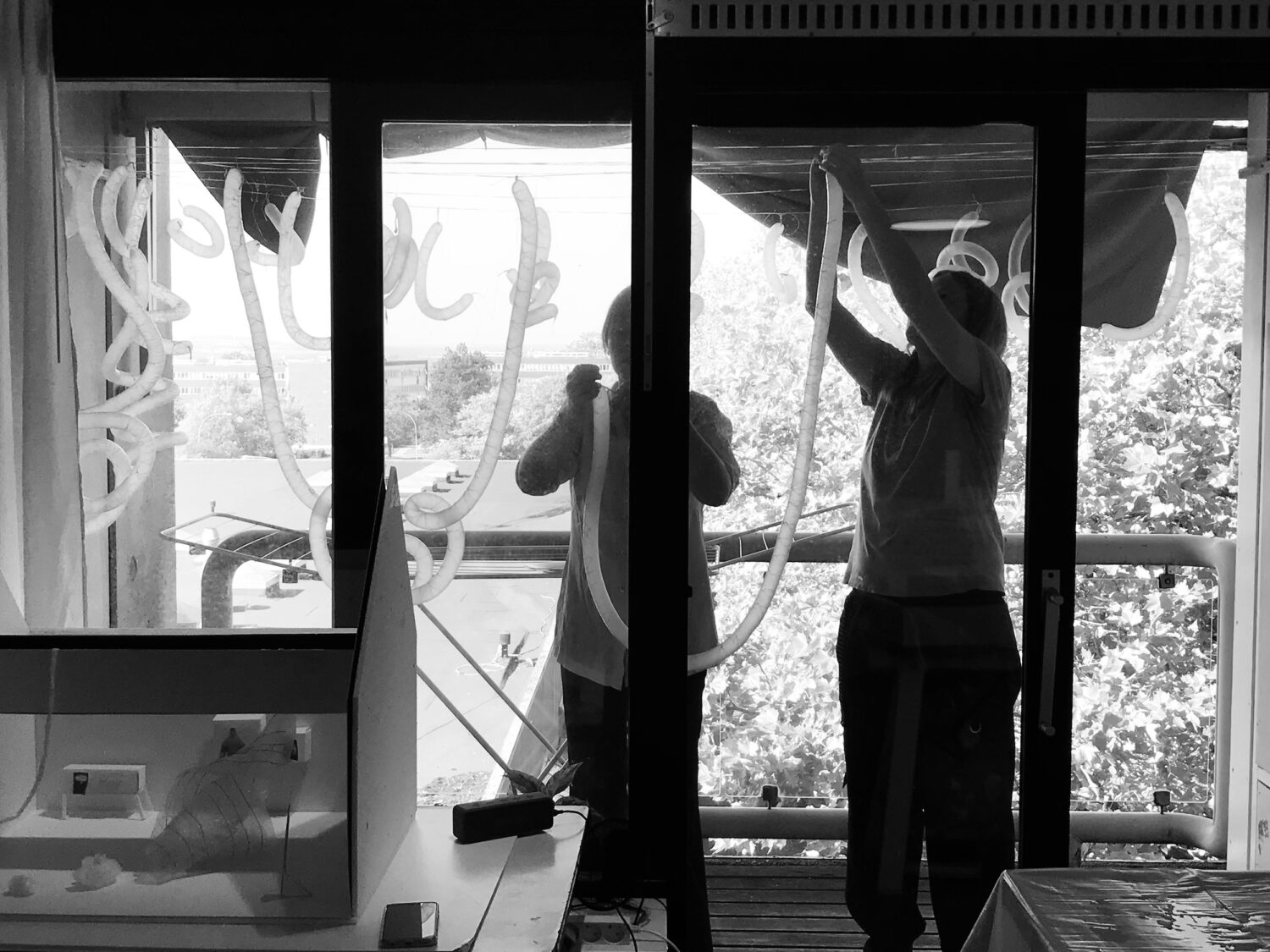
The exhibition ‘Breathing Membranes’ consists of works by leather seamstress Sofie Amondsen, who reinterprets an old traditional seal gut basket, and Julie Bach’s contribution to the exhibition, which will be a large installation combining pig intestine and seal intestine in an abstract idiom with a focus on sensuality and tactility, and with sewing as a path to healing. The diverse works are brought together in one exhibition with the help of curator Randi Sørensen Johansen’s ethnographic and historical perspective and knowledge from the Greenland National Museum. Together, they create an interdisciplinary exhibition that illuminates gut skin as a material from a holistic perspective – an interdisciplinary collaboration that is essential to the project as a whole and its individual parts.
‘We have been very aware of having different approaches to understanding. Both the ethnographic, historical and artistic, and then through reinterpretation of concepts and materials. An important part of the project is to come together and stand together and have our hands in the materials, and hopefully influence and learn from each other.’
With the exhibition, they want to explore tradition, history and aesthetics based on gut skin as an artistic and cultural material. The intentions of the exhibition are manifold and paint a clear picture of a love for Greenland, traditions and human existence in the world – both in the past, present and future. The exhibition aims to focus on a traditional but forgotten craft practice that was once an important part of the Greenlandic way of living and being, and to inspire new interpretations and creativity among the Greenlandic population.
When art brings people together
For Julie Bach, the works and the experience of the works are about a transition, a connection with something close, something ritual and about being connected to each other. For her, this is exactly what art and working with craftsmanship and materials can do; it can transform and unite:
‘I have the experience that it’s transformative when you sit together with the materials and people. Something happens – a connection or a transformation. Something shifts. The craftsmanship and materials can do something different than the very confrontational dialogue that sometimes characterises the conversation and debates about Greenland. It’s as if the craftsmanship and materials can do something else that flows across. It connects rather than pushes us further apart. It might even help to heal us.’
For the artist, sewing is a healing process – a connection between body and soul where there is more at stake than you might think:
‘For me, sewing becomes a healing process. Sewing stitch after stitch after stitch. It’s on a fleeting level, but I think that underneath and above the concrete action itself, something happens that is very valuable. Something that is pure. I experience this when I use my father’s old clothes in my work, and when I create new encounters and help share knowledge through my practice. There can be a long way between Denmark and Greenland: culturally and in terms of understanding. I really want to help open up conversations and understanding through art.’
Multifaceted communication initiatives
Knowledge sharing and community engagement have been key elements of the exhibition from the start, as evidenced by the versatile communication strategy. Body and soul have been considered from the beginning. It shows a sense of cohesion and a genuine desire to create a relevant and engaging exhibition for local people. At the centre of the exhibition will be workshops and lectures, and freely available material will be created for anyone interested in the craft of sewing gut leather. The exhibition is intended for people of all ages and organisations that want to promote creativity and crafts among children, young people and adults.
Dialogue through materials
Materials are crucial to the artist and play an essential role in both aesthetics and the encounter with the visitor, especially the dialogue that arises:
‘I have previously exhibited at Ilulissat Art Museum with works in gut skin. The conversations that emerged from that exhibition were important. When I stood in the exhibition and the visitors came in, the material was a good conversation opener. And that’s what materials can do. The audience sees and experiences something they might not have expected – like when you expect to experience something historical about Greenland at the National Museum, but then you walk in and experience abstract installation art made from pig intestines. Then you get something different sensory experience that can’t quite be explained, but which settles in your body and opens up the dialogue.’
Breathing Membranes
‘Breathing Membranes– Gutskins Tradition & Innovation’ is on display at the Greenland National Museum, Nunatta Katersugaasivia Allagaateqarfialu.
Exhibition period: 25 September 2025 to 23 February 2026.
Project participants:
Julie Bach, Textile artist / project manager and exhibitor
Sofie Amondsen, Leather tanner and seamstress / exhibitor
Randi Sørensen Johansen, Museum curator / project manager
Aviâja Rosing Jakobsen, Museum Curator
Skindsystuen Kittat / participant in Knowledge Sharing Workshop
Julie Bach has spent 6 weeks at the Danish National Art Workshops, where she has developed the installation.
Note: Article was edited on 13 March 2025.
Theme: OUTLOOK
Artist-in-residence, exhibitions and competitions in international contexts have always been part of the DNA of craft artists and designers. What stories do they take with them? What knowledge do they bring back home?