
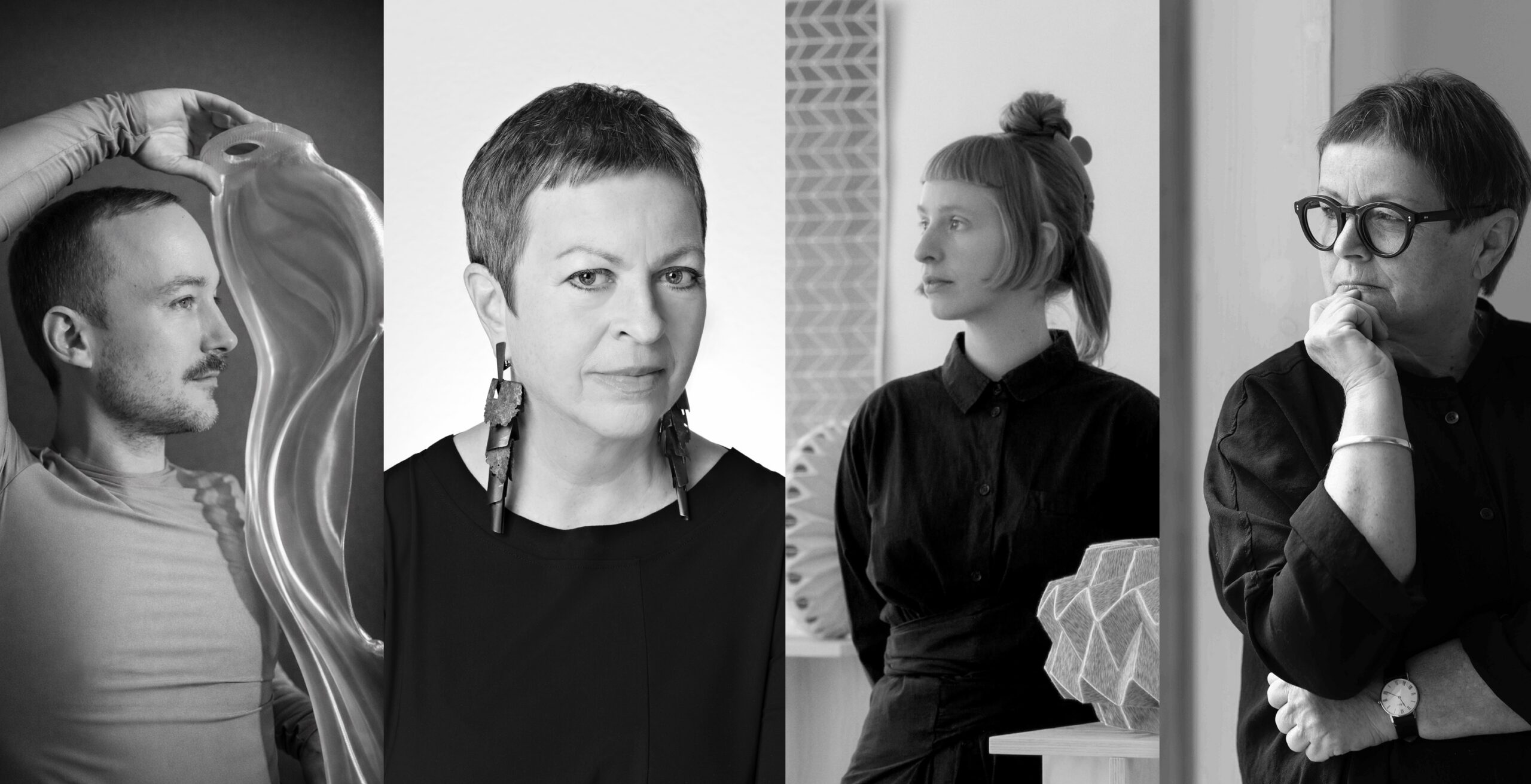
Frue Plads Market, the Biennial of Crafts & Design, Officinet, Formkraft and, most recently, the Green Craft & Design Guide are just some of the projects the association has been behind. Danish Crafts & Design Association (DkoD) is celebrating its 50th anniversary, and over the decades the association has achieved far more than the milestones mentioned above. Amidst these visible achievements, there are annual meetings, committee meetings, fundraising, minutes, membership fees, newsletters and website updates. There are financial matters and day-to-day operations managed by one full-time employee and three part-time staff. The rest of the work relies on volunteer members who are elected to the Executive Committee, the various committees and branches across the country.
Like the rest of society, the association has gone digital, and over time a more professional, transparent and rigorous structure has emerged in both the secretariat and the Executive Committee. Membership has reached 565 and is steadily rising. This is hugely positive, but there is always room for more. In particular, we need young people who are willing to champion current issues and help to rethink the association so that it remains relevant in the future.
Political agenda
In recent years, the association has not only increased its focus on sustainability through the Green Craft & Design Guide, but has also prioritised the political sphere. It is essential to engage in the debate surrounding budgets and agendas that promote craft and design – or the lack thereof. For this is precisely one of the key issues.
On 1 May, DKoD and Formkraft are hosting a panel debate at Designmuseum Danmark on creating a Danish craft and design policy. (Read more about the event here)
At the association’s recently held Annual General Assembly, the following was on the political action plan:
To position Danish Crafts & Design as a clear and influential player in the cultural policy debate – including the development of a new Danish craft and design policy that focuses on craft in the public sphere. (Source: DKoD’s Action Plan 2026)
This is a major ambition. An ambition that, over the last few years, has resulted in a presence at the Culture Meeting on Mors, the People’s Meeting on Bornholm, greater visibility in the media and increased engagement in the association’s representative bodies. DKoD’s chair, Hanne B. Sønnichsen, elaborates on the challenges facing the sector that should be addressed politically.
Hierarchy and a patchwork economy
‘It is a deliberate strategy on my part that the association should engage in political work. In the five years I have been allowed to lead the association, successive boards have agreed on this priority. Our outward-facing political efforts are essential for the association’s visibility and our members’ future opportunities. Political work requires a long and persistent effort before visible results emerge.
We are now seeing that the efforts of recent years are paying off – and I therefore hope that future boards will continue the political work that we, in collaboration with a capable secretariat, have initiated. Craft is a field in its own right. It is not an appendix to other art forms – and we must dare to highlight the field’s values so that we are recognised and move up the art hierarchy.’
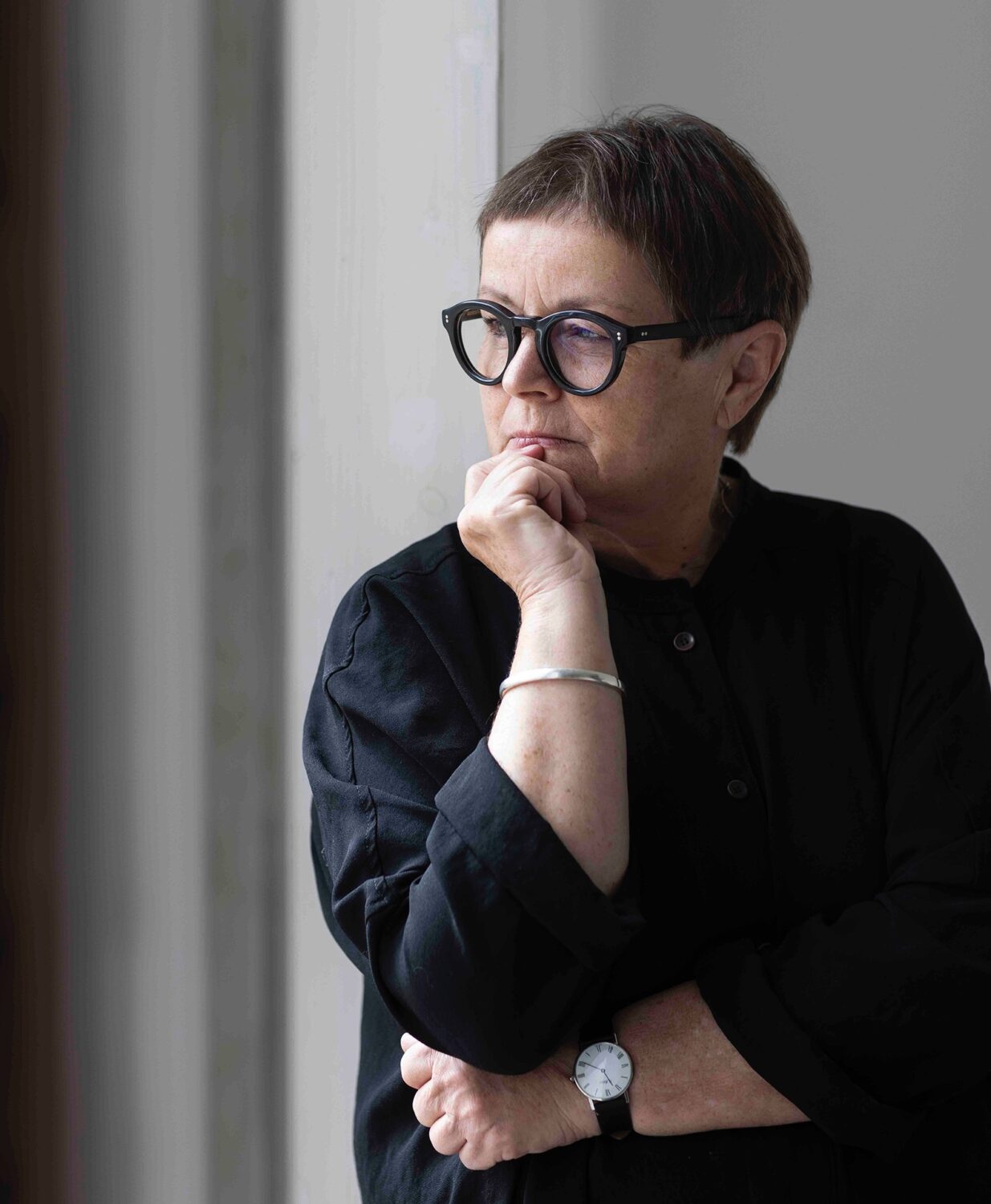
‘Another thing is that craftspeople are masters of the patchwork economy. We piece together our income from various jobs. For many, this is not a problem; it may even be a strength in their working lives, which in this way becomes varied, with tasks that enrich one another.
The problem arises when measuring job opportunities for recent graduates and counting only full-time employment within a specific period after graduation, as far too many then fall through the large gaps in the spreadsheet. Refining one’s own practice and developing one’s business takes several years. This fact is completely absent from the metrics that, in a far too simplistic manner, conclude that designers and craftspeople count as unemployed simply because they do not have a conventional full-time job.’
Sønnichsen’s point refers to a systemic ‘gap’ that, for reasons unknown, has been allowed to slip through the system. In the design sector, it has become a familiar argument that too many people are being trained, and that it takes them too long to find work. At the Royal Academy of Architecture, Design and Conservation, where I myself work part-time on various projects, the school underwent a fairly significant downsizing a few years ago.
The unemployment figures show designers as unemployed, but this is unfair if the figures are based on incomplete measurements. If, instead, we measured how many craftspeople and designers were in the process of building up their businesses and included them in the statistics as entrepreneurs rather than the unemployed, the figures would look significantly healthier and more encouraging. It is rather frightening to think about.
Respect for materials, craftsmanship, the environment and time
There are not only stricter requirements regarding employment, but also an ethical and responsible dimension that newly qualified designers must address. One of the association’s new, younger members, textile artist Emilie Palle Holm, points out:
‘In a world where the need to produce large quantities of new products is no longer essential, new craftspeople and designers face the challenge of creating thoughtfully: developing works and products that are not only inviting and functionally well-crafted, but also sustainable and meaningful.’
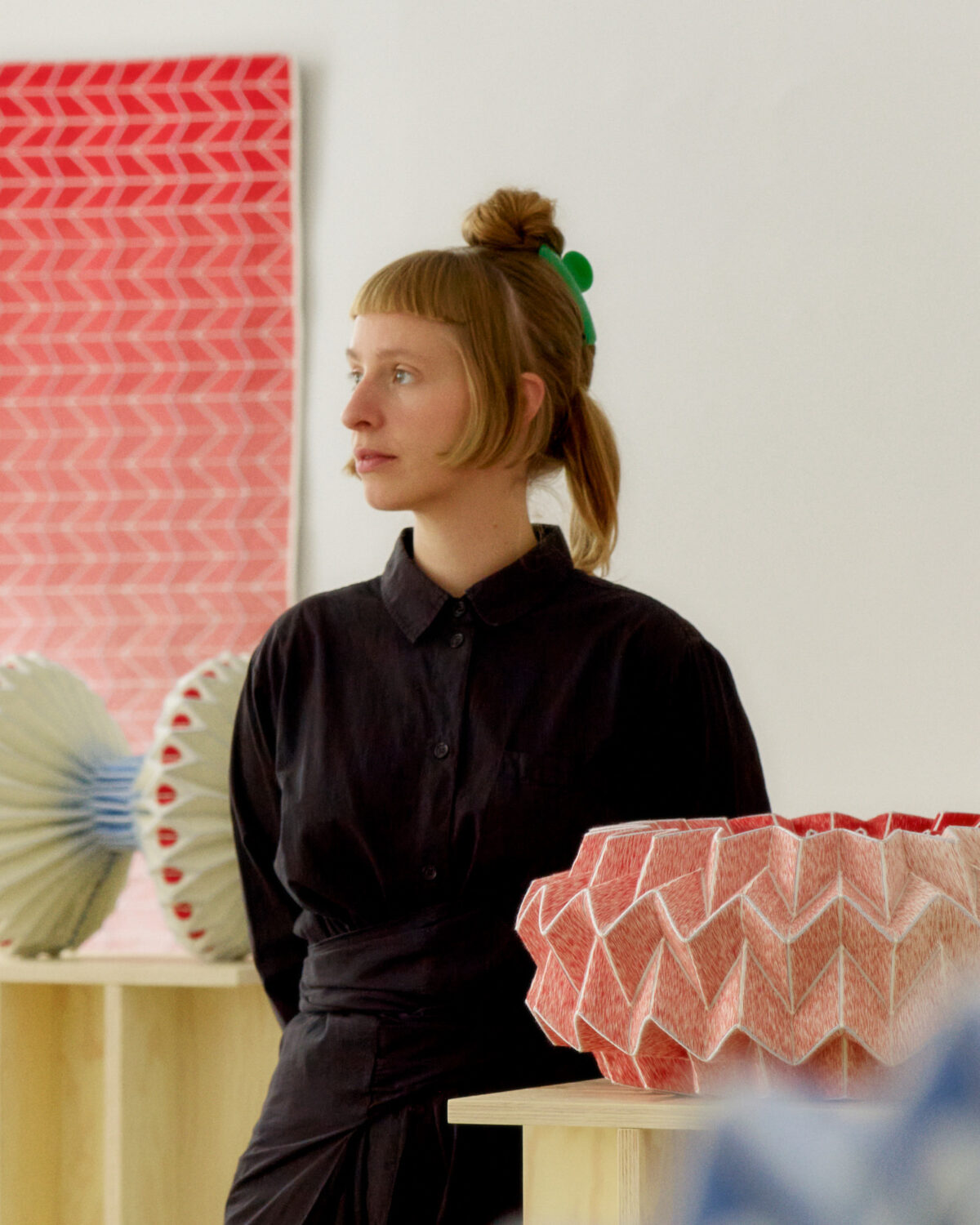
Emilie Palle Holm continues: ‘It is about exploring and developing methods that respect materials, craftsmanship, the environment and time, whilst also leaving room for innovation and experimentation. New graduates must navigate a landscape in which they must grapple with economic realities, environmental demands, social expectations and new technologies.
This requires a balance between tradition and innovation, between the slowness of craftsmanship and society’s constant change, so that every work or product can have a lasting significance – both for people and the planet.’
Let’s build bridges
Mikkel Nielsen is also one of the new, younger members of the association. He is a qualified architect, chair of DKoD’s Copenhagen branch, and has just been elected to the executive committee. Nielsen also dreams of making a political impact in the field, and when asked what he would like to help change, he replies:
‘My mission is to bring construction and craftsmanship closer together in order to create better buildings in Denmark. I am a qualified architect and have worked in architectural practices for many years, witnessing an industry in the midst of an identity crisis, where the architect’s role is gradually losing momentum. Many of the major architectural practices are being bought up by engineering firms, which are increasingly setting the agenda.
One way out of this crisis is to insist on quality in architecture. Here, craftsmanship can play a crucial role. Historically, craftspeople have been integral to the building process and have shaped architecture through façade elements, building details and material processing, from masonry and stone carving to woodwork and site-specific building components. Their contributions have not been superficial additions, but a prerequisite for the architecture’s construction, tactility and identity.’

Mikkel Nielsen continues: ‘I see great potential in re-establishing craftsmanship as a natural part of the building process. Craftsmanship is rooted in materials and functionality, and is therefore directly relevant to architecture. At the intersection of material, function and form lies a common foundation that can enhance the quality of future buildings.’
(Read also Dorte Østergaard Jakobsen’s Speaker’s Corner: I wonder why)
The potential of craft and design
Chair Hanne B Sønnichsen agrees that craft must be brought to life and not merely be something people talk about:
‘The association’s most important task today is to make it clear that craft and design have always been, and must continue to be, an essential part of Danish culture. There are many toasts made to great Danish icons and our reputation as a design nation. That is not enough – these intangible values must be illustrated in ways other than in the famous spreadsheets, so that the sector gains the status it deserves.
These intangible values are precisely what we seek in the modern, consumerist world. A cup bought from an artisan calls for care. It comes with a story of aesthetics: an understanding of materials, a sense of colour and form. It stimulates several of your senses – for example, it is pleasant to the touch. It costs more than a mass-produced cup, but in return becomes part of its new owner’s ‘family’. It has been chosen with care and is therefore looked after and not discarded until it is absolutely necessary. We even put up with both chips and cracks, as long as the cup remains intact.
Products with this background are passed on to the next generation. The planet needs this sustainable approach, for it is being suffocated by overconsumption.’
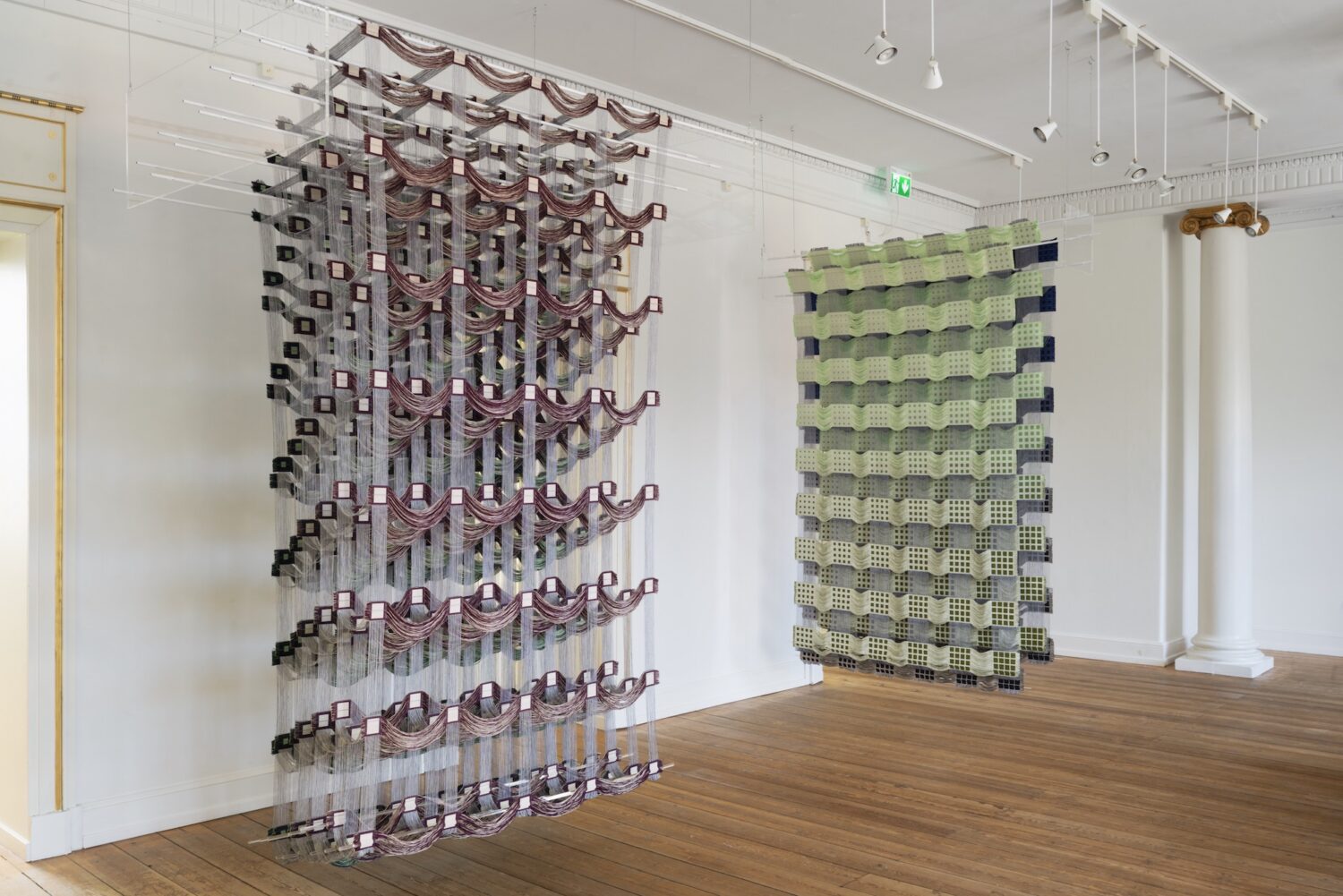
As someone who promotes this field, I agree. It is high time that the obvious benefits embodied and delivered by Danish design and craftsmanship became visible to people other than those of us who work within the field. Emilie Palle Holm emphasises that craft and design possess a unique approach that reimagines tradition and experiments with materials and expression. And isn’t this where people usually say innovation arises? Holm says the following:
‘Danish craft and design are rooted in a strong tradition characterised by a close interplay between high-quality craftsmanship, contemporary design and a detail-oriented aesthetic expression. At the same time, there is a strong awareness of materials and a clear focus on holistic sustainability.
Craftspeople and designers in Denmark carry on both traditional crafts and techniques, whilst actively experimenting with new approaches and further developing methods and practices that challenge and redefine what craft and design are and can be.
This practice emphasises the importance of maintaining an exploratory and experimental approach that constantly challenges materials, techniques and forms of expression, ensuring that the field can evolve in step with a world in constant flux.’
Why does the craft sector have more influence in Norway?
For many years, DKoD has collaborated with the Norwegian Association for Craft Artists (NK) within the Nordic Network of Crafts Associations (NNCA) on shared priorities and international projects. NK celebrated its 50th anniversary in 2025, but its development has taken a somewhat different path from that of the Danish counterpart.
Their organisation is both state-funded and receives income from its members. Thanks to state funding, NK has far greater resources to fight political battles, amongst other things; they also act as an umbrella organisation for two galleries, Format in Oslo and Kraft in Bergen, and have established Norwegian Crafts, which promotes Norwegian craft abroad. In other words, there is more strength behind the Norwegian organisation, which Danish politicians would do well to learn from.
In Norway, all state cultural policy since the 1970s has placed crafts on an equal footing with fine art – as kindred disciplines within the visual arts. In Norway, craftspeople are trained in the same institutions as visual artists, which means they are oriented towards similar goals – and are therefore increasingly merging.
Jorunn Veiteberg is a Norwegian art historian, writer and curator specialising in craft. In addition, she has worked as a researcher, editor and lecturer at several Nordic art schools, and has been a member of the Danish Arts Foundation and the Norwegian Cultural Council. Here, she shares her perspective on why the conditions for craft have developed differently in the two countries.
Why do you think these associations emerged at the same time in Norway and Denmark?
‘I believe it comes down to the fact that these countries were shaped by the same countercultural movements, which were critical of industrial overproduction, consumerism and the throwaway culture, and viewed traditional design and craftsmanship as bourgeois (despite the intention of Arne Jacobsen, Børge Mogensen and Hans J. Wegner to make design democratic).
Furthermore, many craftspeople were active in the women’s movement, where they were encouraged to break new ground and insist on artistic freedom and a less commercial orientation. And it was a time when many new organisations emerged. It was a politically conscious generation which, whether committed or sceptical, established professional organisations.
In Denmark, there has been no tradition of creating large, joint professional organisations within the arts sector, but rather many individual groups. This has made them vulnerable when it comes to making demands of the state.’
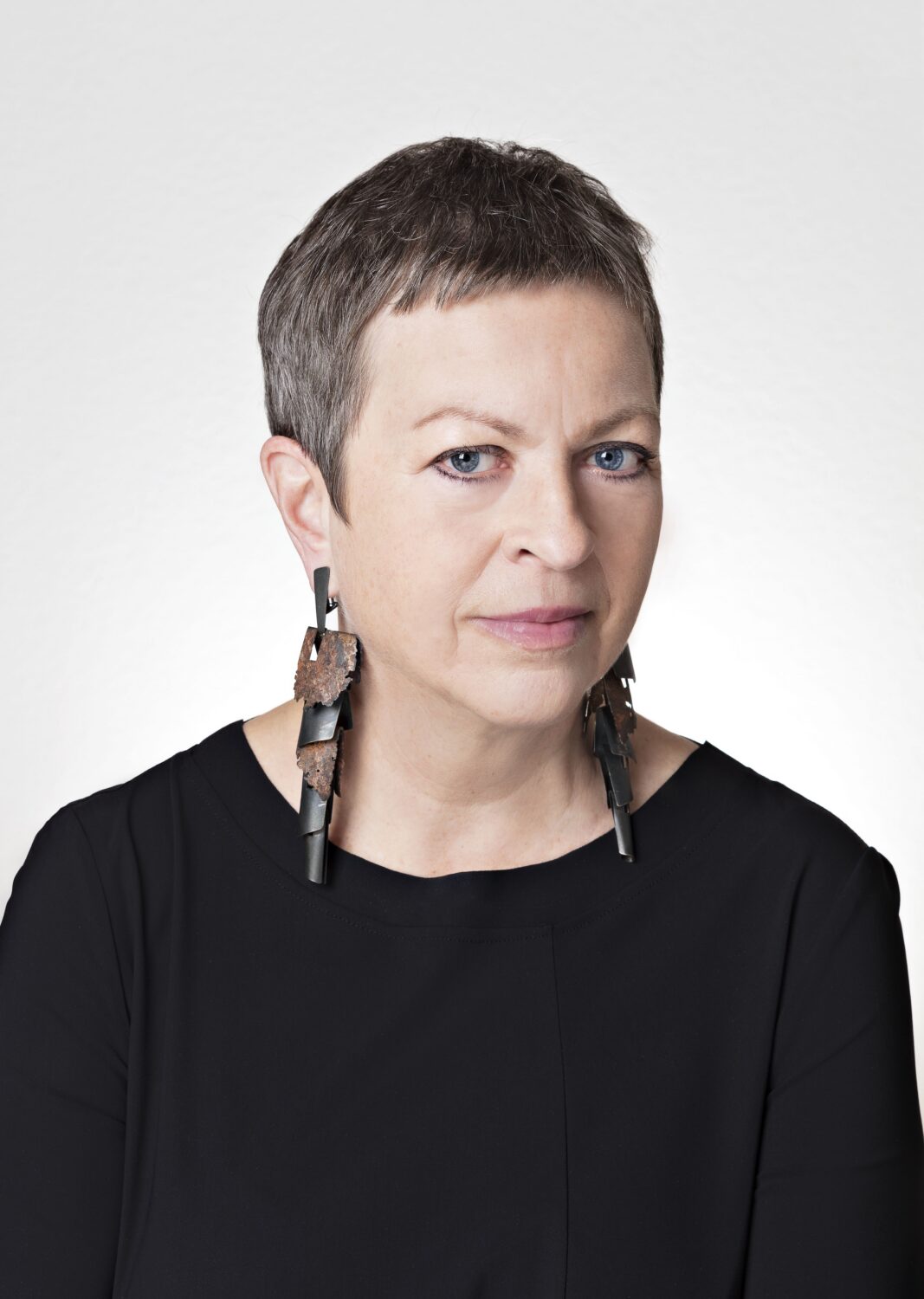
Jorunn Veiteberg continues: ‘The reason Norway has secured such favourable grant and remuneration agreements for exhibitions and the use of art in public spaces is that all the artistic organisations joined forces – visual artists, craftspeople, writers, musicians and others. This is how Kunstneraktion-74 came about in 1974, laying the foundations for increased use of art in society. Through this campaign, the artistic organisations gained the right to negotiate with the state, and this has reinforced the understanding that craft is about art – not about products. This offers great freedom and ambition in terms of artistic expression, innovation and the opportunity to experiment – rather than all the considerations one must take into account when working in the commercial design world.
It has changed the educational programmes (in Norway, ed.) that the functional aspect was downplayed in favour of free artistic expression – and when the bachelor’s and master’s degree structure was introduced, the master’s programme became, to a greater extent, an art education. This has meant that the two fields have merged to a greater extent, but institutionally it has been important that the Norwegian Association for Craft Artists has its own galleries, an acquisition fund and, not least, its own international outreach through Norwegian Crafts.’
‘The most depressing thing I’ve experienced in Denmark was when they closed the ceramics department at Design School Kolding. The symbolic significance of Denmark cutting back on its educational programmes has a major impact, because the standard of ceramics in Denmark is so high. I believe that Norway’s strong state investment in art education and support for artists’ organisations stems from the fact that we are a young nation.
We only gained our independence in 1905. A nation that demands independence must have its own culture, its own institutions and a strong understanding of how important culture is to identity.
Language is key here. I find that you are very unaware of the language situation in Denmark. In Norway, we have two written languages: Nynorsk and Bokmål, but we also have an indigenous people and four national minorities with the right to their own language. This means that everyone must take a stance on language, and it fosters greater awareness at a fundamental level. This can be applied to the arts.
There are deep historical reasons why Norway treats crafts and visual arts as equal art forms. But here one must also bear in mind that Norway has not traditionally had private foundations supporting the arts. This has only emerged quite recently.’
The Future of the Association
At DKoD, there is certainly no shortage of tasks on the agenda. And the political drive to create better conditions and greater visibility for the sector is particularly strong. But in many ways, the times are also on the side of the association and the values the sector stands for. Against this backdrop, it can be said that DKoD, with 50 years of experience behind it, is facing a new era. An era in which, with more members, more young people, greater visibility and a stronger digital presence, it can tackle the many tasks and political ambitions.
The times call for community, and this is precisely where the association also has a significant advantage. The report from the recent annual meeting states that the association must work to strengthen professional communities as a foundation for engagement, visibility and recruitment. This is to be achieved through professional events, activities, knowledge-sharing and collaboration with external stakeholders, amongst other things.
Identification begins with the members – both new and long-standing. Textile designer and artist Emilie Palle Holm is one of the new members, and here she explains how she believes the association can play a significant role for the new generations:
‘Danish Crafts & Design can play a crucial role by supporting the next generations through networking and visibility. The organisation can create platforms where young craftspeople and designers can exhibit their work and meet both an interested public and potential partners. At the same time, the organisation can foster strong networks between established and emerging designers and craftspeople, facilitating valuable knowledge-sharing and enriching mentoring schemes. Furthermore, DKoD can act as a voice for the sector in dealings with politicians and cultural institutions, thereby working to secure better conditions for crafts artists and designers in Denmark.’
Mikkel Nielsen agrees. The association is relevant, but it must also make itself relevant.
‘My focus is on helping to make craft more relevant and bringing it into new contexts – such as the 1.5% system – whereby 1.5% of the construction budget for a (public, ed.) building project must be spent on art. Here, it is natural to ask, why not arts and crafts too? I dream of creating more work for craftspeople, even though it is a long and arduous task. To fight together as a unifying body. I couldn’t do this alone. It is easier to bring about change amongst like-minded people.’
As chair of the association, Hanne B. Sønnichsen has the final word.
‘Right now, arts and crafts are gaining momentum, both nationally and internationally. We must capitalise on this. The historical achievements are indisputable, and we need to strengthen our ranks with new, talented practitioners. That is why training programmes must be prioritised, and sufficient funding must be provided so that we in Denmark can continue to pride ourselves on being leaders in this field.
We must ensure that the vital knowledge and skills acquired through generations of work in the craft can be passed on. For several disciplines, this is becoming the very last chance. There are still practitioners with broad craftsmanship experience, though many are in their final working years. Jewellery training programmes, for example, have already been discontinued. It is often pointed out that what we can no longer offer in training here at home can be found abroad.
In my view, this is far too low a level of ambition. Travelling abroad is good and important, but capitulating on a national level is fatal, especially for a design nation. There must be better conditions for graduates, including when they choose the path of working as a solo practitioner or in a small business. That is one part – the other major task for DKoD is to foster a sense of community.
The community is the place where knowledge is shared, where experiences are passed on, and where one meets one’s colleagues. After decades of increasing individualism, it is clear that we must once again highlight the fact that together we can achieve something different and something greater than when we are alone. Together, we can build networks through collaborative meetings, knowledge-sharing and mutual inspiration.
By working together, we can achieve greater political influence than we could alone, and we can make better use of our resources through shared platforms, thereby reaching a wider audience. Clusters of workshops and practitioners can be found throughout the country. An individual workshop may not have particularly great or measurable value by traditional standards, but together these clusters of workshops, studios and galleries constitute an important magnet for tourism and settlement.’
What are your wildest dreams for the association?
‘My ultimate dream is that Denmark, like Norway, will include arts and crafts in the national budget. This would lay the foundations for the healthy and sustainable development of the sector. At the moment, the association’s finances have two main sources: membership fees and grant allocations. Both sources are uncertain and resource-intensive. It is difficult to plan for the long term when, in practice, finances can vary wildly from year to year. Too large a proportion of our resources is allocated to seeking funding.
A place in the national budget would also signal society’s endorsement of craft and design – a much-needed and important statement.
Next, I dream of a prominent state-funded exhibition venue for craft. A place where, for example, the Biennale for Craft & Design could find a permanent home, and where world-class Danish craft could be showcased all year round. Right now, craft is ‘on temporary visits’ to various venues.
An exhibition venue for craft and design would be a huge pat on the back for those who have carried the discipline through the association’s first 50 years, and for the new talents who will carry the torch forward.’
Facts
Danish Crafts & Design Association (DKoD) is the association for professional craftspeople and designers. The association was founded in 1976.
The association is behind, among other things, Officinet, the Biennial of Crafts & Design, Frue Plads Market, Green Crafts & Design Guide, and Formkraft, and has previously been behind even more initiatives such as the VÆRK Christmas market and the print magazine Kunstuff.