
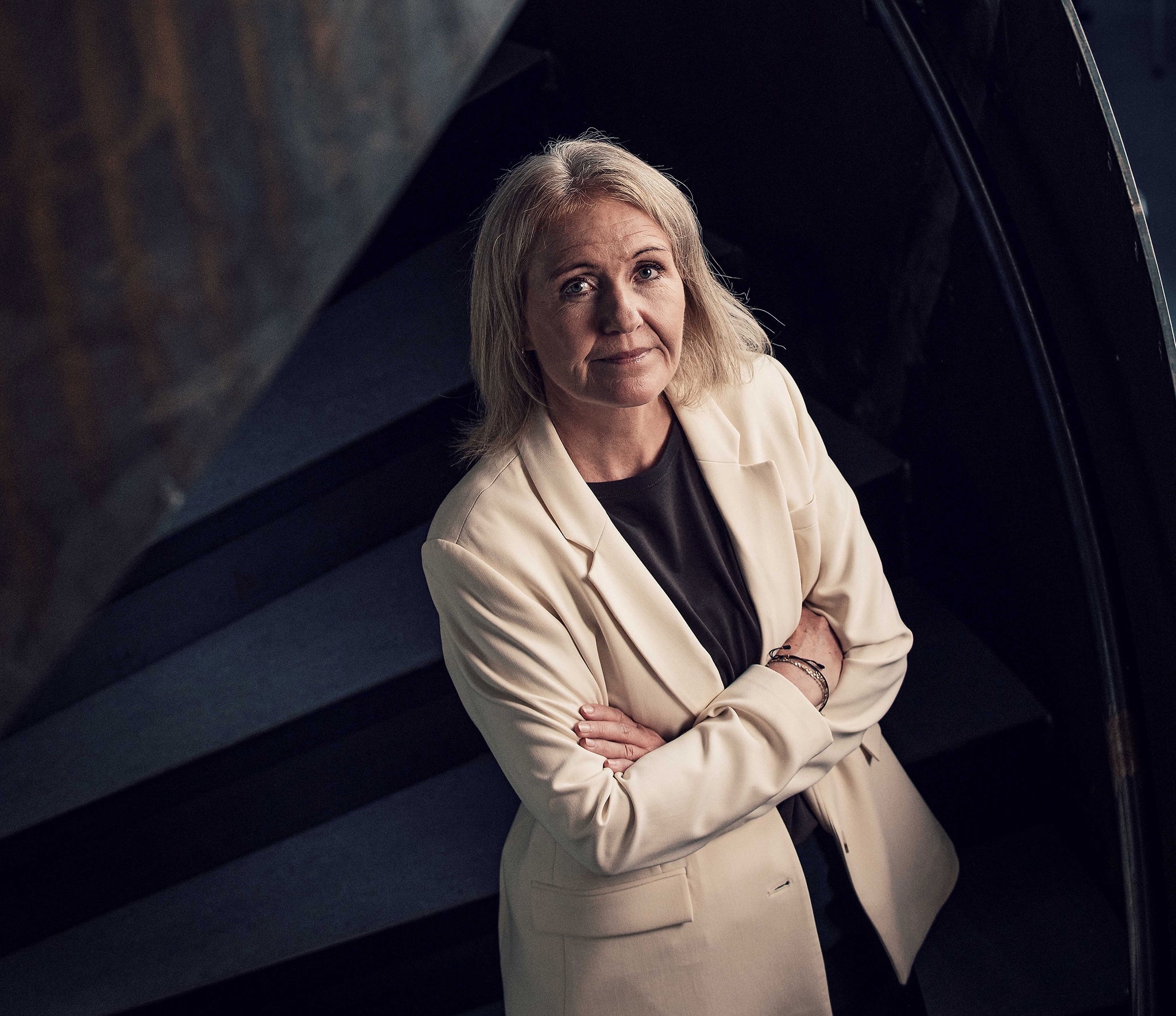
When Carina Christensen started her new job as principal of Design School Kolding in the autumn of 2025, the former Minister of Culture was surprised to discover that Denmark still did not have a new policy for design and crafts.
‘I left politics in 2011. When I returned to the field, I took it for granted that design policy had been continuously updated. It seems obvious that this should be in place, considering how important design is to society in general. I was surprised that there is no new policy in the field of design that reflects our common ambitions and priorities. Design and crafts are a social competence that requires a functioning supply chain.’
The first Danish design policy was adopted in 1997 and updated in 2007. This was before smartphones, and climate had not yet become a central issue for designers, businesses and the state. The then government’s “DesignDanmark” policy focused heavily on internationalisation and the global market. It has been almost 20 years since the overall policy in this area was thoroughly revised.
Carina Christensen, who served in the Danish Parliament from 2001 to 2011, is not the only one calling for an update of design policy with increased focus on design as an important element not only in education but also in business. The Danish Industry Design Board has pointed out the critical nature of the absence of a current design policy in a nation that otherwise celebrates Danish design.
‘If you don’t breathe life into design and crafts, they slowly fade away and disappear. This means that we could lose something valuable if politicians don’t take action. Design and crafts are important social skills. I am aware that the focus these days is on STEM subjects and technical education. Many politicians believe that this is the way forward, but they are overlooking something important,’ says Carina Christensen.

Design schools forgotten
The principal has been lobbying politicians since she took up her post on 1 October 2025. Shortly afterwards, the government presented a proposal on research and innovation. It says that the state will invest 19 billion Danish kroner in this area over the next few years, but design schools are not mentioned. This prompted Carina Christensen to respond with both an open letter and a direct appeal to Christiansborg.
‘It’s a great deal, but where are the artistic/academic programmes? In addition to the large sums of money allocated to universities, there is a pool of 100 million Danish kroner in 2026 and 20 million Danish kroner in the following years, to be shared between institutions such as ours and, for example, production schools. This shows that politicians have completely forgotten what design and design research can do for society. It is an obvious mistake to make such a big agreement and overlook what we do. They are forgetting the importance of design. This needs to be rectified.’
Research and innovation 2026-2029
The government’s proposal for a four-year agreement on research and innovation includes investments of DKK 19 billion. By far the largest share, DKK 6.9 billion, is earmarked for Denmark’s security and defence. The green transition accounts for DKK 6 billion, while health accounts for DKK 3 billion. According to the proposal, DKK 15 billion is earmarked for long-term research and DKK 3.8 billion is set aside as free funds for research and innovation. The proposal from the Ministry of Education and Research focuses on STEM subjects, i.e. Science, Technology, Engineering and Mathematics. Design and design research are not mentioned.
Read document (in Danish)
While politicians have been hesitant to update Danish design policy and allocate funds for further research at design schools, there is no lack of interest from the business community. For many years, Design School Kolding has worked closely with companies such as LEGO. Carina Christensen explains that the state’s contribution to research is supplemented by up to 40 per cent from private actors.
‘I recently met with the Danish Industry Design Board, and they are very interested in design. They are working on the subject and hiring designers. The public sector is doing the same when it comes to creating innovative welfare solutions. There is a need for people who can provide knowledge about human needs.’
In your open letter to the Danish Parliament, you write that politicians underestimate the economic value of the humanities and arts. What do you think this value consists of?
‘Technical subjects can do all the technical stuff, but there needs to be a user focus that takes people as its starting point. Function, form and aesthetics are needed if technical solutions are to work. You can develop the finest gadget, but if no one can figure out how to use it, the technology will not catch on. That is why it is one-dimensional to focus solely on technical subjects. Design, crafts, form and function help to create a strong whole. If this part of the supply chain is not prioritised, we risk losing that knowledge.’
At European level, there is awareness that designers and craftspeople do not just create products, but processes, behaviours and communities. This is evident from a report by the European Crafts Alliance. You yourself have had dealings with both the EU and the Danish government. Why are Danish politicians not picking up on these kinds of signals?
‘I don’t think it’s malicious intent. There are constant tough priorities to be made. There are more elderly people, and we are moving towards smaller youth cohorts. There are many pressing challenges in society. STEM subjects get the most attention, but people forget that design must be included. When I ask politicians whether user-driven innovation and aesthetics are important, no one says no.’
What can the rest of us do?
Carina Christensen does her lobbying work inside the system, where politicians, educational institutions, and the business community talk about the big picture for the future. But what about those who work with design and crafts? What can individuals do to bring more attention to this area?
‘It’s difficult to do anything on your own, but if we all do something, we can make ourselves heard. That’s what’s needed: for us to be heard. I suggest that every time you create a solution, make sure it is communicated. What significance does it have? It could be design and aesthetics or a process that can be placed in a social context. We must not take it for granted that people understand that design and crafts are important.’
How do you convince your former colleagues in the Danish government that they need to start writing a new Danish crafts and design policy?
By reminding them of the things we have been talking about here. We must not take design and craftsmanship for granted and think that we have always been good at it in Denmark, so it will probably continue. We must cherish the field, have ambitions and invest in Danish design. This has been forgotten.
Many people want a new crafts and design policy, but when will it come?
‘We are close to an election, but it would be fantastic if design policy were included in a new government platform. It doesn’t have to be specific. Just saying that design and crafts are important and that the work will be part of the next government term would be a big step forward.’
Bio
Since 1 October 2025, Carina Christensen has been principal of Design School Kolding.
Carina Christensen (born 1972) is a former Minister of Culture, Minister of Transport and Minister for Family and Consumer Affairs. Elected to the Danish Parliament for the Conservative Party. Left politics after the 2011 election.
Since then, she has been CEO of, among other things, GRAKOM, the employers’ and trade organisation for the communications industry, CEO of ITD, the trade organisation for Danish road freight transport, and director of Nordic Innovation under the Nordic Council of Ministers. She is also the former owner of the furniture factory Rugballe Møbelfabrik A/S. Carina Christensen graduated with a Master’s degree in Economics from the University of Southern Denmark in 1999.
Sources
A Study into the Resilience of the Craft, published by European Crafts Alliance, 2025.
Strategiske prioriteter for forskning og innovation 2026-2029, October 2025.
Dansk DESIGNPOLITIK gennem tiderne, published by Dansk Design Center, 2016.
Shape the future
Formkraft and Danish Crafts & Design Association invite you to an engaging paneldiscussion on the political future of crafts and design in Denmark. Designmuseum Denmark will host the event on 1 May 2026. Programme to follow. (the debate will be in Danish)
Formkraft 2026 is published with support from:
Danish Arts Foundation
Ny Carlsbergfondet
European Crafts Alliance – Co-funded by the European Union