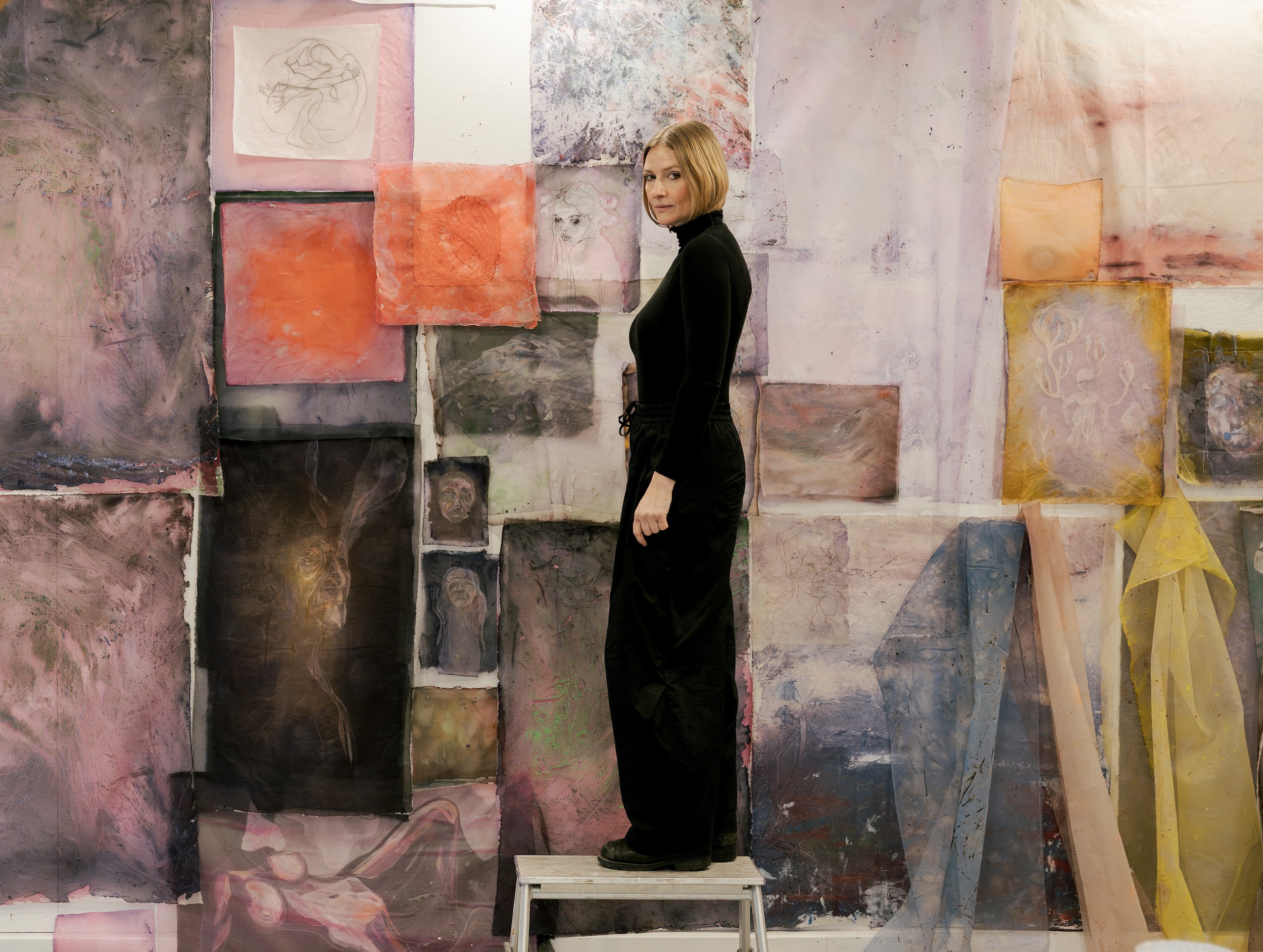
You immediately sense that something special is unfolding when you step into the small, intimate exhibition “The Eternal Smile” at the Design Museum Denmark. On display here are textile works by Nikoline Liv Andersen (b. 1979).
The exhibition is set up in two of the museum’s smaller rooms, and whilst the adjoining galleries are packed with visitors to an exhibition of Japanese posters, many still find their way to “The Eternal Smile”. Here, one is met by tactile art, sensuality and fragility. Works that clearly break with the more austerely designed exhibitions that otherwise characterise the museum.
An immersive textile environment
The exhibition is spread across two rooms. In the entrance room, the exhibition’s theme is presented alongside a film that wordlessly depicts Nikoline Liv Andersen’s artistic process. The film is accompanied by a dreamlike sound piece featuring female vocals, composed by Simon Dokkedal and Nikoline Liv Andersen. The song follows the visitor through the exhibition, creating an atmospheric setting.
The antechamber also introduces the exhibition’s title, ‘The Eternal Smile’, taken from Pär Lagerkvist’s novel ‘Det eviga leendet’. In the novel, a group of dead people seek out God to ask about the meaning of life. God replies that he has done his best by giving them life, but that each individual must find the meaning for themselves.
Motherhood, Life and Death
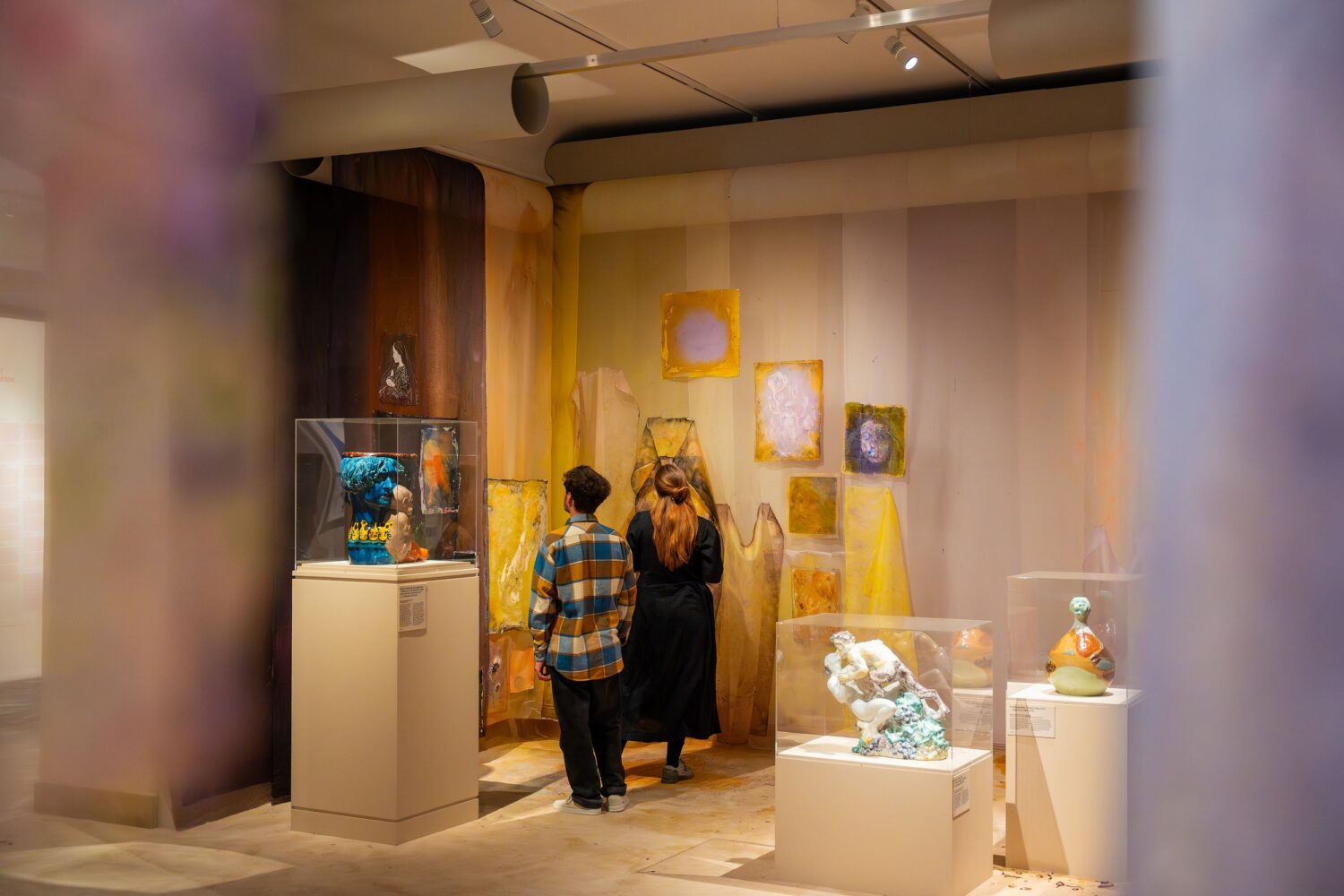
As you step from the entry hall into the exhibition space, you are surrounded by textiles. The floor is covered with a custom-made, thick-pile carpet in the same shades as the artworks.
Silk panels hang in multiple layers from ceiling to floor on all the walls, and smaller works are suspended from the outside of these. This creates an organic, undulating and soft environment.
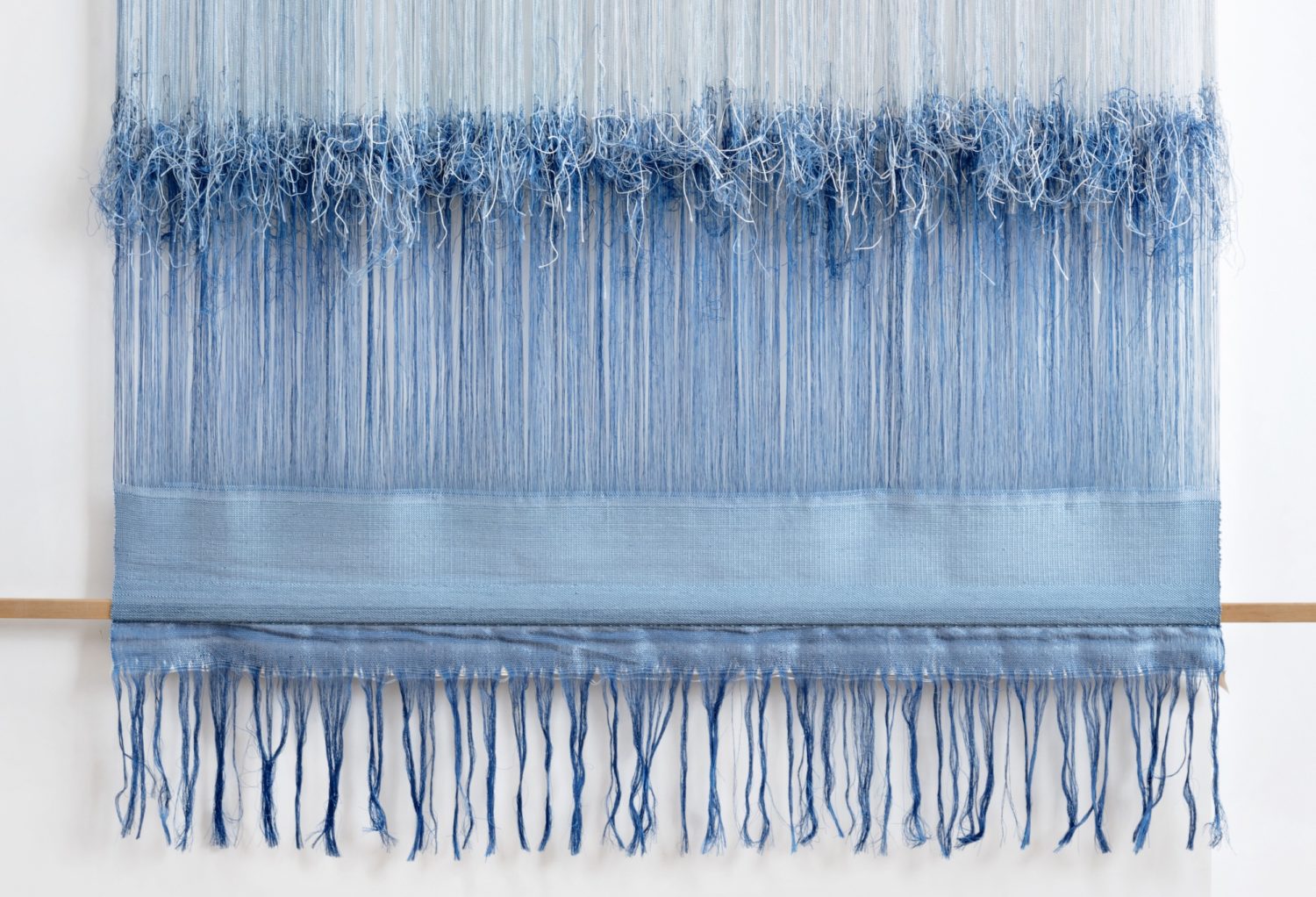
The many works are primarily in warm colours: purple, red, yellow and flesh-toned shades. Loose threads and raw edges are a recurring feature. The unfinished and raw aspects are visible, yet there is no doubt about the high quality of the craftsmanship.
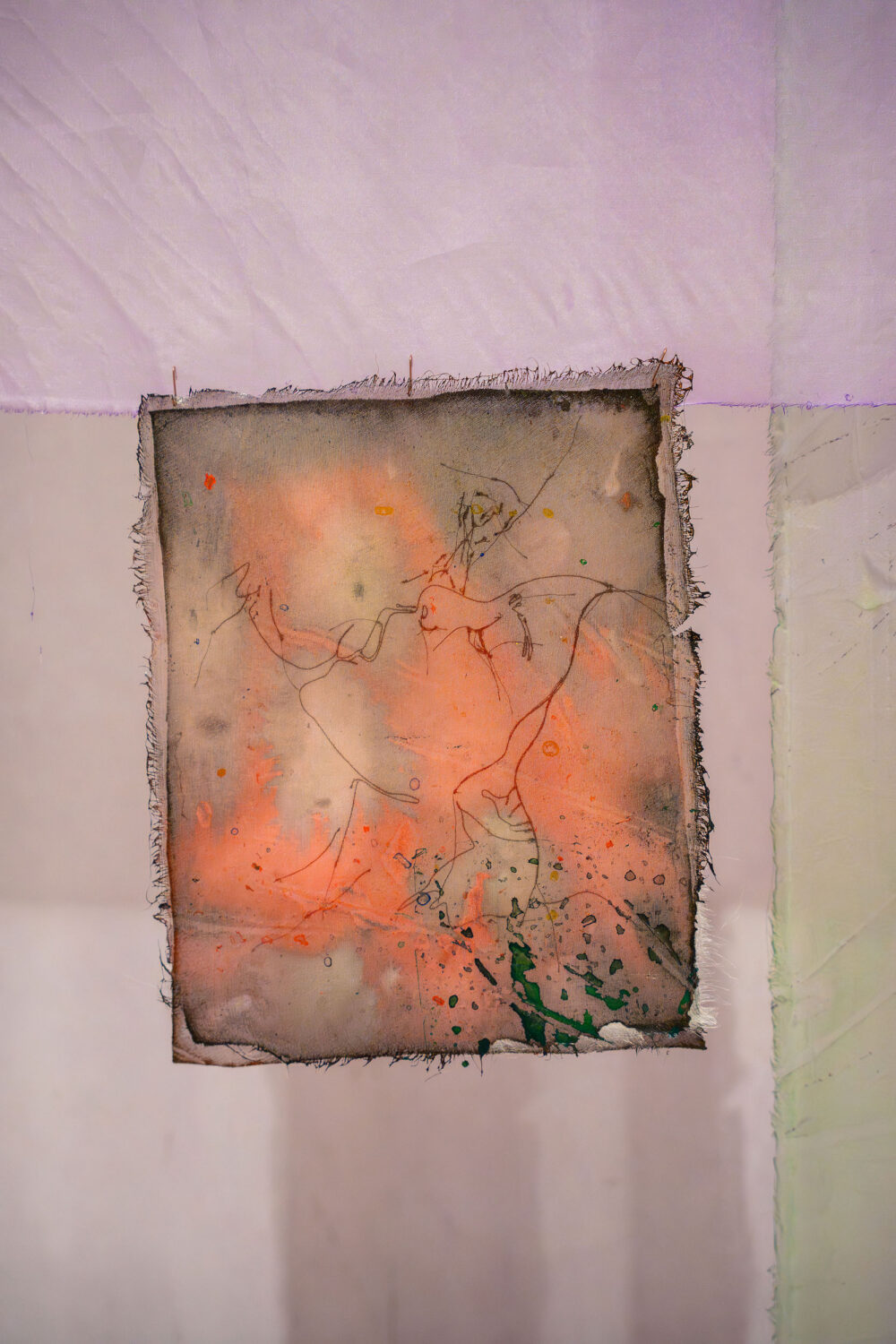
The exhibition brings together a wide range of textile techniques: various forms of embroidery, painted silk and beadwork. It is a must-see for anyone with a passion for textile craftsmanship. With its many beautiful details and subtle touches, the exhibition both challenges and inspires.
Many of the works are light and delicate, featuring flowering plants and nude female figures floating across the textile surfaces. In other works, the colours are deep and powerful.
I am fascinated, for example, by a portrait of a foetus in the womb, shaped like a flower with petals of blood vessels and membranes in blood-red, fiery shades of red, brown and purple. The tiny foetus is a delicate shade of pink. This work combines several textile techniques, such as embroidery and painting.
In another work, a foetus with a long, embroidered umbilical cord floats against a background of several layers of painted silk – like skin – in shades of purple and yellow. Here, the connection between nature and humanity is highlighted.
Other works are portraits of younger and older women. Some of the older women resemble ghosts or sections of photographic glass negatives. Are they anonymous foremothers – or specific portraits of women?

Contemporary versus Collection
The layout of the exhibition in the elongated space, with textiles covering all the walls except the ceiling, creates an intense atmosphere. It complements the exhibition’s themes beautifully: life’s transitions, the female universe, and humanity’s interaction with nature. There are no explanatory texts accompanying the individual works by Nikoline Liv Andersen.
There is, however, text accompanying the ceramic works from the museum’s collection, which are displayed in glass cases in several places around the room. This is a necessity to protect our cultural heritage. Nevertheless, they clash brutally with Nikoline Liv Andersen’s organic textile universe, and I find myself wishing that the works from the collection had instead been placed in the antechamber.
The juxtaposition of older works and modern art is a classic device with a clear intention: to re-actualise and contextualise. Lene Adler Petersen’s jar, in particular, harmonises with Andersen’s experimental textures, whilst Jean René Gauguin’s groups of figures dominate the space. Nikoline Liv Andersen’s works would have been better served standing alone and filling the room.
References to older artists’ works and semi-recognisable portraits of women and children are present, albeit more as a hint. I particularly seem to recognise works by Edvard Munch in a similar colour palette and thematics. However, with the man’s gaze upon the girl, the mother, the woman. Nikoline Liv Andersen, on the other hand, draws these themes back to a female understanding of puberty, the body, motherhood and death.
From haute couture to experimental textile art
Nikoline Liv Andersen is a qualified fashion designer who has completed an internship with John Galliano and worked at the fashion house Fendi. Many of her earlier creations are wild, featuring materials such as straws and feathers, and she gained international recognition when she designed costumes for singer Björk’s Vulnicura Tour in 2015.
She clearly knows her craft, and it is fascinating to see how she has branched out from a commercial career into experimental textile art.
Many niche artistic materials have enjoyed a renaissance in recent years and are once again regarded as a medium for fine art and not solely for craft. This applies, among other things, to textile art. It is powerful and heartening that textiles have been given greater scope, and in Nikoline Liv Andersen’s work, art and craft come together.
An exploration of the facets of life
If you’re interested in contemporary textile art, then this is the place to go. This isn’t an exhibition you can simply rush through. You need to take the time to get up close to Nikoline Liv Andersen’s works and immerse yourself in them. The many fine details and the major themes – life, death, motherhood and the cycle of life – demand contemplation and time to sink in.
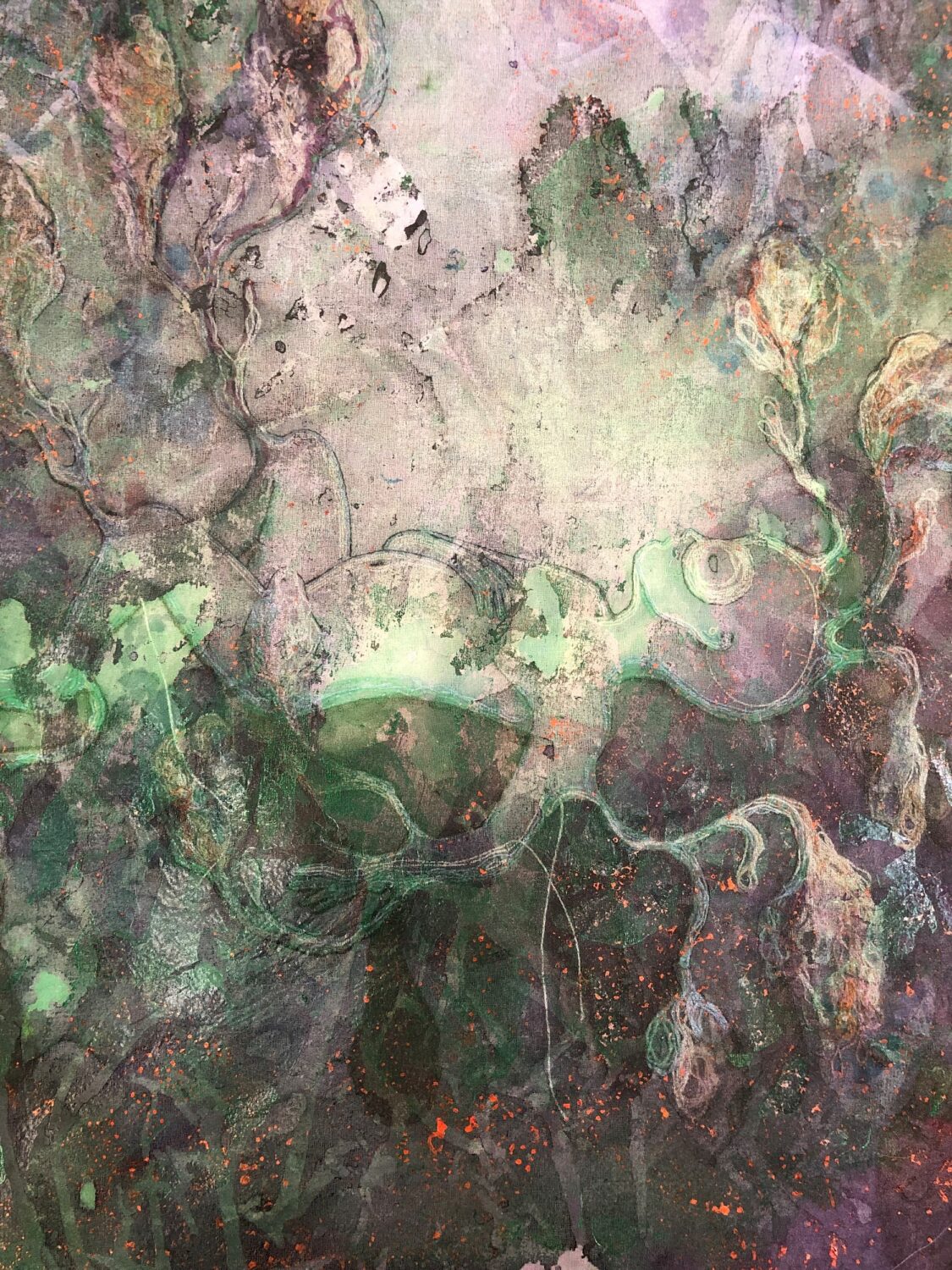
As mentioned, the exhibition’s title, “The Eternal Smile”, refers to Pär Lagerkvist’s novel of the same name. Nikoline Liv Andersen’s works also explore many facets of life. Clues are laid out, and just as the many loose ends and rough edges in the works suggest, she indicates that there is no single, perfect answer. It is up to each individual to find their own meaning.
Facts
Nikoline Liv Andersen’s exhibition “The Eternal Smile” can be seen at the Design Museum Denmark from 1 May to 27 September 2026.
You may also be interested in these articles:
Textiles are making ANOTHER comeback
Textile printing is alive and thriving. As are all the other forms of textile expression that are currently picking up the threads and revitalizing historical waves – from 1960s fibre art to the wild textile printing of the 1980s. The contemporary Danish textile scene is as vibrant as ever.
The social fabric
You only need to look carefully at any piece of textile to see the theme of this issue of Formkraft: fibres + connectedness = textile.
Whether fibres are being spun, woven, crocheted, knitted, braided or felted, the purpose is the same: binding a vast number of tiny fibres close together in formations that now suddenly possess new potential and capacity. The loose fibres become fabric, knitting, felt or mesh, which in turn becomes clothing, sails, fishing nets and upholstery – among many other objects.
Read