«People often make the mistake of undervaluing what is close to home, admiring the foreign, and only valuing what has been bought at a high price.»
Ole Worm, Museum Wormianum (1655)[1]
In most exhibitions, the beholder looks at objects. The beholder has learned not to touch them. They are too valuable. Behind the scenes, a similar logic of care continues. Museum technicians and curators move objects with great care as they catalogue and prepare them for display. Once something enters a collection, it enters the realm of the beholder. The object is often no longer meant to be used as it once was. A golden ring is not used to propose to anyone; a carved drinking horn is no longer raised at a table; a stackable plastic chair is no longer stacked.
In the realm of a collection, the object is additionally translated into data and formatted to fit a cataloguing system, most often according to standard categories defined by the institution. Apart from the name of the maker (if it is known), the data that are usually registered concern the object itself. Most systems record dates, materials, dimensions, types, names of the maker or producer, style, and provenance.
The cataloguing system does not describe the skin of the hands that wove the textile, the sound of the wheel that turned the clay, nor the CNC router that cut the chair. Also, a cataloguing system does not usually take into consideration the object’s potentialities; what the object could become in a different context or in a radically different society. Nor do cataloguing systems register dreams of how an object might be used a hundred years from now. In other words, most collection categories tend to stabilize the object as something belonging to the past.
However, it was not always like this. Collected objects were once understood together with their origins, materials, and making, and dreams of what they could become.
The physician and antiquarian Ole Worm (1588–1654), from Aarhus, Denmark, founded one of the first museum collections in Northern Europe. His project of collecting and mapping Danish and Norwegian natural artifacts and curiosities from near and far was published in the catalogue Museum Wormianum seu Historia Rerum Rariorum in 1655.[2]
Worm’s collection consisted both of a large book and a physical collection arranged as a spatial index, where he exhibited man‑made objects (“artificialia”)—artworks and decorative objects, tools, antiquities (such as relics and archaeological finds) and ethnographic objects from distant places—and strange things from nature (“naturalia”) such as minerals, earths, and shells. In addition came everything that fell outside the categories: deviant things, malformations and other oddities. Worm collected raw materials and natural objects, man-made artifacts, and things perceived as rare, deviant or strange. Collectively, such objects belonged to the category named in the title of his catalogue: rerum rariorum, the genitive plural of res rariores—“rarer things”.
Numerous studies and analyses have been published on Ole Worm as physician, theologian, antiquarian, and collector. Cultural historian and museologist Camilla Mordhorst (2009) and art historian Lisbet Tarp (2023) have written comprehensively about Worm’s collecting practices and the knowledge systems his objects were embedded in.[3] Philologist and historian Henrik Ditlev Schepelern’s doctoral thesis from 1971 was a landmark study on the life and work of Worm,[4] and Schepelern was a part of the first reconstruction of Worm’s museum in 1988, assembled for the exhibition “Between Heaven and Earth” in 1988, presented on the upper floor of the Trinitatis Church in Copenhagen.[5]
In 2003, American artist Rosamond Purcell reconstructed Worm’s museum in her exhibition, Two Rooms,[6] which travelled to the Steno Museum in Aarhus in 2006,[7] and has been on permanent display at the Natural History Museum in Copenhagen since 2011. In 2026, the work of Aarhus-born Worm has been a curatorial starting point for investigating categories and hierarchies in contemporary Danish crafts and design. However, in the exhibition RARIORUM, at RERUM, in Aarhus (September – December 2026), Worm’s collection is not reconstructed in order to preserve the past, but the ethics and aesthetics of his collection are reimagined for the times ahead.
Organizing Objects
Many sixteenth- and seventeenth-century cabinets and Wunderkammern arranged objects according to a mix of visual and symbolic principles, often with great attention to symmetry and spatial effect.[8] In Worm’s display, however, the organization of objects formed part of an early modern knowledge apparatus, as Worm’s Museum Wormianum was both a printed book and a physical space of carefully organized objects.[9]
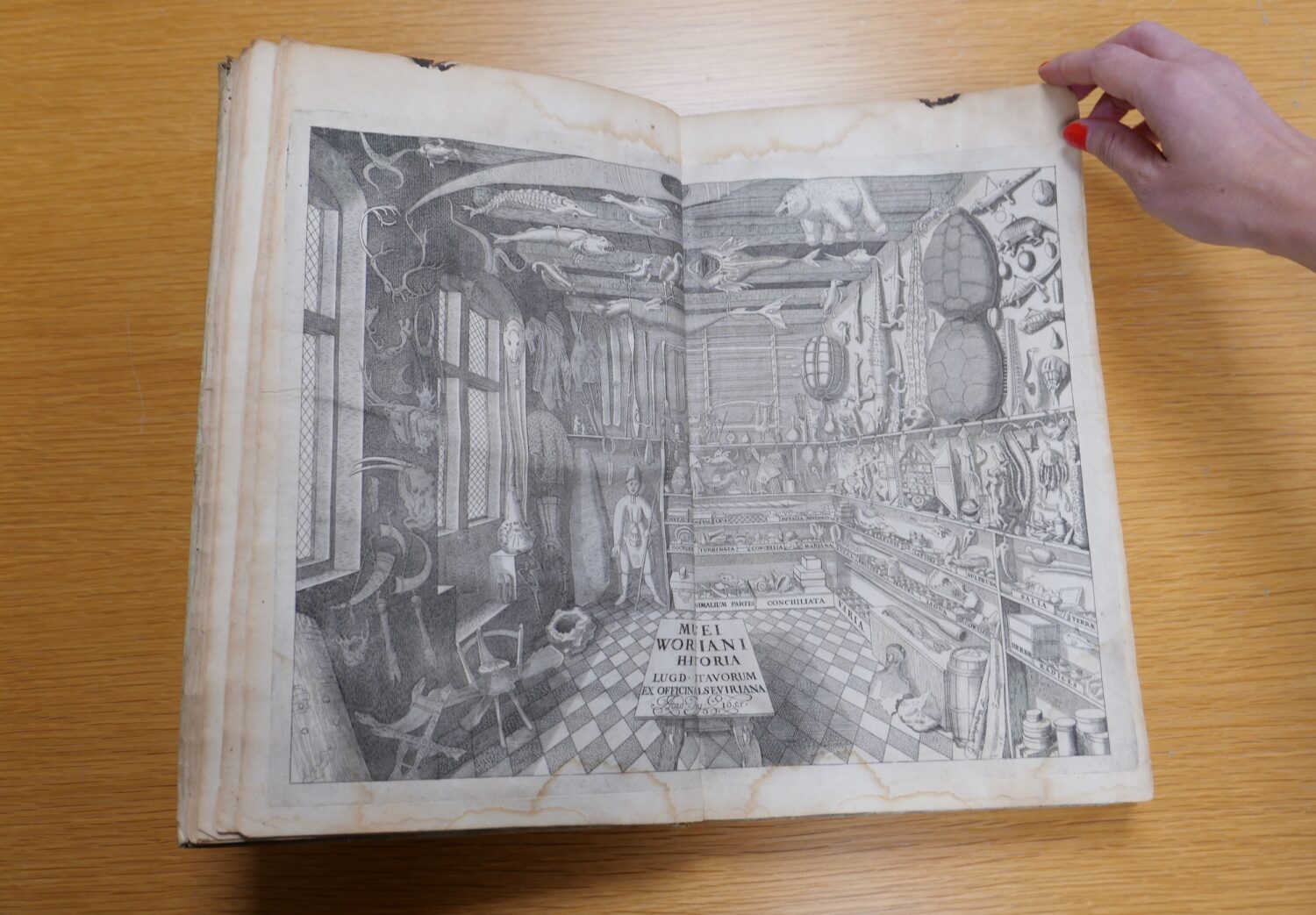
In Genstandsfortællinger (2009), Camilla Mordhorst argues that Worm’s catalogue and display are unique in that it can be verified that the arrangement of objects in the room correlated closely with the written catalogue. This is possible because of the now world-famous engraving included in the publication: a metal engraving by G. Wingendrop, whose name appears in the lower right corner as if inscribed on one of Worm’s collected objects (fig. 1). The engraving shows a rectangular room that presumably formed part of Worm’s own house. With 215 visible objects, it is often regarded as one of the earliest realistic visualizations of a museum interior.[10]
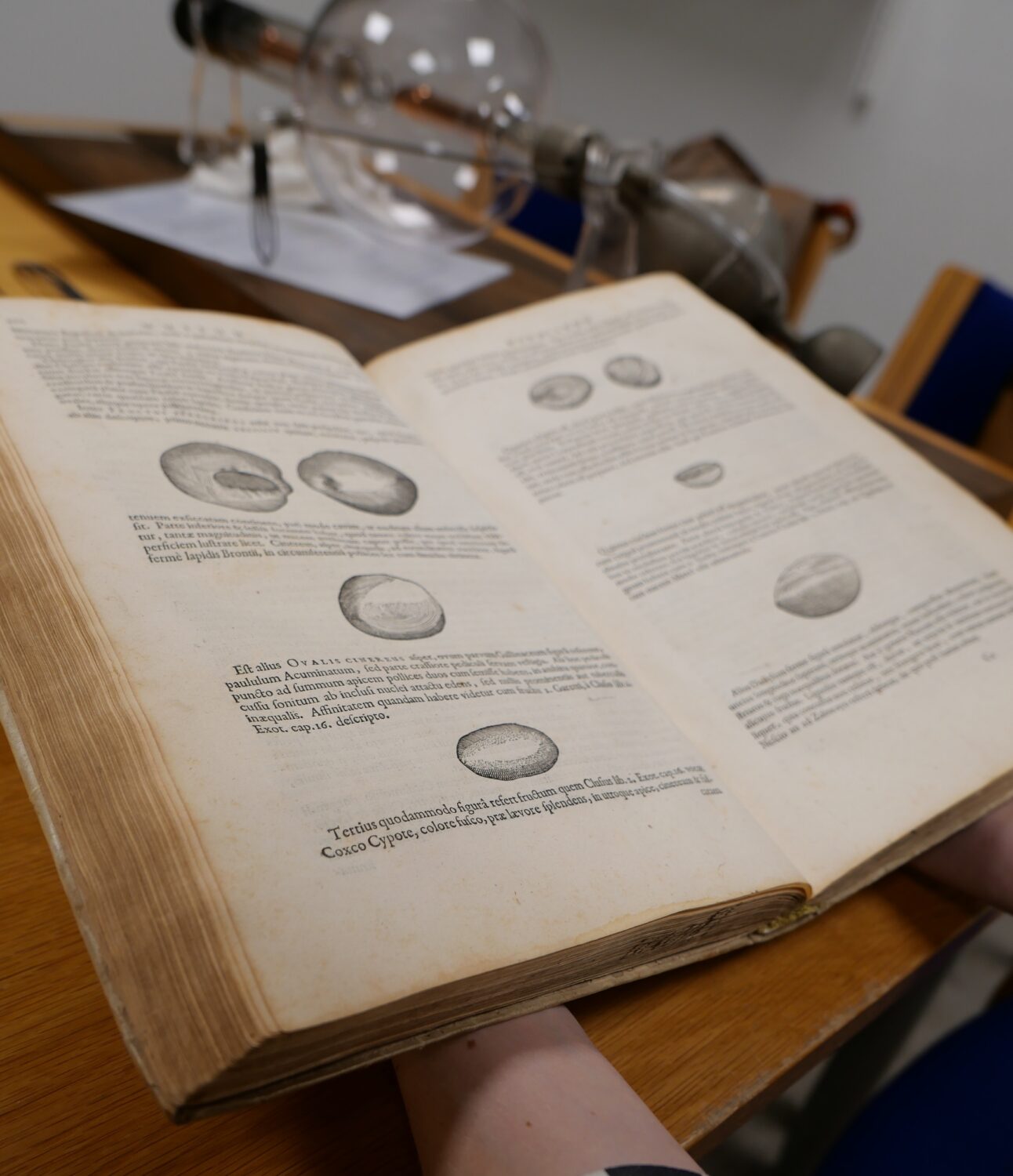
The first pages of the extensive 400-page Museum Wormianum are dedicated to earth, and the spatial narrative of the engraving likewise begins in the lower right corner, with the first box labelled terrae, namely earth.
Worm’s museum thus begins in the ground. It begins with lumps of earth. Earth is the fundamental element on which all other life depends, yet at the same time it occupies the lowest position in Worm’s material hierarchy, which is shaped in part by Aristotelian thought.[11] His collection included several kinds of earth, clay, and stone, and in the written catalogue these materials were indexed according to three different but overlapping principles.
The first was based on sensory and physical qualities: how a mineral, stone, or lump of earth felt in the hand—whether it was heavy or light, porous or dense, soft or hard, lean or fat. Worm then differentiated these materials further by color—“white, black, yellow, red, purple, green, blue, ashen, brown”—as well as by taste, such as “sweet, rich, sharp, astringent,” and even by smell. Shape also mattered: some pieces of earth appeared “like slabs,” while others had more irregular forms. Only after this tactile, visual, gustatory, and olfactory considerations did Worm turn to a more contextual criterion: place of origin.
In the catalogue, he emphasized “the places from which they are dug up,”[12] as in the case of Samian earth (a white clay from Samos, Greece). A third principle was use: medicinal earths, fullers’ earths, potters’ clays, and painters’ pigments. Yet in Worm’s material logic, the same earth could serve several functions and, in the written catalogue, therefore appear across several categories at once.
This is what makes Worm’s organization of objects so suggestive today. His collection was not ordered according to one stable classificatory system alone, but between sensory properties, material origin, and potential use. In that sense, organizing objects was not simply a matter of putting things in place.
It was a way of producing knowledge about how matter moves from ground to hand, from substance to tool, from locality to exchange, from material to medicine, pigment, or artifact.
In Museum Wormianum, earth, fossils, tools, antiquities, ethnographic artifacts, and artworks were repeatedly described in relation to where they were dug up or found, and to what they do: to bodies, to beliefs, and to everyday practices. By contrast, from the later seventeenth century onward, and more systematically in the eighteenth, collections increasingly came to be organized according to classificatory principles that privileged visible characteristics and stable categories.[13]
Worm’s organizational logic is useful today. In the contemporary art field, educational institutions, funding structures, and professional organizations often still favor clearly defined categories: fine art, craft, design, photography, performance, or literature. Yet many contemporary practices move between such categories, and interdisciplinary collaboration has become integral to how many artists and makers work.
Across crafts, design, art, and architecture, one finds practices in which material qualities and histories are a conceptual point of departure, where the ethics of making is central, and where the work of the hand remains a recurring focus. Seen from this perspective, Worm’s collection offers more than a historical curiosity. It suggests a way of organizing objects that does not lock them into a single identity but allows them to also become something else.
Regenerating Places
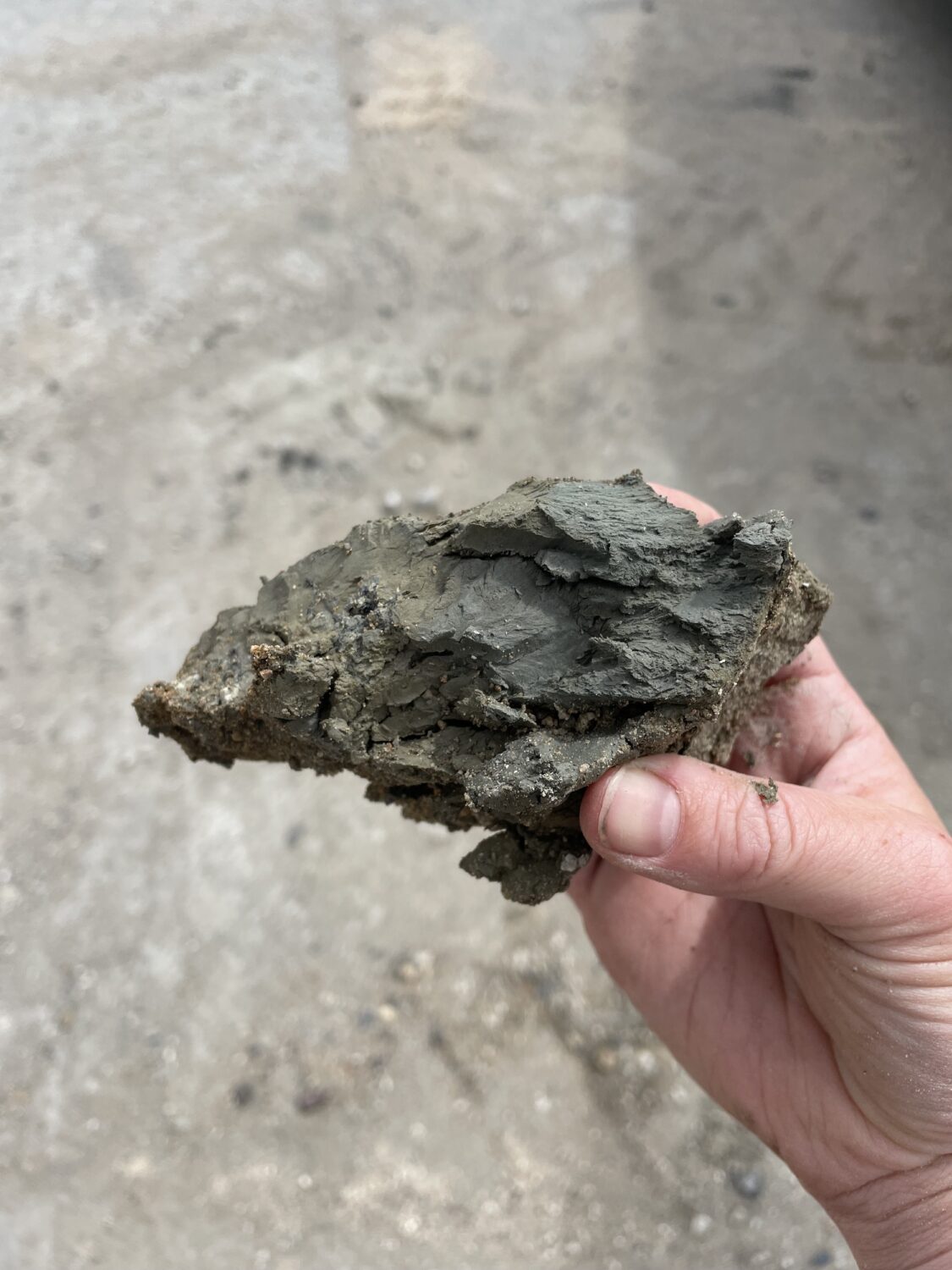
As in Worm’s collection, RARIORUM, begins with a strange lump of earth. This particular lump was dug up in Sydhavnen, Aarhus’s old port district. Like many European cities in recent decades, Aarhus has followed a familiar model of urban regeneration in former industrial areas. Sydhavnen is one of the city’s current redevelopment zones.
To regenerate a place, earth is first excavated and displaced. Over the past five years, tons of soil have been removed from the ground at Sydhavnen to make room for underground parking garages beneath new high-rise buildings.
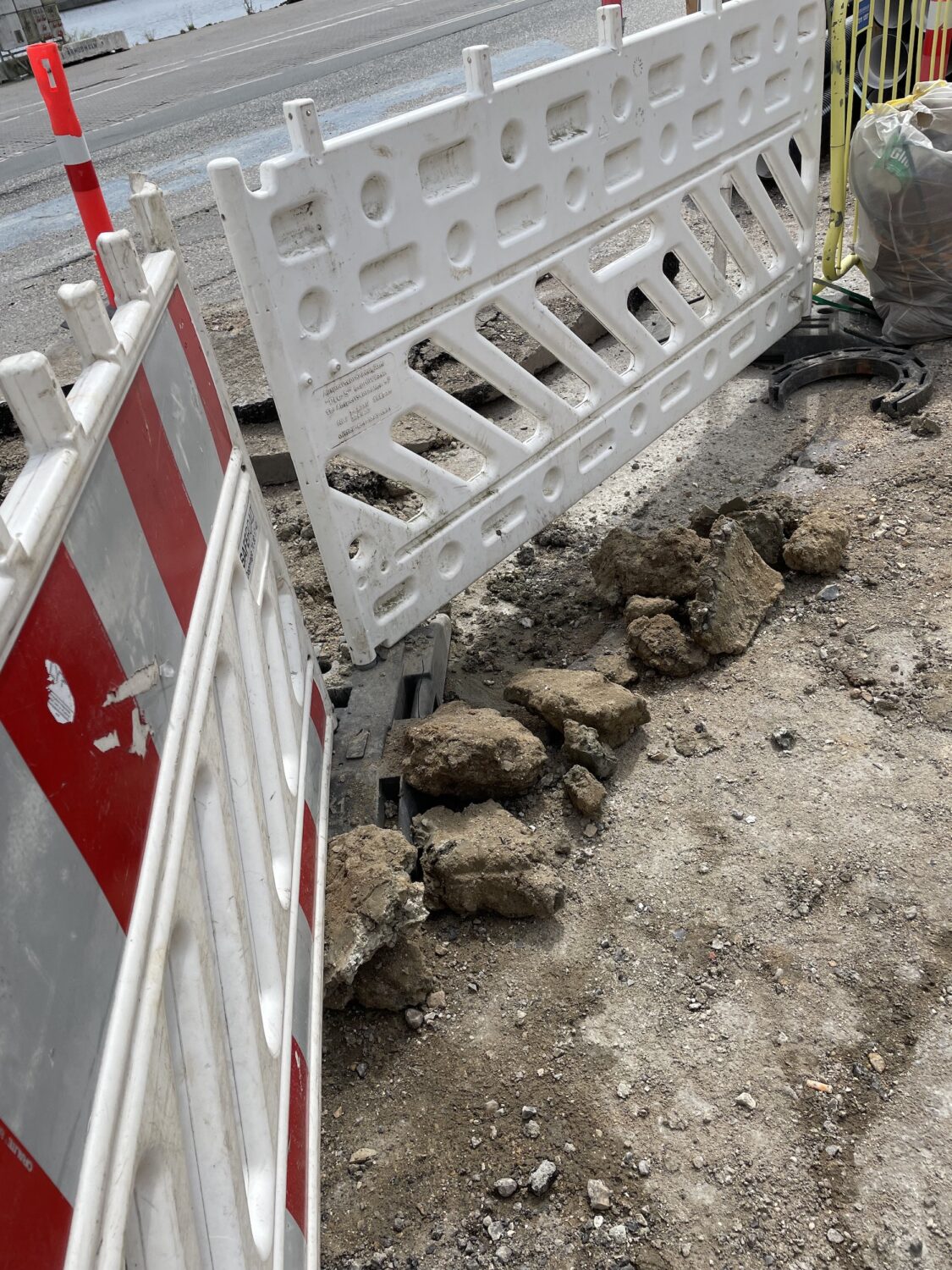
In the summer of 2026, artist Silje Kjørholt (b. 1990, Norway) walked through the construction sites of Sydhavnen searching for clay. In a ditch made for new pipes, she found layers of blue clay—the clay that in recent years has often been treated as construction and demolition waste.
The earth was dirty, lumpy and dark blue-green. Some lumps were porous and dry, others slightly damp and heavy. Some were soft enough to be kneaded – firm and smooth.
Kjørholt loaded the clay into her car, left a handwritten note explaining that she had taken some clay from the site, and drove back to Norway to dry it and to investigate how she will use it.
In October 2026, the lump of earth will return to Aarhus, where it will be activated in Kjørholt’s clay performance, as part of the RARIORUM, display.
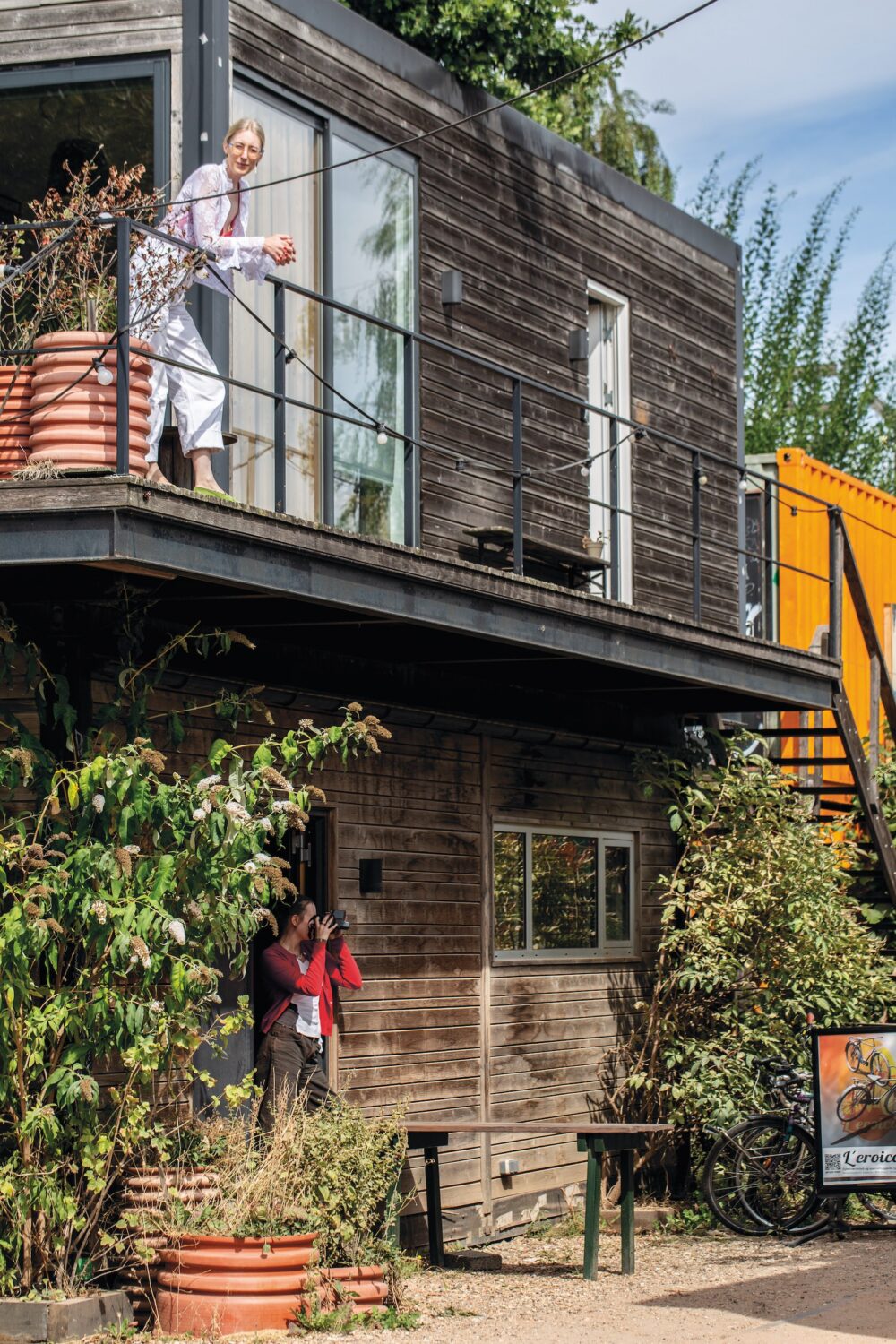
The new gathering place for crafts and design in Aarhus, RERUM, is itself situated in a reused container at Institut for X, a bottom-up, site-specific platform for artistic and creative practices. Institut for X emerged as part of the regeneration of the former train cargo area, Godsbanen—after goods transport by rail largely became obsolete around year 2000. But the containers on site never left. Instead, artist-run spaces and workshops gradually took shape within them. RERUM, now occupies one of these containers.
The design of the shipping container changed the world. As a standardized object, it made the large-scale circulation of mass-produced goods cheaper, faster, and more efficient. As Marc Levinson argues in the book The Box (2006), the transformative power of the container did not, however, lie only in its design as an object, but in the logistical system it enabled.[14] Standardization reorganized transport, labor, and infrastructure, and as the container became dominant, it made the working communities of ports and cargo train stations obsolete. Today, containers cross the oceans by the million each week, carrying everything from medical equipment to cheap plastic commodities.
Yet the container that houses RERUM, does not belong to this logic in any simple sense. It is not a standardized steel shipping container built for the anonymous movement of goods in transit.
The rectangular room is made of wood and originally served as a gathering place for railway workers. It was a container for people rather than for goods: a break room, a place for coffee and conversation.
In reusing the container as a new place for crafts and design, RERUM, in some sense reclaims that earlier, place-specific social function. It becomes again a place of gathering: for working artists, designers, and craft practitioners; for discussion, disagreement, collaboration, and exchange.
What once belonged to an infrastructure of transport now supports a small-scale, collaborative cultural economy. In that sense, the global economy is not simply opposed here, but contained, slowed, and redirected within another set of values and within clear limits. In RARIORUM, this logic of containment forms the basis of the exhibition’s method of working with place.
Activating People
When Ole Worm built his collection, people rather than money were its primary agents. Worm began acquiring objects through personal encounters, and later, as his reputation grew, friends, colleagues, and contacts across the continent contributed specimens and rarities, as gifts, to his collection.
Worm’s museum was thus sustained by a social network. And although Worm became a powerful figure in Denmark toward the end of his life, his collection was not an instrument for staging royal grandeur or national identity.
As Schepelern notes, “Worm’s collection, though formed within a kingdom, was not built up under royal protection.”[15]
Worm’s museum was established in continuation with an earlier collection paradigm, one structured less by centralized power than by friendships, curiosity, learning, and exchange. In later centuries, such cultures of collection and display emerged as increasingly entangled with imperial classification and colonial extraction. But although people were the main actors that formed his collection, as noted by Schepelern, “[Worm’s] museum interior betrays no attempt to gratify the visitor’s eye.”[16] Visual pleasure for beholders was not the goal for Worm’s display.
The term behold offers a suggestive way of thinking about this. In modern usage, the beholder is usually understood as the gazing subject, the one who stands before an object and apprehends it visually. Yet older meanings of behold and related verbs of holding and keeping suggest a different emphasis: not only looking at, but also holding to, retaining, or belonging with.[17] This helps clarify what it means for an exhibition to activate people. It does not simply provide things to be gazed at.
In RARIORUM, the beholders are the ones who hold, contain and belong to the growing collection of strange things. The exhibition gathers people into relations that must be maintained: artists, makers, and organizers, hosts and visitors, works and waste, conversations and disagreements.
Questioning Time
The same four categories—objects, place, people, and time—structure this essay and RARIORUM, the exhibition it accompanies. Together they name the basic conditions through which exhibitions take shape. And like Museum Wormianum, which was at once a book and a room, essay and exhibition are two versions of the same arrangement.
Yet the categories are neither neutral nor stable: objects organize knowledge, place regenerates material and social relations, people activate the exhibition through participation and care, and time is not something the exhibition simply inhabits, but something it actively carries forward.
To behold an exhibition takes time; it unfolds through duration. But RARIORUM, also stretches both backward and forward in time. It looks back to Worm’s collection and its material, open-ended logic, while also projecting itself into the future. The exhibition is not complete when it opens. In a sense, it has only just begun. In RARIORUM, a new collection of rare, deviant, and strange things unfolds in real time.
Unlike Worm’s collection, however, this is not the project of a single authoritative collector. Instead, the collection is formed collectively by members of The Danish Crafts & Design Association. Members are invited to contribute their own “rarea” over the course of the exhibition period: rare objects, strange materials, small and large deviations—anything that reveals something about how craft artists and designers in Denmark work today.
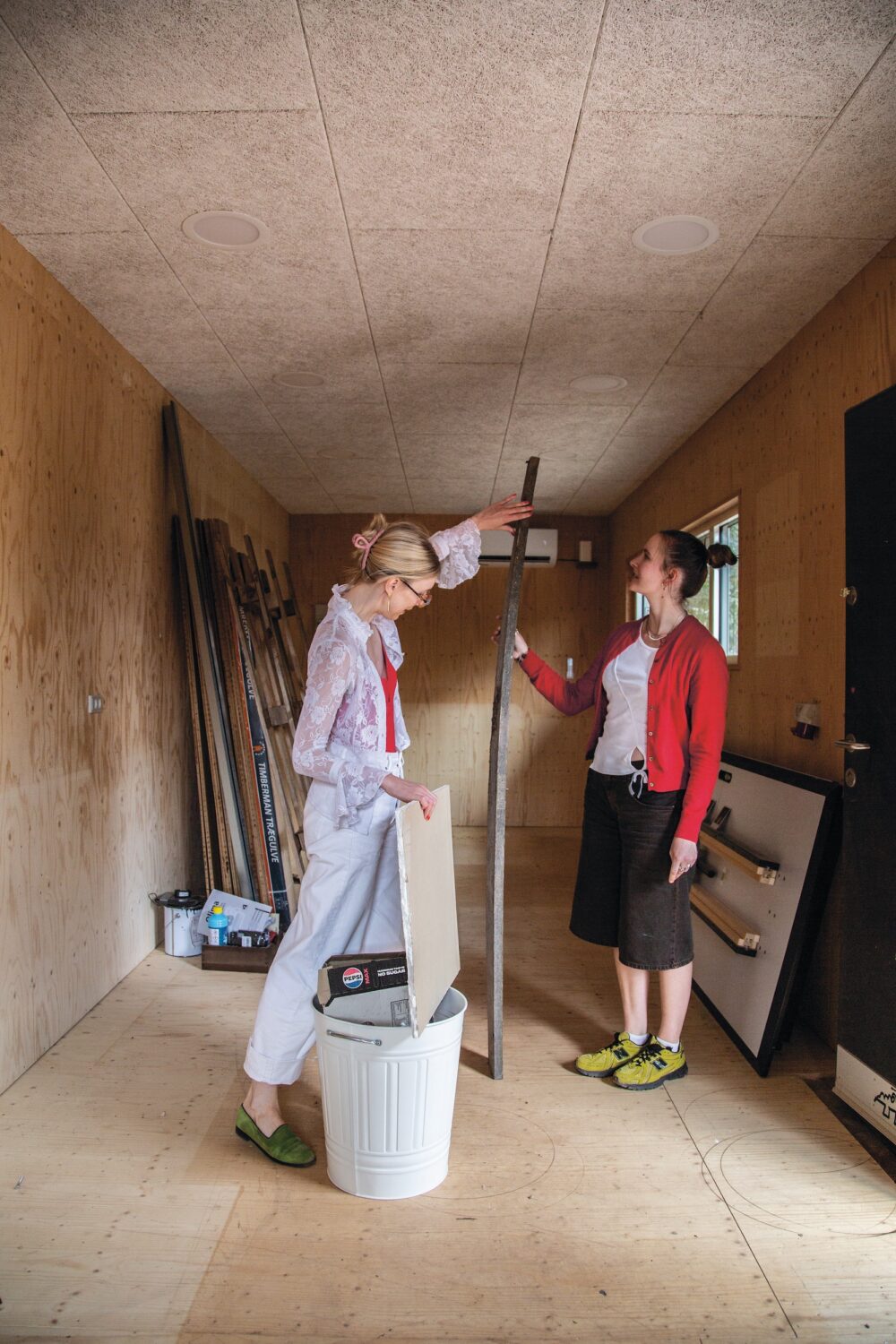
These may include artworks, but also overlooked or discarded things: a broken weaving stick, a ball of yarn, a unique object, or another material fragment that would not normally enter exhibition space. In this way, RARIORUM, does not simply display finished works, but gathers the broader ecology of contemporary practice, which changes as the collection grows, and as its systems and methods emerge through use.
As part of the exhibition, the objects on display are registered. The register holds not only things, but people, processes, and possible futures. The rectangular room fills for as long as there is space for more. And through this growing format, RARIORUM, with its deliberate comma, marks a pause rather than a full stop, an anticipation of what is to come
Facts
RARIORUM (3. September 2026 – 20. December 2026) is curated by Ingrid Halland, Associate Professor of Aesthetics and Culture at Aarhus University, with Anna Lena Raab as curatorial assistant. The exhibition is a part of the research project Extraction and Aesthetics (funded by the Novo Nordisk Foundation 2026–2030), led by Halland, which investigates material hierarchies—in relation to objects, systems and methods—within art, architecture, crafts, and design.
Footnotes
[1] Ole Worm, Museum Wormianum seu Historia Rerum Rariorum, Tam Naturalium, quam Arificialium, tam Domesticarum, quam Exoticarum, quæ Hafniæ Danorum in ædibus Authoris servantur (Leiden: Isaac Elzevir, 1655), 16. Latin: “Vulgare vitium est, propria despicere, peregrina admirari, et nihil nisi magno pretio emptum aestimare.” This Latin quote is translated into English by Stig Oppedal. This essay was greatly improved with the help of Lisbet Tarp and Stig Oppedal.
[2] In English, the full title of Worm’s book is Museum Wormianum, or A History of Rare Things, Both Natural and Artificial, Both Domestic and Exotic, Which Are Kept in Copenhagen of the Danes, in the House of the Author.
[3] Camilla Mordhorst, Genstandsfortællinger: Fra Museum Wormianum til de moderne museer (København: Museum Tusculanums Forlag, 2009); Lisbet Tarp, ”Museum Wormianum: Collecting and Learning in 17th Century Denmark,” in: Gary D. Rosenberg and Renee M. Clary (eds.), Museums at the Forefront of the History and Philosophy of Geology: History Made, History in the Making (Boulder, Colorado: Geological Society of America, 2018); Lisbet Tarp, “Fertile Stones,” in: Marjolijn Bol and Emma C. Spary, The Matter of Mimesis: Studies of Mimesis and Materials in Nature, Art and Science (Leiden: Brill, 2023); Lisbet Tarp, “Marble and Marvel Ole Worm’s Globe and the Reception of ‘Nature’s Art’ in Seventeenth Century Denmark,” Kritische Berichte, (3)(2013): 8–23. The monograph The World of Worm: Physician, Professor, Antiquarian, and Collector, 1588–1654 (2022) by Ole Peter Grell situates Worm at the intersection of early modern science, medicine, and museum history.
[4] Henrik Ditlev Schepelern, Museum Wormianum. Dets forudsætninger og tilblivelse (PhD diss. University of Copenhagen, 1971).
[5] Henrik Ditlev Schepelern, “The Museum Wormianum Reconstructed: A Note on the Illustration of 1655.” Journal of the History of Collections 2(1)(1990): 81–85.
[6] Purcell’s reconstruction, titled “One Room,” debuted in her solo exhibition Two Rooms at the Santa Monica Museum of Art.
[7] See Hanne Teglhus & Morten A. Skydsgaard (eds.), Ole Worm – Liv og videnskab (Aarhus: Steno Museet, 2006). Published along the exhibition Refleksion – Ole Worms kabinet og renæssancen at Steno Museet. Purcell’s reconstruction, titled “One Room,” debuted in her solo exhibition Two Rooms at the Santa Monica Museum of Art.
[8] Laura Laurencich-Minelli, “Museography and Ethnographical Collections in Bologna during the Sixteenth and Seventeenth Centuries” in Oliver Impey and Arthur MacGregor (eds.), The Origins of Museums: The Cabinet of Curiosities in Sixteenth and Seventeenth-Century Europe (Oxford: Ashmolean Museum, 2001), quoted in Camilla Mordhorst, “Systematikken i Museum Wormianum.” Fortid og nutid (3)(2002), 205.
[9] See Camilla Mordhorst, Genstandsfortællinger: Fra Museum Wormianum til de moderne museer (København: Museum Tusculanums Forlag, 2009) and Mattias Ekman, “The Birth of the Museum in the Nordic Countries – Kunstkammer, museology and museography.” Journal of Nordic Museology (1)(2018): 5–26.
[10] The engraving has been confirmed to be a relatively realistic depiction of one room—or part of Worm’s collection—which counted 1663 objects in total at the time of his death. “This engraving constitutes, perhaps, the only fully reliable representation of a seventeenth-century museum interior.” Henrik Ditlev Schepelern, “The Museum Wormianum Reconstructed: A Note on the Illustration of 1655.” Journal of the History of Collections 2(1)(1990), p. 81. See also Camilla Mordhorst, “Systematikken i Museum Wormianum.” Fortid og nutid (3)(2002), 206.
[11] Artist and researcher Marte Johnslien has investigated material hierarchies in Occidental early modern aesthetics, see the artistic research project ‘TiO2: The Materiality of White (2022-26)’, which seeks to bring the white colourant titanium dioxide back to its earthly origin.
[12] Original Latin: “Aliæ terrarum differentiæ defumi poffunt è locis, ex quibus eruuntur; ut, Samia, a Samo; Erethria, ab Erethro; Chia, a Chio; Selinufia, a Selinunte; Cimbrica, e Cimbriā.” Ole Worm, Museum Wormianum, 2.
[13] See Michel Foucault, The Order of Things: An Archaeology of the Human Sciences (London: Routledge, 1989).
[14] Marc Levinson, The Box: How the Shipping Container Made the World Smaller and the World Economy Bigger (Princeton, NJ: Princeton University Press, 2006), 1.
[15] Henrik Ditlev Schepelern, “The Museum Wormianum Reconstructed: A Note on the Illustration of 1655.” Journal of the History of Collections 2(1)(1990), 84.
[16] Ibid.
[17] The Oxford English Dictionary: Second Edition, Volume II (Oxford: Clarendon Press, 1989), 77. This argument was first developed for an essay about Johanne Hestvold’s sculpture series Seks beholdere, created for the exhibition in Sun and Spring in January – Next Generation in Norwegian Contemporary Art. See Ingrid Halland, «Beholder: or, the Unthought’s Negation: An Essay on Johanne Hestvold’s Sculptures» in Sun and Spring in January – Next Generation in Norwegian Contemporary Art (Oslo: Astrup Fearnley Museum of Modern Art, 2019), 36–61.
[18] See Lisbet Tarp, “Museum Wormianum: Collecting and Learning in 17th Century Denmark” in Museums at the Forefront of the History and Philosophy of Geology.
Bibliography
Ekman, Mattias. “The Birth of the Museum in the Nordic Countries – Kunstkammer, museology and museography.” Journal of Nordic Museology (1)(2018): 5–26.
Foucault, Michel. The Order of Things: An Archaeology of the Human Sciences. London: Routledge, 1989.
Grell, Ole Peter. The World of Worm: Physician, Professor, Antiquarian, and Collector, 1588– 1654. London: Routledge, 2022.
Kristensen, Jens Erik. “Det kuriøse og det klassificerende blik: Naturens indsamling og forordning fra Renæssancens samlere til det moderne naturhistoriske museum med Museum Wormianum som udgangspunkt”. Den jyske historiker (64)(1993): 31–44.
Levinson, Marc. The Box: How the Shipping Container Made the World Smaller and the World Economy Bigger. Princeton, NJ: Princeton University Press, 2006.
Mordhorst, Camilla. Genstandsfortællinger: Fra Museum Wormianum til de moderne museer. København: Museum Tusculanums Forlag, 2009.
Mordhorst, Camilla. “Systematikken i Museum Wormianum.” Fortid og nutid (3)(2002): 204– 218.
Purcell, Rosamond. “A Room Revisited.” Natural History, Vol. 113, Iss. 7, (Sep 2004): 46–48.
Schepelern, Henrik Ditlev. Museum Wormianum. Dets forudsætninger og tilblivelse. PhD diss. University of Copenhagen. 1971.
Schepelern, Henrik Ditlev. “The Museum Wormianum Reconstructed: A Note on the Illustration of 1655.” Journal of the History of Collections 2(1)(1990): 81–85.
Tarp, Lisbet. “Fertile Stones.” In: The Matter of Mimesis: Studies of Mimesis and Materials in Nature, Art and Science. Edited by Marjolijn Bol and Emma C. Spary. Leiden: Brill, 2023.
Tarp, Lisbet. “Marble and Marvel Ole Worm’s Globe and the Reception of ‘Nature’s Art’ in Seventeenth Century Denmark.” Kritische Berichte, (3)(2013): 8–23.
Teglhus, Hanne and Morten A. Skydsgaard (eds.), Ole Worm – Liv og videnskab. Aarhus: Steno Museet, 2006.
Worm, Ole. Museum Wormianum seu Historia Rerum Rariorum, Tam Naturalium, quam Artificialium, tam Domesticarum, quam Exoticarum, quæ Hafniæ Danorum in ædibus Authoris servantur. Leiden: Isaac Elzevir, 1655.
Further reading
Connections through time: Materials, nature and creativity from the 16th century to now
Materials have always been a key condition of human creativity, but in recent decades, they have taken on renewed prominence in artistic practices. This article examines how today’s focus on materials relates to ideas from 16th-century understandings of nature and materials and how these connections can shed new light on the ongoing departure from modernism and on the artist’s role and position.
By: Maria Fabricius Hansen, Professor, Department of Art and Cultural Studies, University of Copenhagen.