

‘My desire is to showcase what makes a space wonderful to be in – and to do so at street level.’ These are the words of Marie-Louise Høstbo. The place that will bring this idea to life is her newly opened gallery in the historic Women’s Building in central Copenhagen.
The venue faces the street with large windows, a view of Helligåndskirken (a church) and generous natural light. Here she shares an address with the bookshop Thiemers Magasin, which has inspired her to think of Danish design as something dialogue-based.
She envisions events – Thursday bars and salons – that can do some of the same things as author talks. The desire is to create a dialogue between designer and user, with room for questions, discussions and advice.
The durable aesthetic experience
Høstbo calls the place ‘a curatorial platform rather than a conventional showroom,’ and when I ask her what she means by that, it becomes clear that the gallery is intended to be something other than and more than just a space for display.
The idea is that visitors should be able to step into an encounter with the designer and the specific object; that there should be space to talk, sense, feel and try things out. And that this should establish a relationship that can expand the aesthetic experience and lift it beyond the purely visual.
A durable aesthetic experience is one that is stored in the body as a sensory experience. When you feel materials that can bear traces of use and time, sit in a chair that supports the body in a discreet but uplifting way, or gather around a table whose shape and texture invite conversation, the aesthetic horizon is expanded.
Encountering a design object
This reminds me of Willy Ørskov’s concept of “the time that is” – the time it takes to take in an object, not just to see it, but to let it come into its own. Ørskov insisted that objects require time to be experienced; that one must give them attention, let one’s hand glide over their surface and let one’s body find its position before a relationship can arise.
In line with this, I perceive a wish for the gallery to be a place where people can try out and run their hands over the furniture or lamp they are considering bringing into their home. And that they can take their time doing so.
Because the encounter with a well-made design object, created to be used and to last a long time, is not immediate. It unfolds in use, in the body’s familiarity with the form, in the slow change of the material. This is where the relationship between human and furniture arises, and the interaction between everyday life and form.
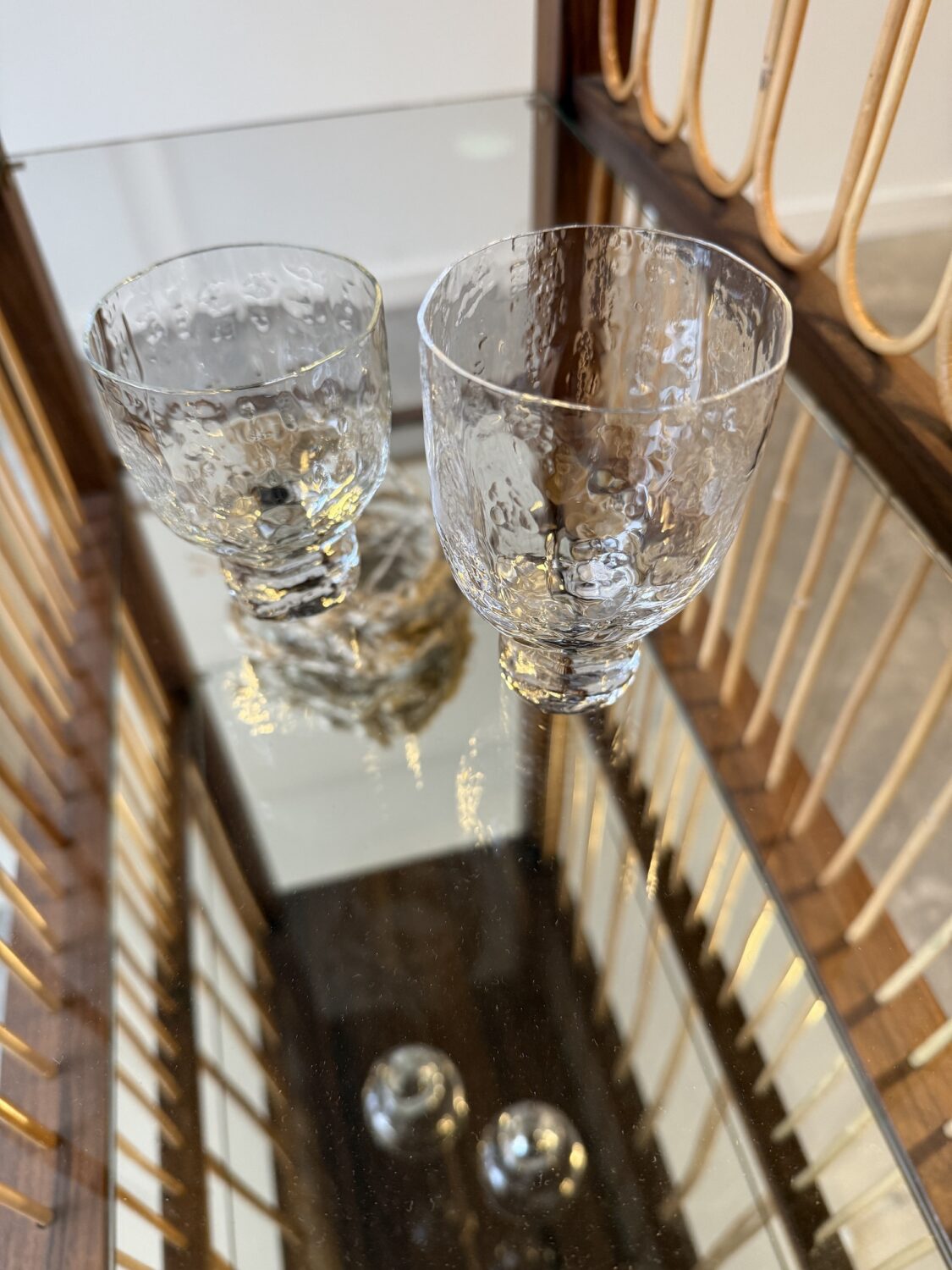
The gallery is not intended to be an inaccessible space for the few, but rather a place to get up close and personal with Danish design and receive advice and guidance when creating a home – or any other space that needs to breathe and live.
Whether it is a home, a restaurant, a workplace or a common room, furniture, lighting and materials shape the way we spend time and interact with each other. Høstbo envisions that the gallery can create connections between Danish designers and those who want to furnish spaces that will be used, unfold and live long.
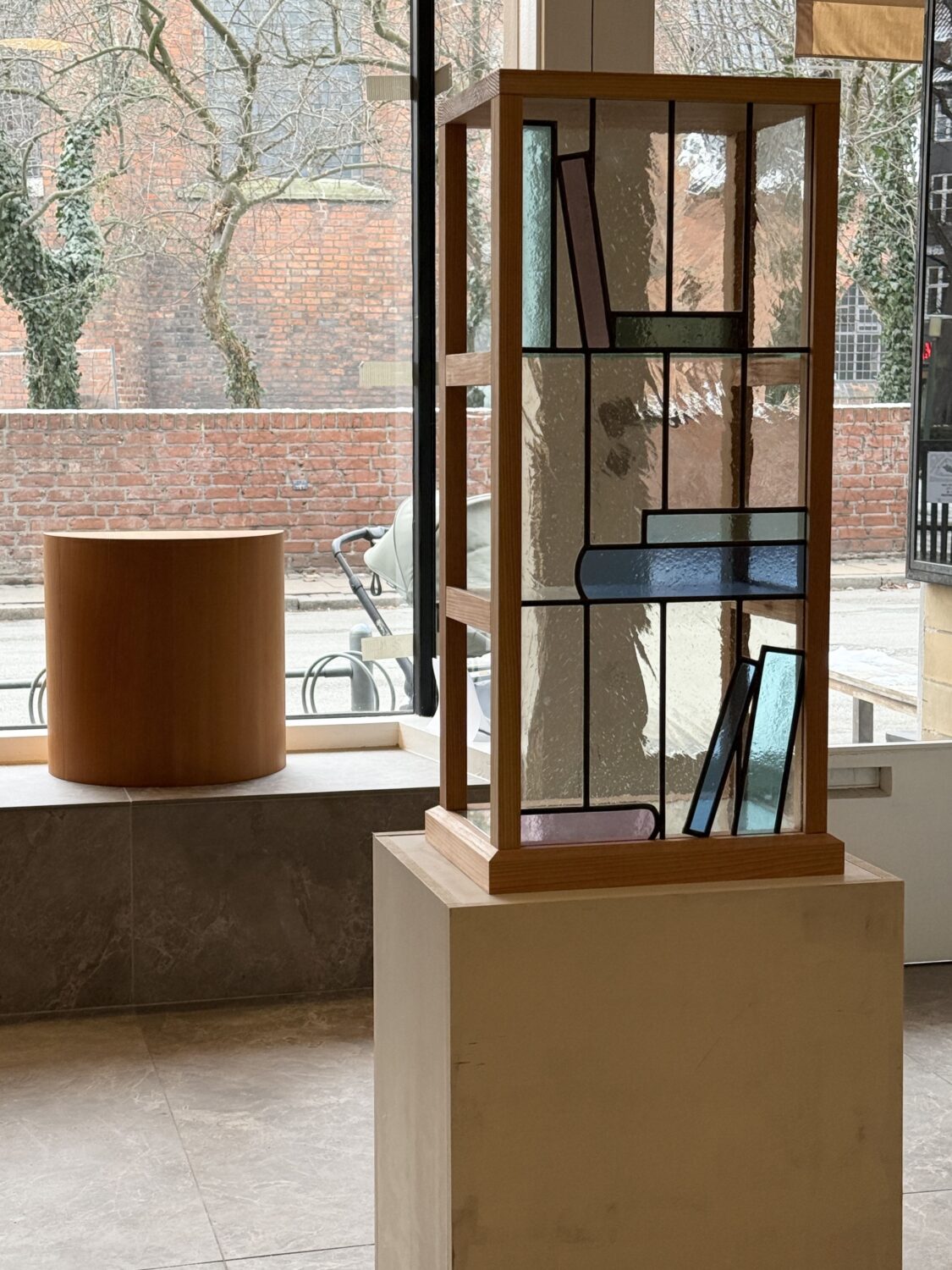
From ‘instant home’ to care and interaction
A home is not created in one go. In the past, it was the norm for it to take shape slowly, object by object, layer by layer. Today, we often see a striving for the finished product or a kind of ‘instant home’ that is well-trimmed from the outset. But when everything is styled from the outset, the layers disappear – and with them, the personal narrative.
A beautiful space is not only beautiful, but also usable. It should invite you to sit, talk and immerse yourself. Perhaps the most beautiful thing lies precisely in the usable, in the functionalist understanding that form and function belong together.
In a building constructed in the functionalist spirit, this idea takes on a special resonance. Aesthetics is not only about the visible, but about perception: touch, materiality and atmosphere. It is in the care and slowness, in the interaction of objects over time, that the space finds its character.
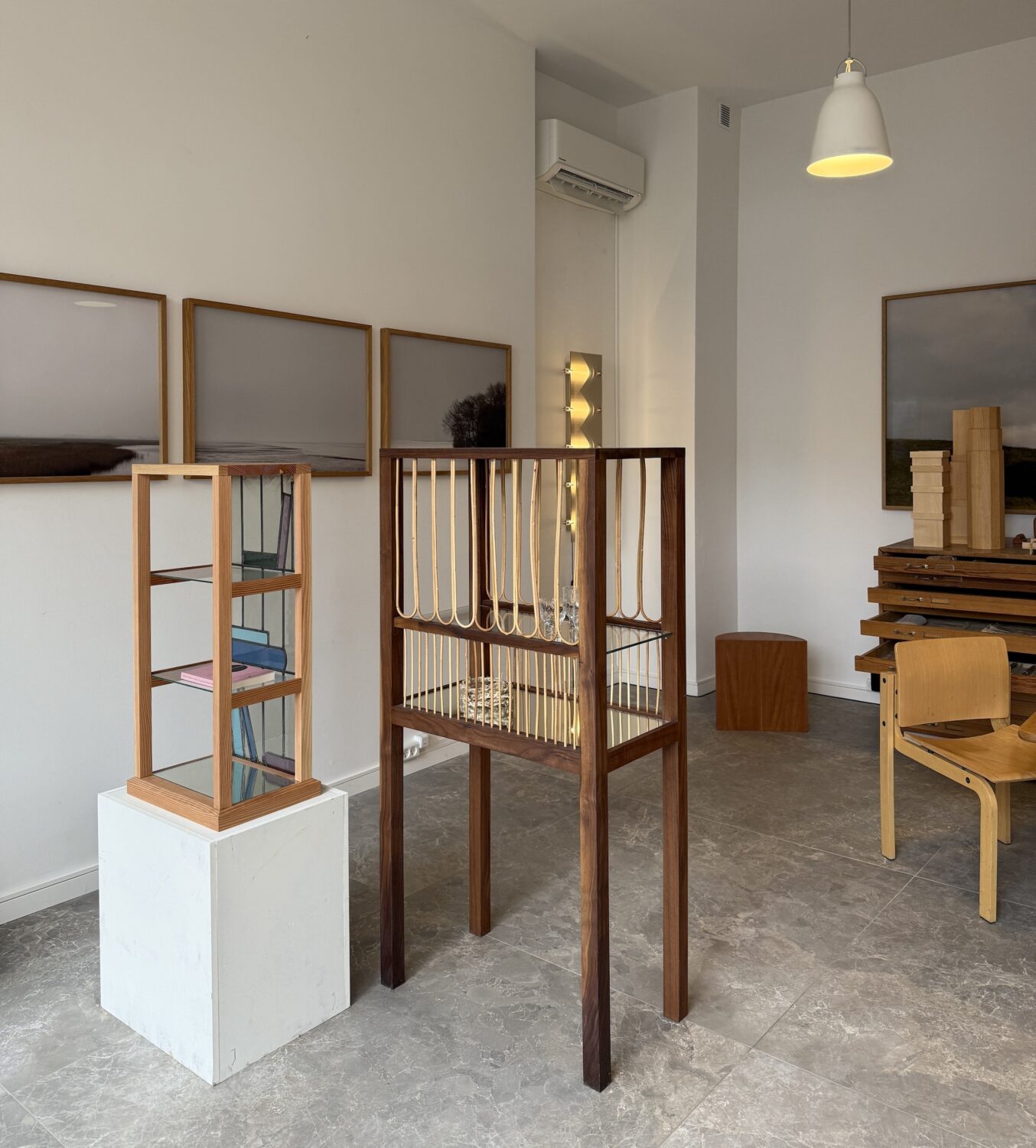
New materials and forgotten techniques
The choice of materials is also crucial, especially when it comes to furniture that you choose to live with for many years. A design object that can withstand use is characterised by the fact that it can be maintained, repaired and patinated. In this way, time is stored in the material and becomes part of its expression – and can even make it appear more authentic, more valuable. For example, a carpenter-made wooden table that weathers and develops character over the years can embody a more vibrant and durable form of aesthetics than a smooth, replaceable surface.
In addition to the material durability often found in natural materials that patinate and evolve, Høstbo wants to look ahead to new materials in Danish furniture art and, at the same time, back to forgotten techniques that can be revived. Looking back is not just an expression of nostalgia or an “everything was better in the old days” attitude, but a respect for the continuity of design. Sometimes innovation lies precisely in rediscovery.
The Women’s Building and the original community idea
The history of the building means a lot to Høstbo. The Women’s Building was constructed in a functionalist style and inaugurated in 1936, but the vision dates back even further. As early as around 1900, a network of women worked to create a place where they could meet, organise and support each other.
The building was conceived as a social and cultural gathering place at a time when women’s presence in public spaces was not yet a given.
Today, as mentioned, Høstbo shares its address with Thiemers Magasin, which incorporates the building’s history by focusing on female authors.
Høstbo does not plan to exclusively showcase female designers, but she is inspired by the building’s original community spirit and openness in her desire to create a place where people feel comfortable entering, looking around, sitting down and having a chat.
In this sense, the gallery continues the building’s original idea of accessibility and community. A beautiful space is one that can accommodate movement, conversation and change.
Facts
Marie-Louise Høstbo is a trained architect and has worked for 25 years at the intersection of architecture and design, with a particular interest in Danish furniture design. The høstbo gallery presents both established and emerging Danish designers, focusing on small-scale productions and unique pieces. Currently represented are Michael Anastassiades, Frederik Gustav, Mia Lagerman, Maduko, Sara Martinsen, Anne Prytz Schaldemose and Anna Søgaard. Marie-Louise Høstbo is also a freelance writer for Formkraft and has written numerous articles on Danish arts and crafts and design.
høstbo
Niels Hemmingsens Gade 8–10
Copenhagen
ml@hoestbo.com
+45 40535834
Source
Ørskov, W., Aflæsning af objekter og andre essays, Borgen, 1966
You may also be interested in these articles from the Formkraft Archive:
Can the future be curated?
Majken Overgaard and Nicklas Larsen work with the future through a curatorial practice because they share a common conviction: The future is not something that just happens to us. It is something we create – together.

Behind the Scenes of Designmuseum Danmark’s Collections: How Are the Milestones of Design History Selected?
Designmuseum Danmark can rightfully call itself Denmark’s design memory. Embedded in the museum’s very DNA is a national responsibility to document, preserve, and communicate Danish craft, applied arts, and industrial design throughout history – for the benefit of both the present and the future. This places significant demands on how works are collected, explains Christian Holmsted Olesen, Head of Exhibitions and Collections at the museum.
In 2026, Formkraft is published with support from the following foundations
The Danish Arts Foundation
Ny Carlsbergfondet
Jorck’s Fond
European Crafts Alliance – Co-funded by the European Union