
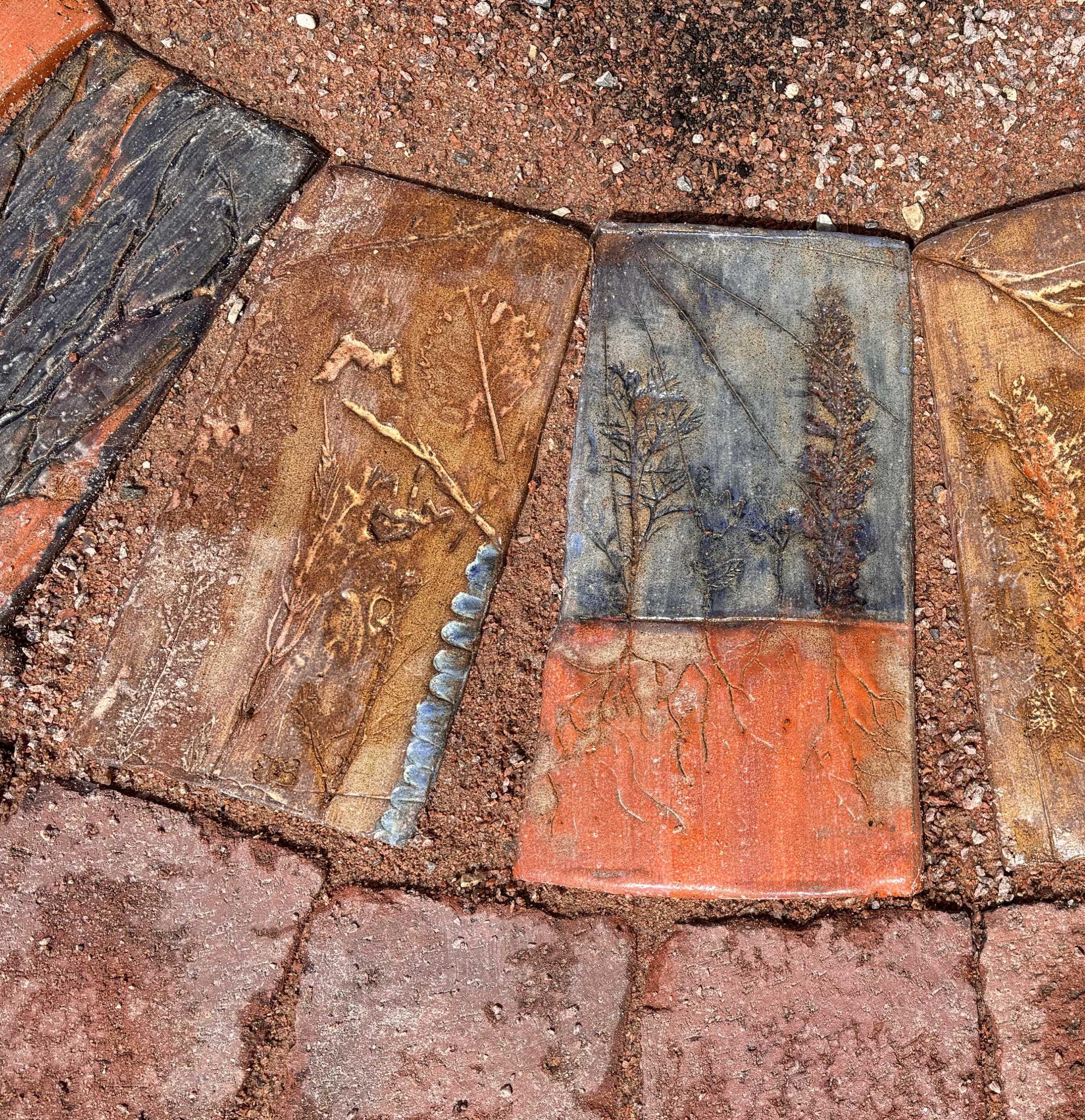
Aesthetics are important to people’s sense of belonging in places. Spaces, materials and forms appeal to our senses and can inspire a sense of engagement. According to the sociologist Hartmut Rosa, aesthetics play a role in whether we experience resonance; that is, whether our surroundings strike a chord within us and we feel that the world ‘responds’.
Craftspeople and designers are masters at combining function and aesthetics. Through craftsmanship, digital technologies and industrial production, they create scalable products: tiles, light sources, acoustic panels, curtains, handles and fittings. Others develop and advise on new materials and production methods that push the boundaries of sustainability.
If we invite them in as co-creators of our surroundings, we can bring the human scale into play. And they can introduce new ideas and methods for how we work with natural materials and surplus materials.
This article provides 25 examples of how craftspeople and designers can assist building clients, urban developers and architects with their knowledge, expertise and experience, and create environments with character, texture and atmosphere. Places where we feel like we belong.
New materials and production methods
These days, many people are experimenting with waste materials and biogenic materials. Søuld, which supplies acoustic panels made from eelgrass, and Kvadrat Really, which produces table tops from surplus textiles, are well-known examples of more sustainable products that have gained a foothold in contemporary architecture.
Similarly, the smaller-scale productions of craftspeople and designers can be scaled up for use in construction projects. This applies to both new-builds and the transformation of existing buildings, where craftsmanship adds variety, texture, narrative and a human scale.
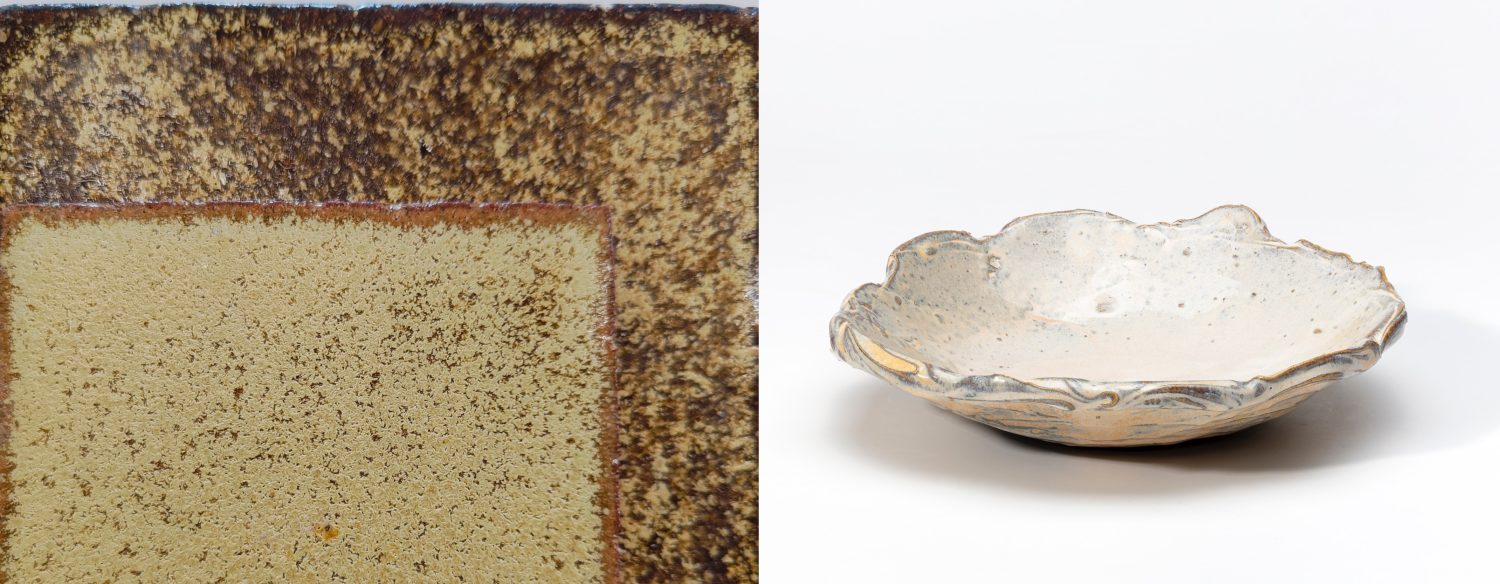
1: New materials made from crushed fixtures. In her studio, ceramicist Christina Schou Christensen crushes toilet bowls, glass scraps and granite. She mixes the powder to create new ceramic materials and glazes, which take on a varied appearance with a random character. The tiles are from a firing that included Bornholm granite, whilst the bowl is made from clay from a sink’s trap, with a glaze consisting of 50 per cent medical glass waste from Novo Nordisk.
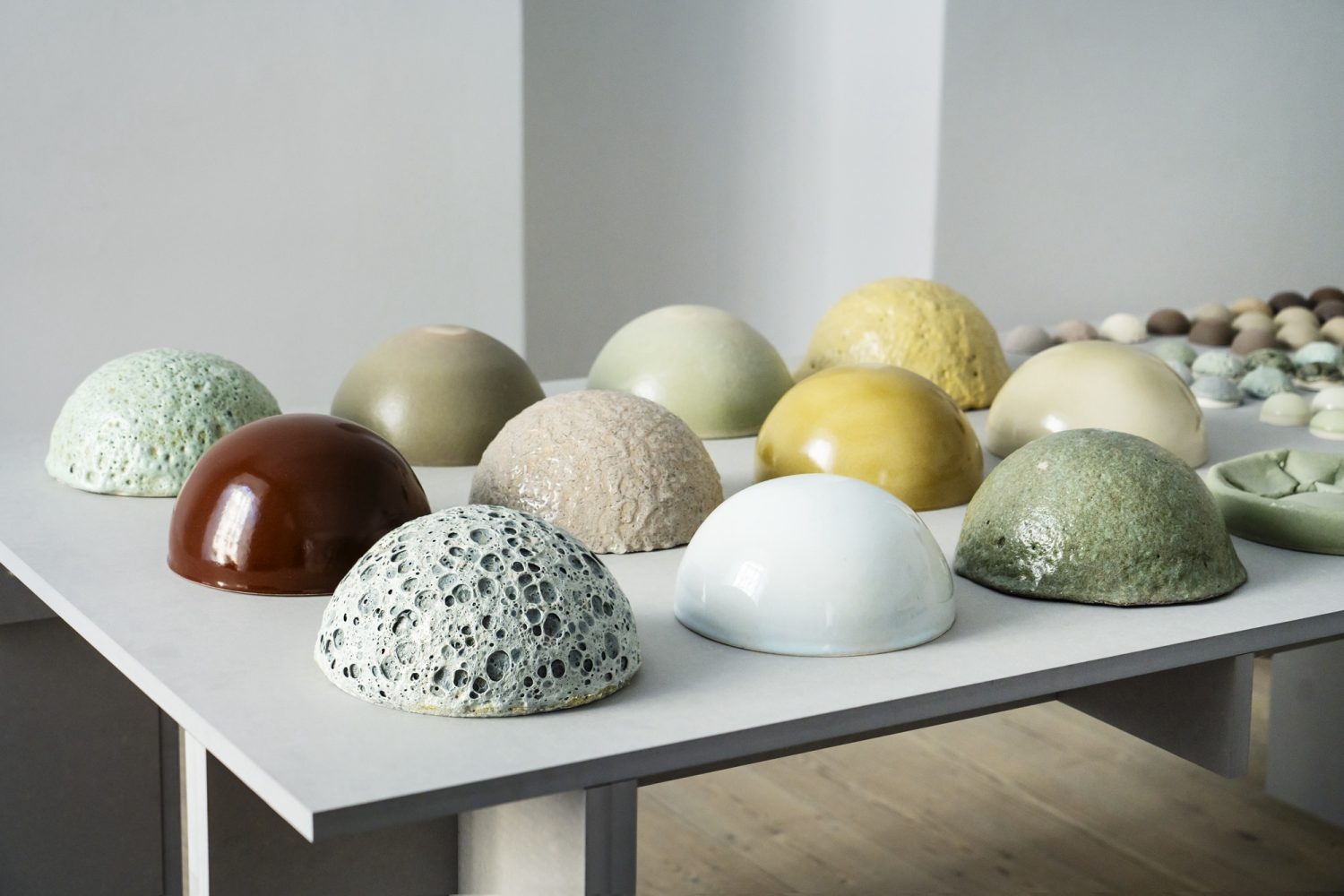
2: Overflader med karakter. Materialeudvikling af Signe Fensholt, Thora Finnsdottir og Christina Schou til udstillingen Ødeland i Officinet. De tre keramikere eksperimenterer med at skabe nye produkter ud af keramisk affald som fliser, potter, tallerkener, toiletter, mursten og granit. Prøverne viser potentialet for at skabe keramiske bygningsdele, der kan skaleres og bruges i arkitektur i samspil med industrielt fremstillede materialer som beton, glas og stål.
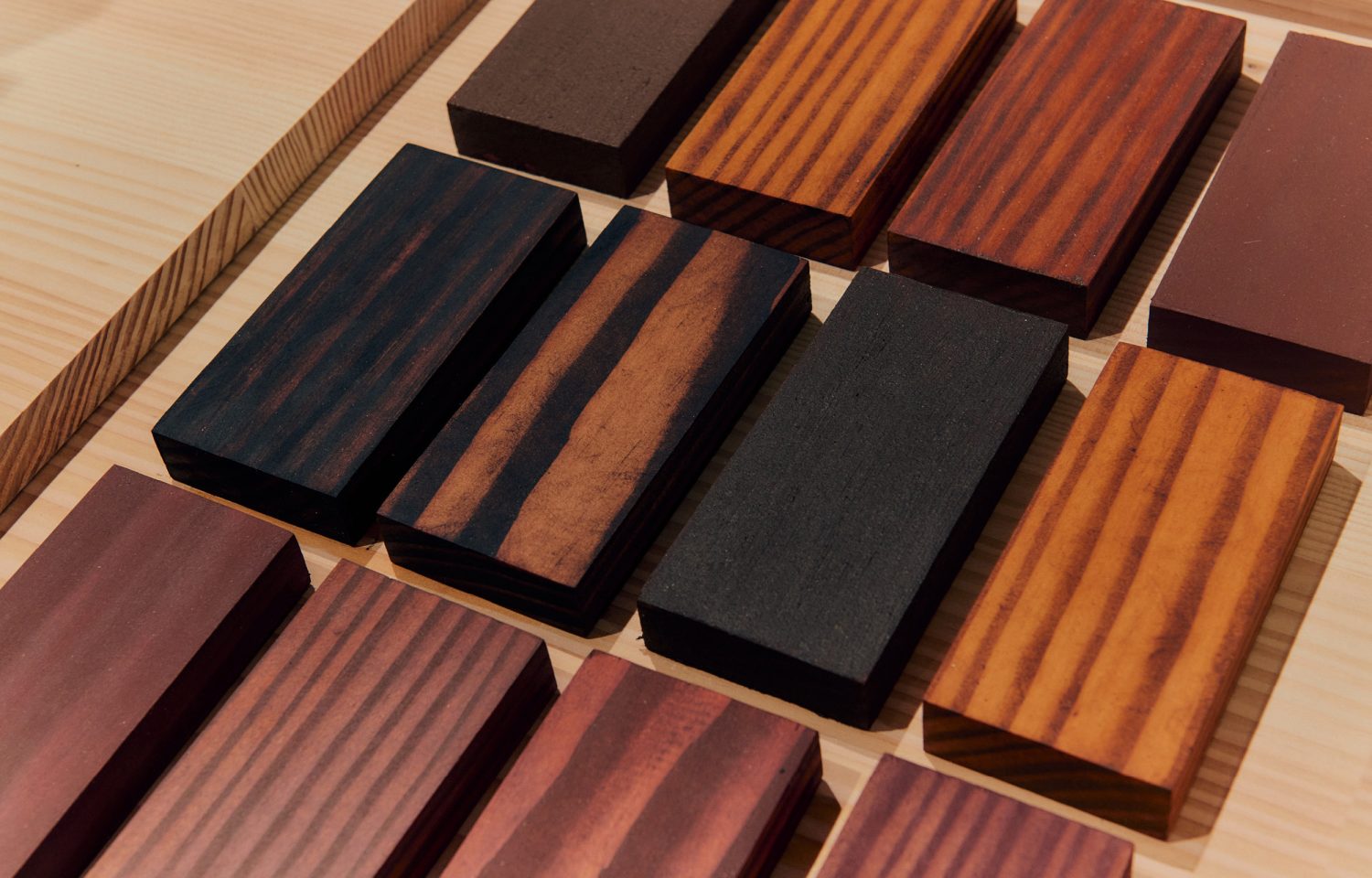
3: Ochre pigments on an industrial scale. Taking ochre as his starting point, furniture designer Thomas Woltmann aims to revive the industrial production and use of natural earth pigments in Denmark. The first two industrial products are now on the market in collaboration with Linolie & Pigment and can be used on walls and furniture.

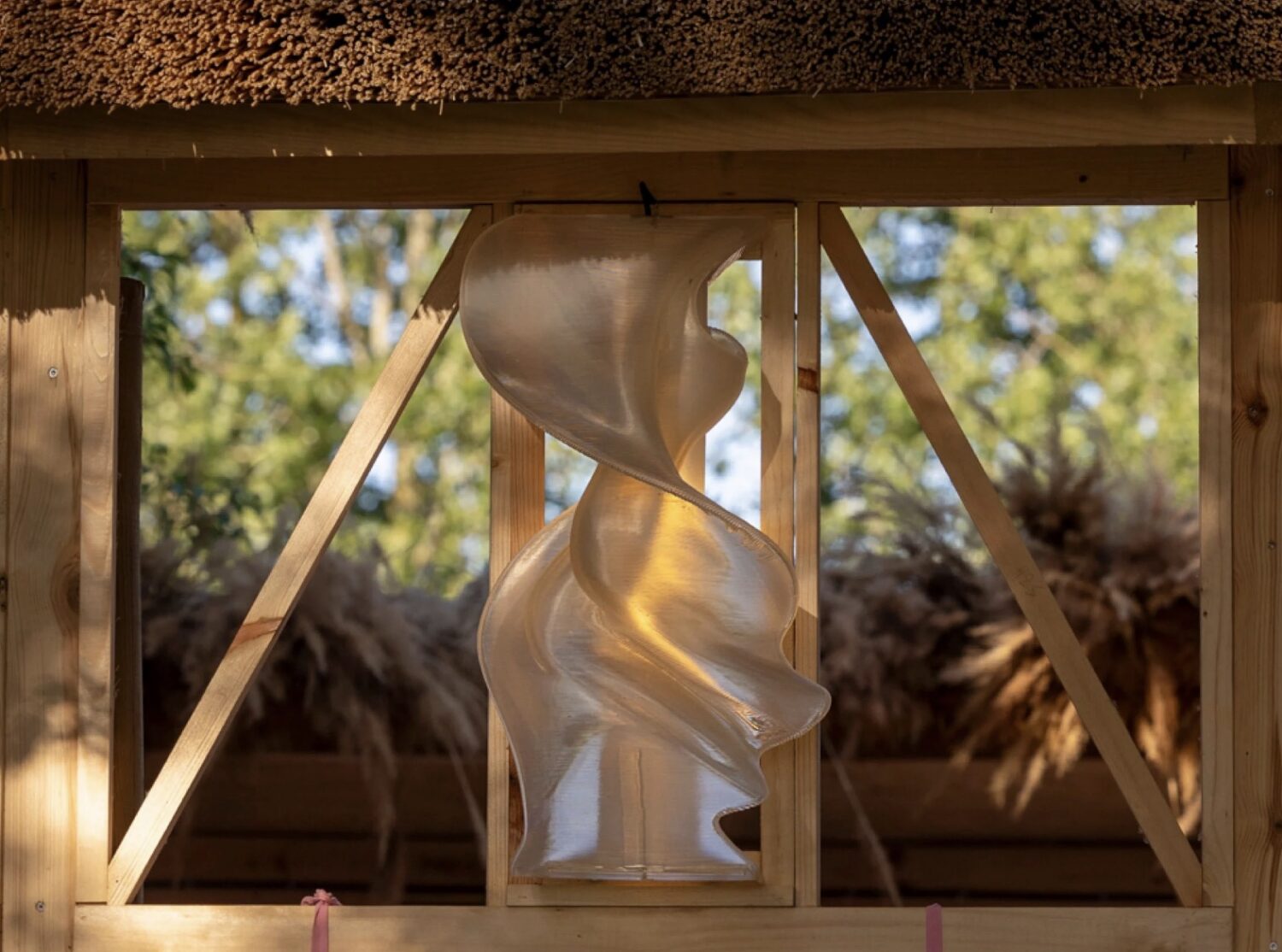
4: 4: 3D-printed building components. Architect and designer Mikkel Nielsen is fascinated by how we perceive beauty. He combines industrial technology and traditional craftsmanship in lamps, which he prints in bioplastic and has finished by craftspeople. In the pavilion ‘Rehearsals of Belonging’, Nielsen explores how the digital manufacture of light sources can be applied on an architectural scale.
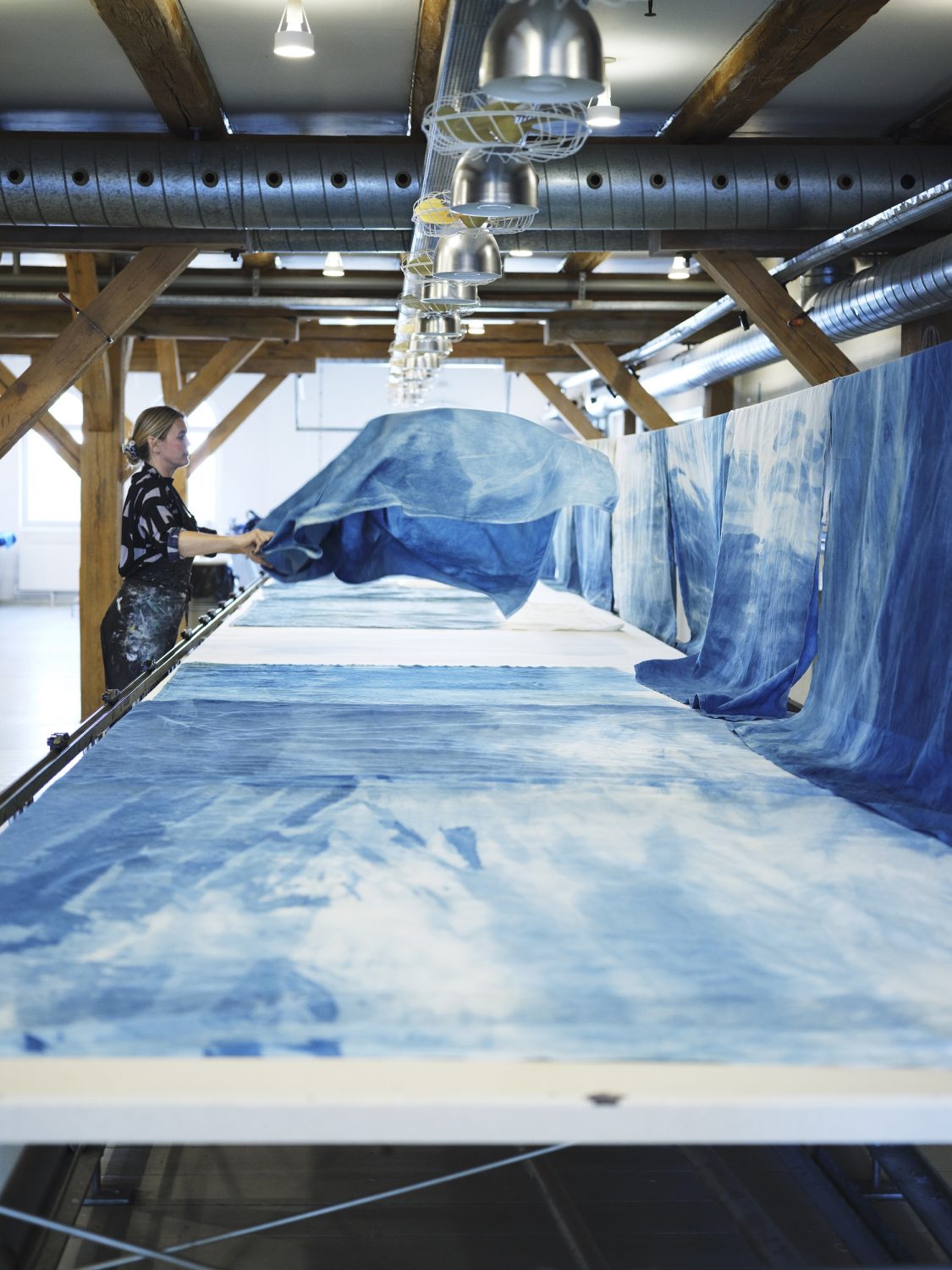
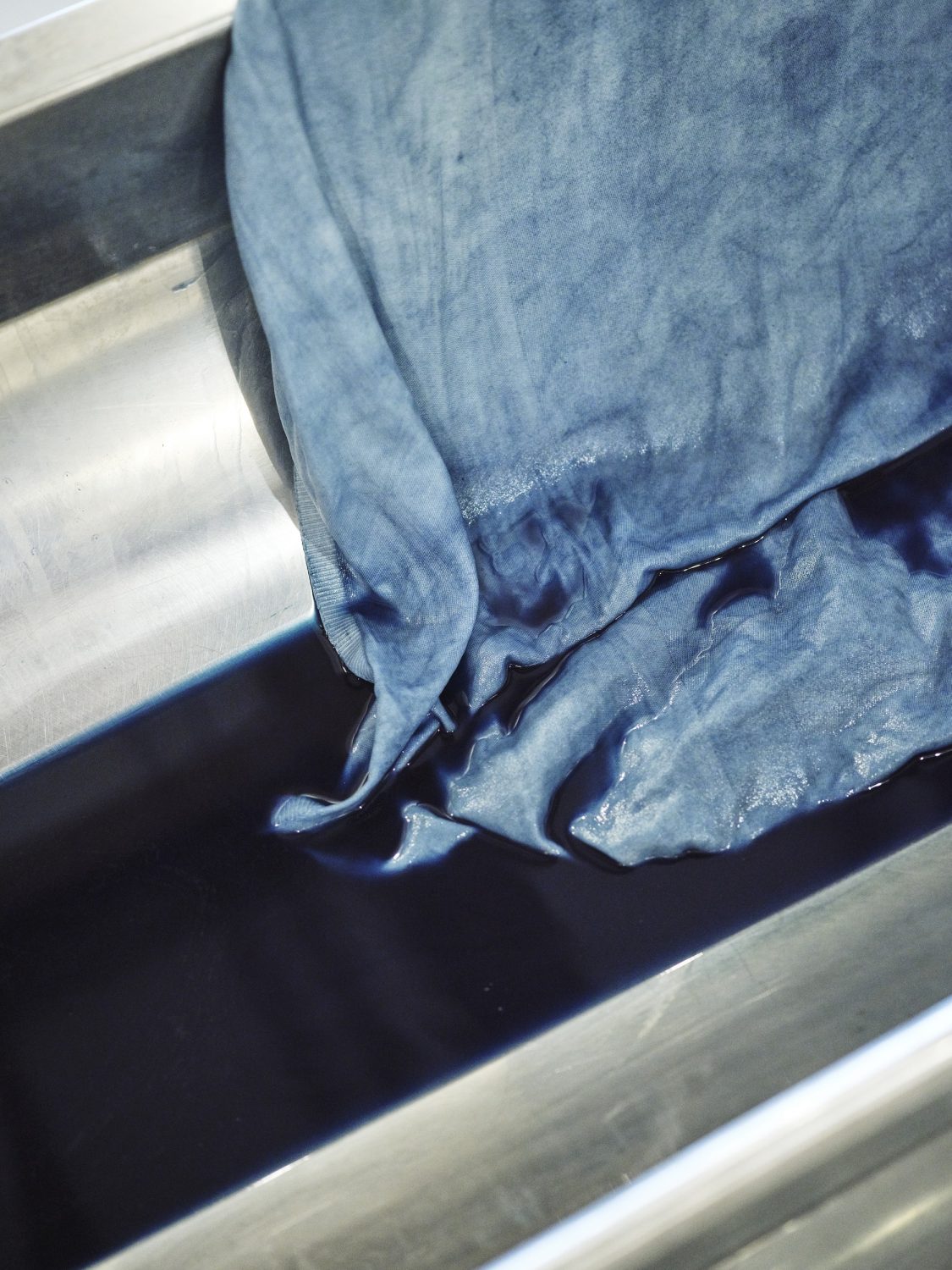
5: Plant-dyed recycled textiles. For the installation ‘Ocean Curtains’, textile designer Anne Nowak uses textiles and colours to reflect on climate change. The textiles are recycled tablecloths from a steam launderette, dyed with a plant-based blue dye. This creates a vibrant and varied effect, which nevertheless appears cohesive and serene across larger surfaces.

6: Biotextiles made from seaweed and algae. Natural Material Studio develops bio-based materials and collaborates with architects, researchers and businesses. The photograph shows a chandelier made from biotextile produced from natural polymers based on proteins, natural plasticisers, chalk – as well as seaweed and algae. The material, which is biodegradable and can be remoulded, has properties similar to those of textiles.
Ornamentation
After decades in the shadows, a growing number of architects and designers are bringing ornamentation back into the limelight. In new-build projects and modern architecture in particular, ornamentation can make a building more inviting. In the form of patterns or figures – often depicting mythological characters, animals or plants – ornamentation can enhance the sensory quality of architecture and strengthen people’s connection to their surroundings. Examples include relief effects or images on building elements.
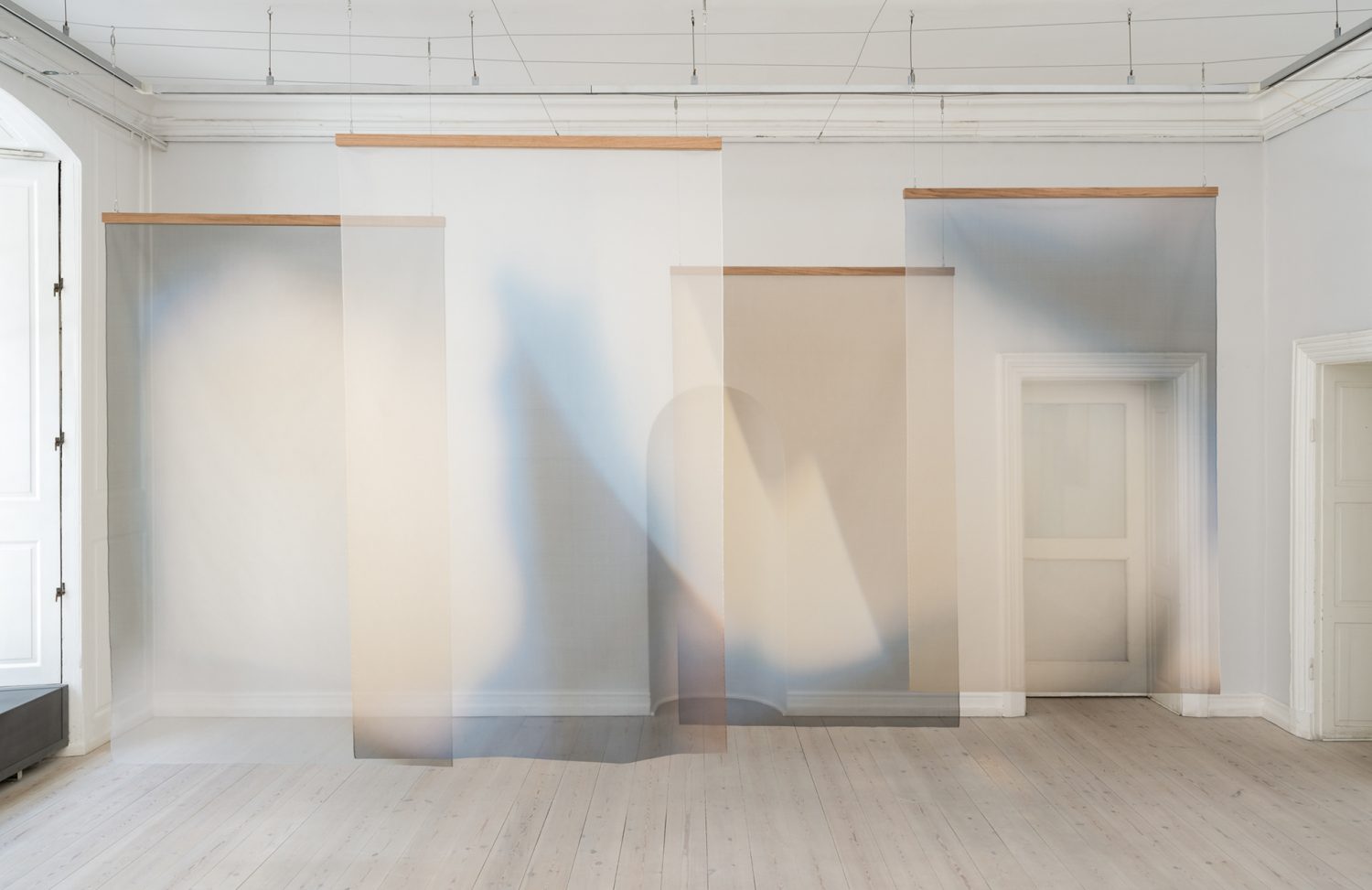
7: Filtering light. Glass artist Mette Colberg is interested in the dualistic nature of glass as both a form and a filter. She creates abstract, transparent colour compositions using handmade glass lenses and photography, which she transfers onto glass, plastic and silk. The motifs in Colberg’s practice can lend a sense of sensuality to today’s transparent architecture and create intimate spaces within large, open environments.

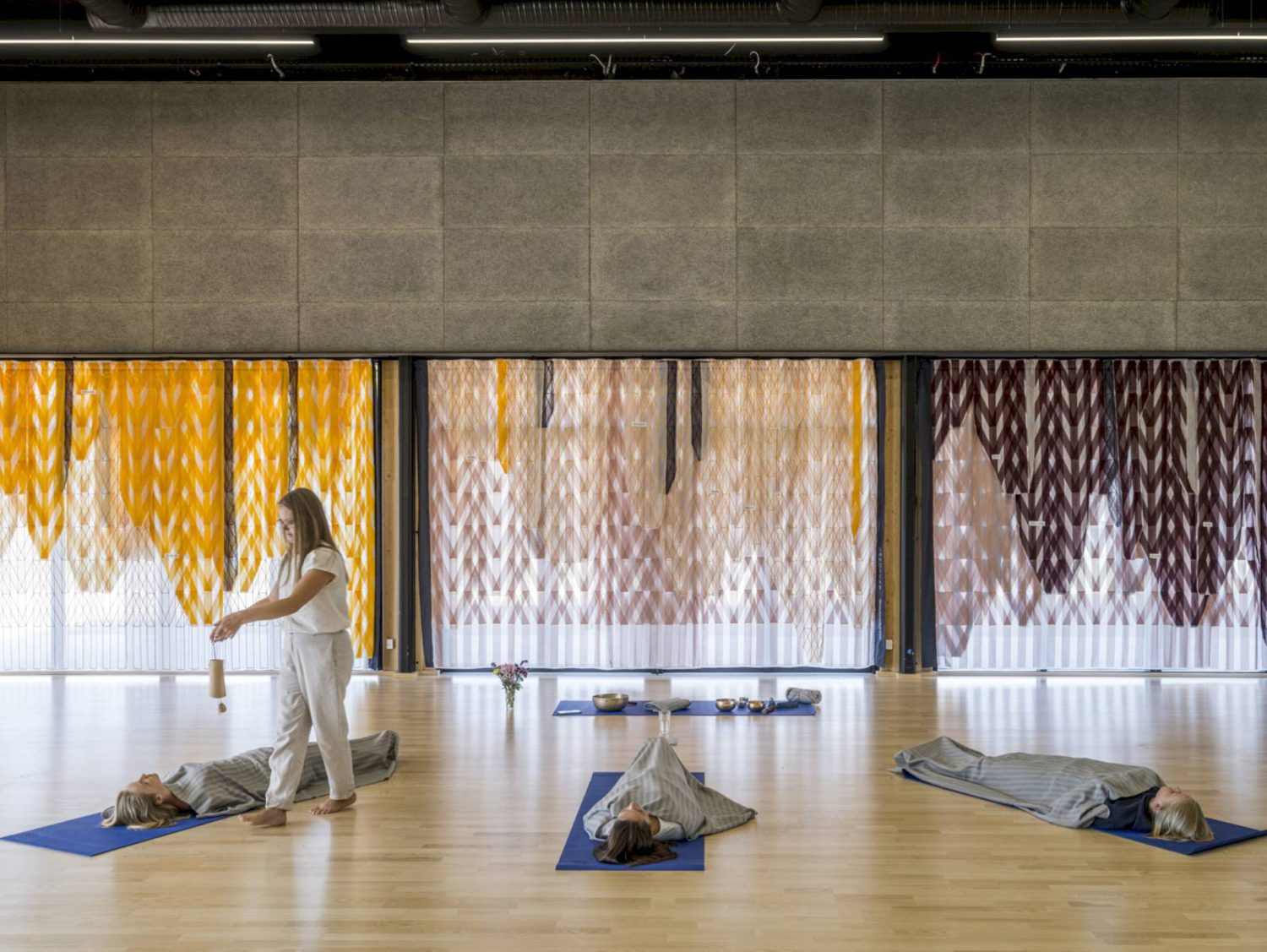
8: Soft façade with an abstract landscape pattern. For the Molsværket community centre, Signe Kirk and Mie Dinesen have created a 48-metre-long, site-specific textile collage featuring an abstract landscape, sewn from donated textiles. The work is an example of how textiles can screen out the outside world and daylight whilst also serving as a façade ornament.
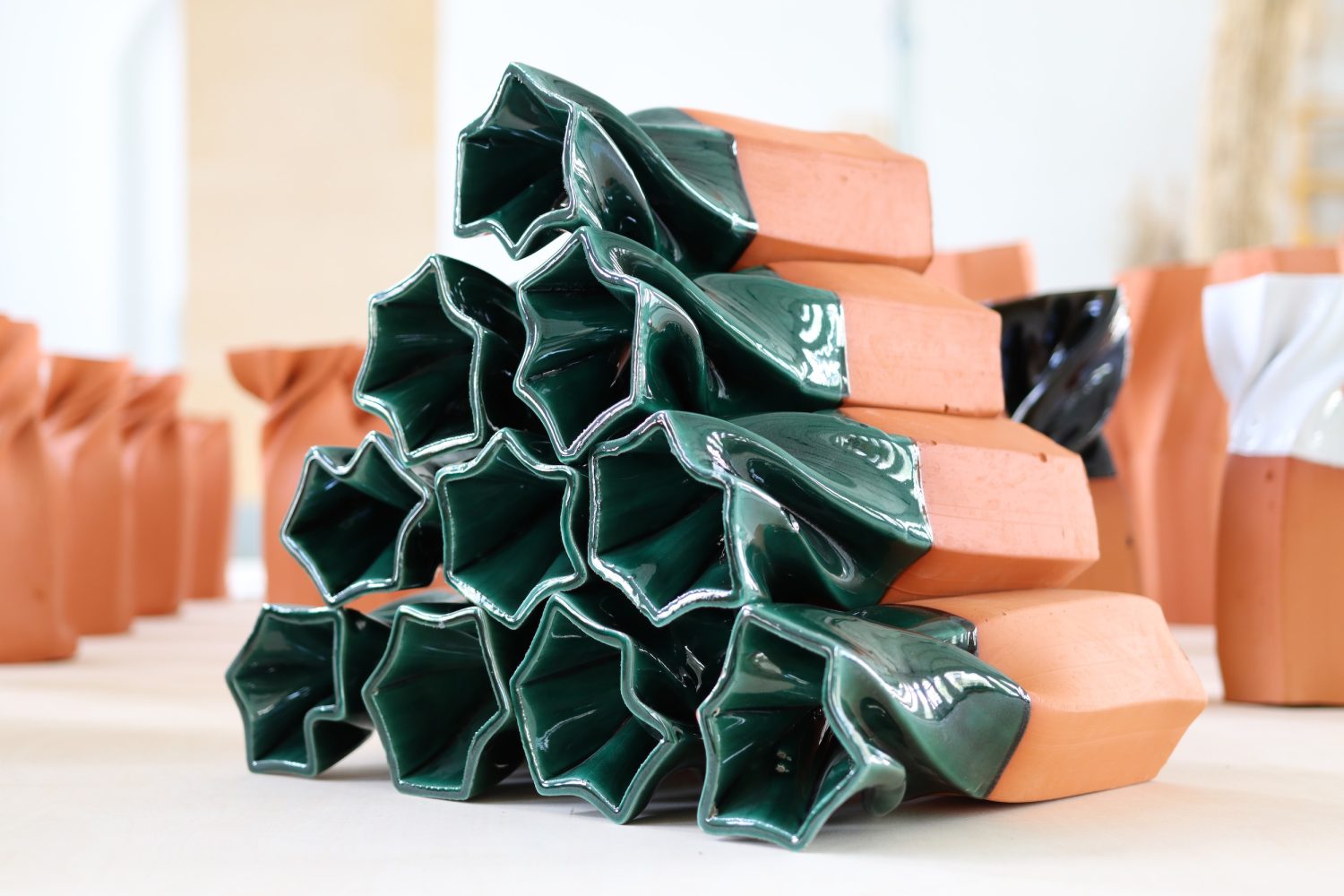
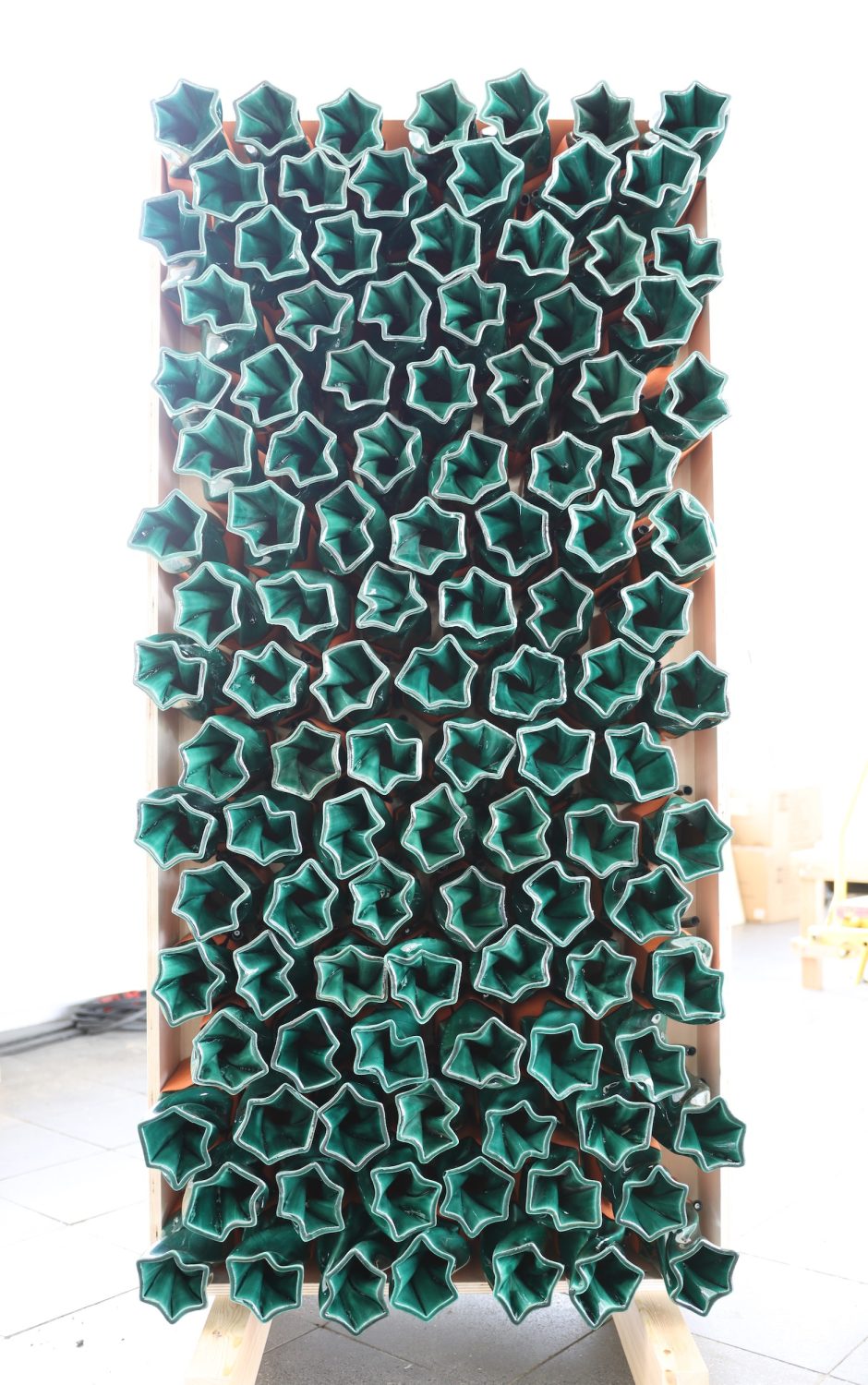
9: Functional relief effect. At the Royal Danish Academy, CEMAS – Centre for Material Studies, researchers Isak Worre Foged, Vasiliki Fragkia and Flemming Tvede Hansen are investigating how industrial production methods for building elements, when combined with a craft-based and experimental approach, can create distinctive and expressive thermal properties.
The aim is to understand and enhance the cooling potential of a modular brick structure through the deliberate manipulation of material and form.
The modules are manufactured from red clay using a combination of industrial extrusion and manual shaping.
10: A traditional technique given a new expression. In a series of site-specific works, Flensted Mouritzen reinterprets the stucco technique known as ‘scagliola’. The material, consisting of plaster, bone glue, water and colour pigments, has been used since the early 17th century to imitate stone surfaces.
Flensted Mouritzen transforms the material into playful objects that function as reliefs in dialogue with industrial materials.

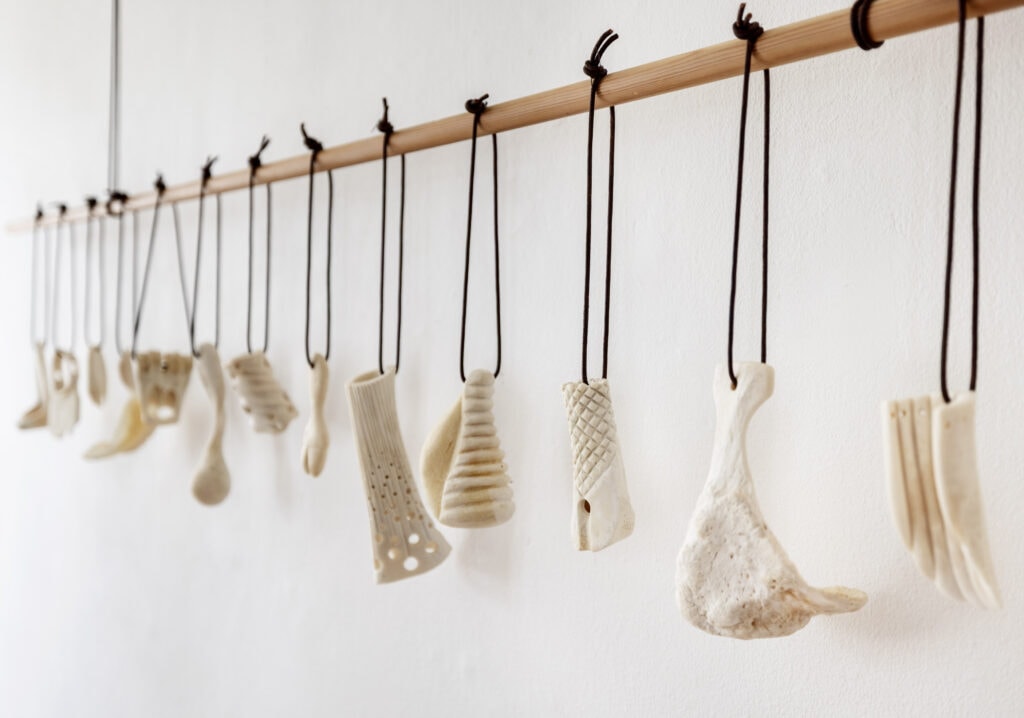
11: Tools with character. For the exhibition ‘AF NATUR ER DET KOMMET’ at Munkeruphus, goldsmith Kasia Gasparski has been invited to work with bones and bone-like materials. Her series ‘TOOLS’ is a reinterpretation of tools; an imaginative and enchanting universe of forms that appear to exist for a concrete and functional purpose. In the same way, one can imagine that architectural elements such as door handles, knobs and switches could be given similar details full of character.
Space
The small scale is the domain of craftspeople and designers. They design objects and spaces and create works that lend spaces atmosphere, a sense of presence and character. Many also use their knowledge and experience of colours, materials and production to advise building clients. In this way, they help to create welcoming spaces and environments where the focus is on the human scale, materiality and texture.
12: A sense of presence in urban spaces. ‘Røde Sol’, by designer Eske Rex and architect Maria Mengel, is a vibrant outdoor space for Kulturhus Nordvest in Helsingør.
The project comprises a south-west-facing outdoor seating area, a canopy, a windbreak with a shelter and a bench, gable decoration and information/exhibition display cases.
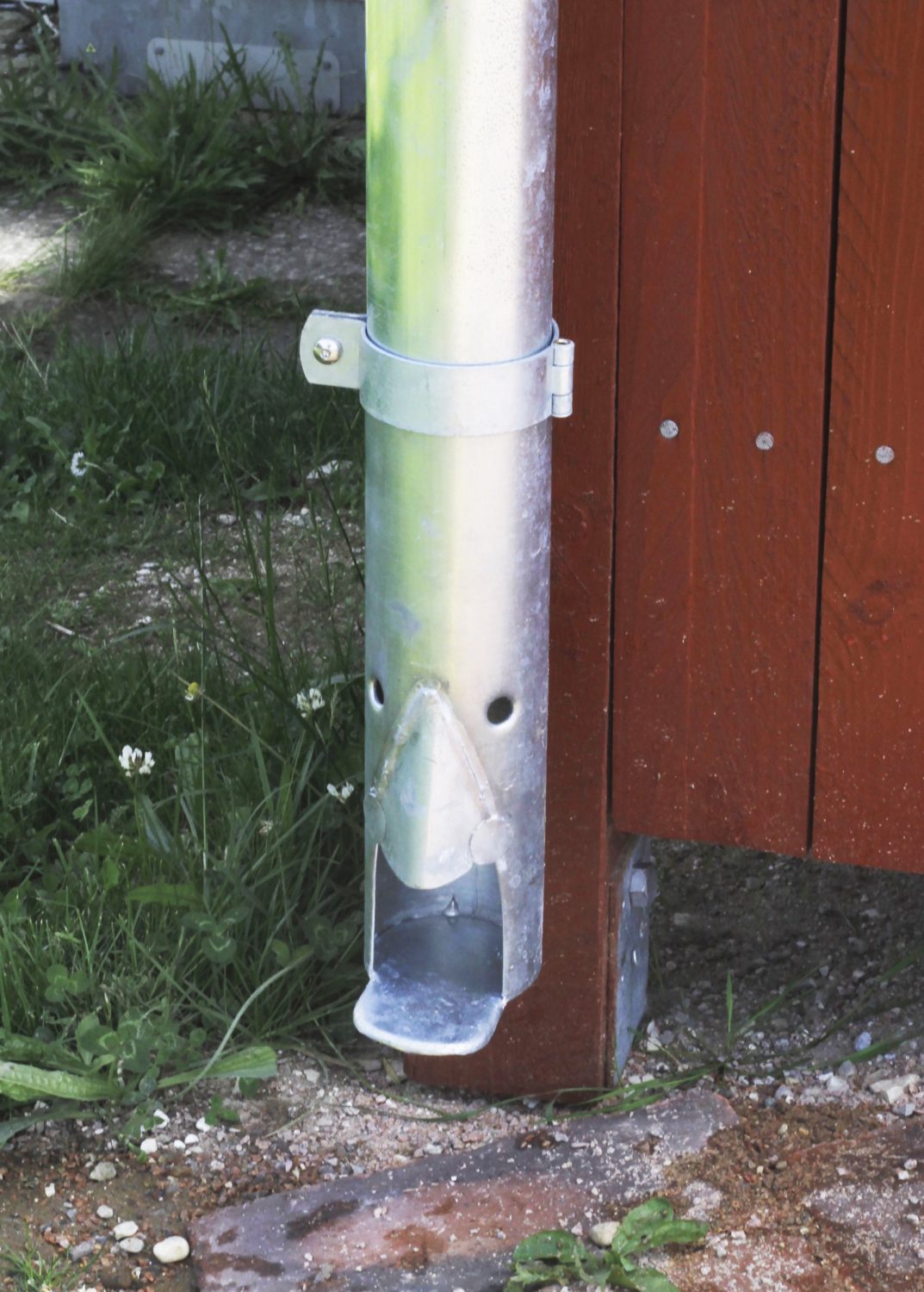
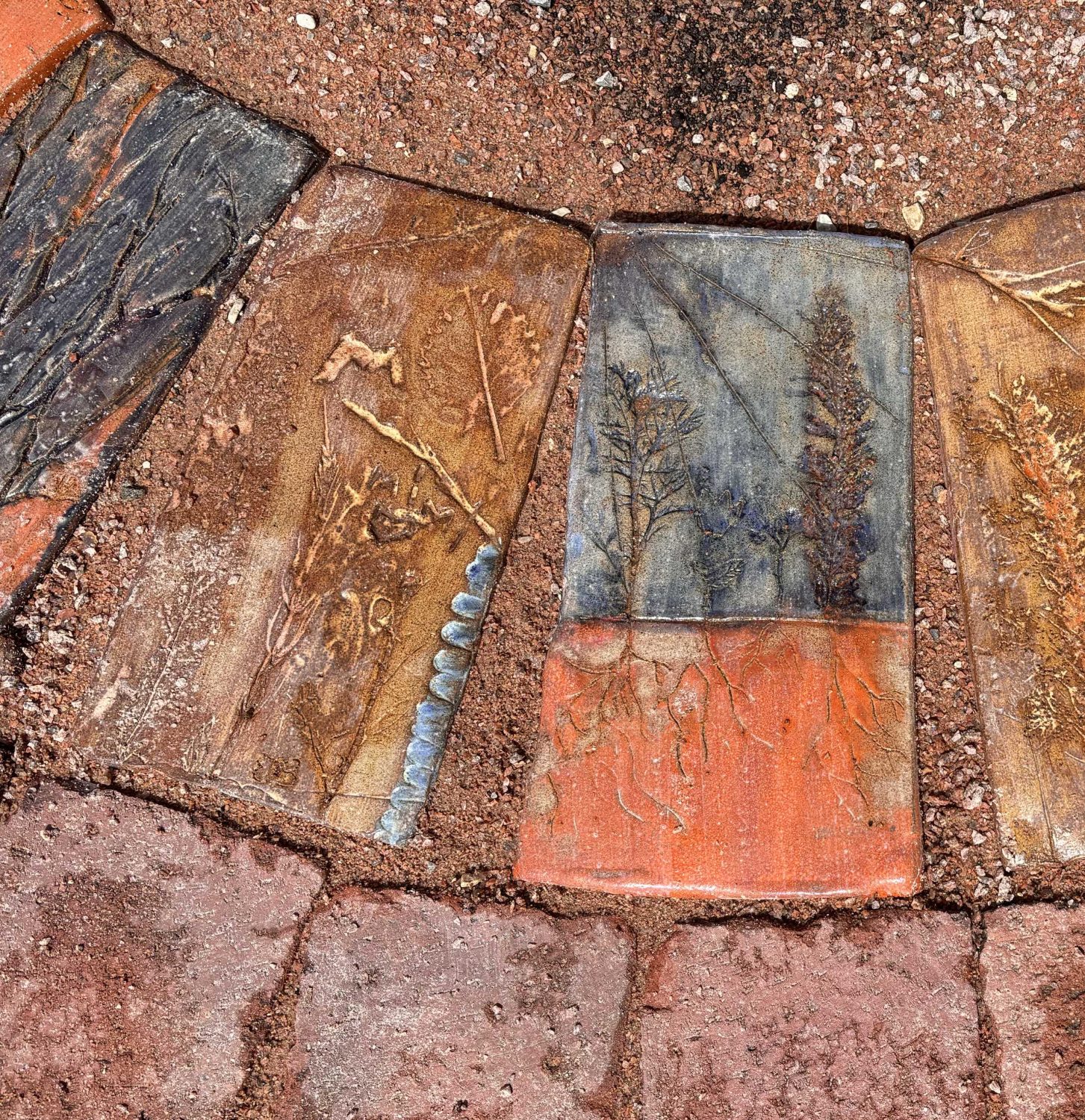
Personal touches are integrated into features such as downpipes and hand-made clinker bricks in the paving.

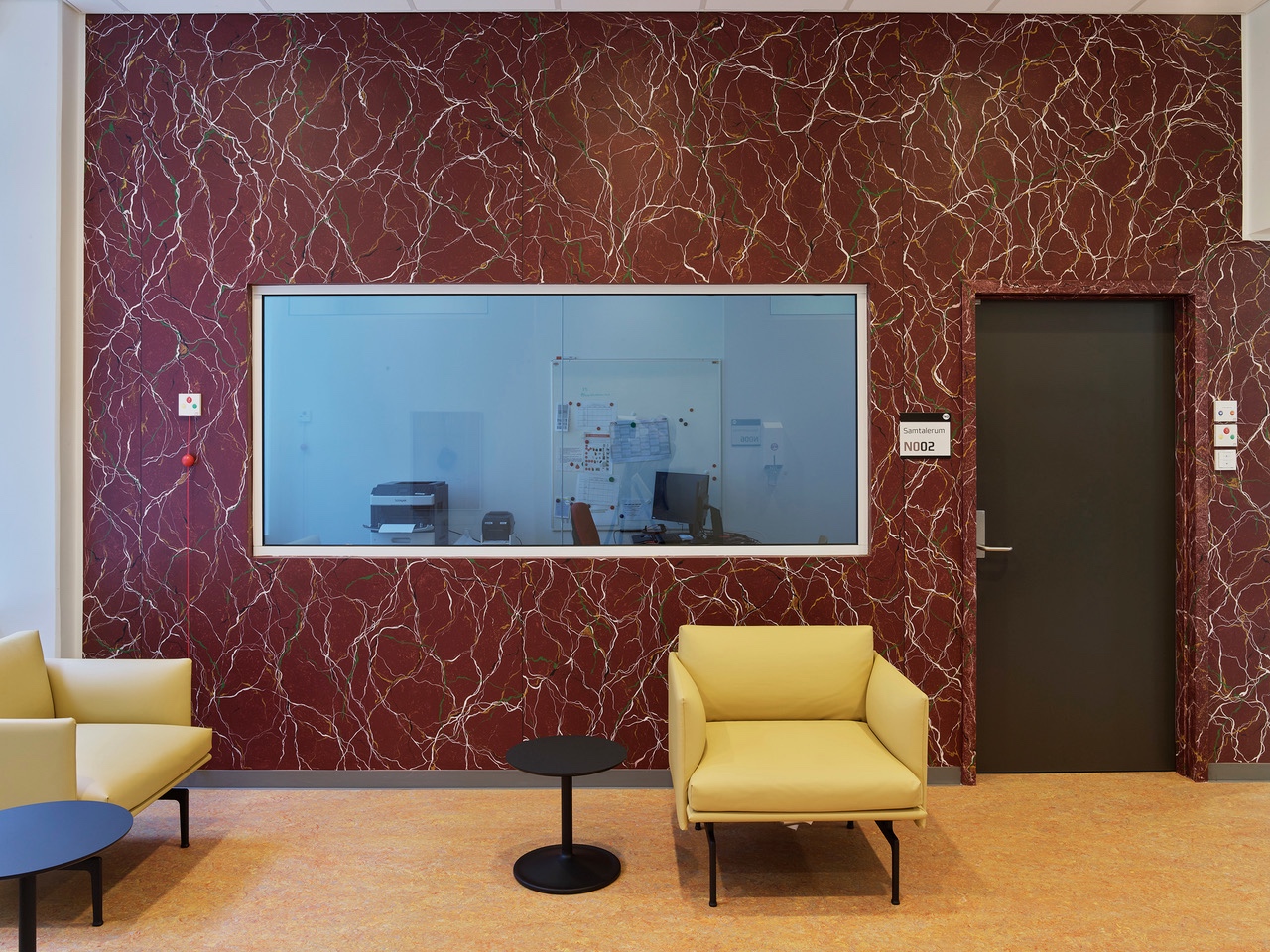
13: Interconnected systems in the blood donation unit. Margrethe Odgaard has created the artwork ‘Haima’ for the blood donation unit at Gødstrup Regional Hospital. ‘Haima’ is a tribute to the donor’s sense of community. Selected walls have been hand-painted with homemade casein paint in a specially developed bloodstone marbling effect, where veins and deposits emerge as if in a piece of rock. Colour, form and material come together to form a whole, in which the life forces of the earth and of humankind mirror one another.
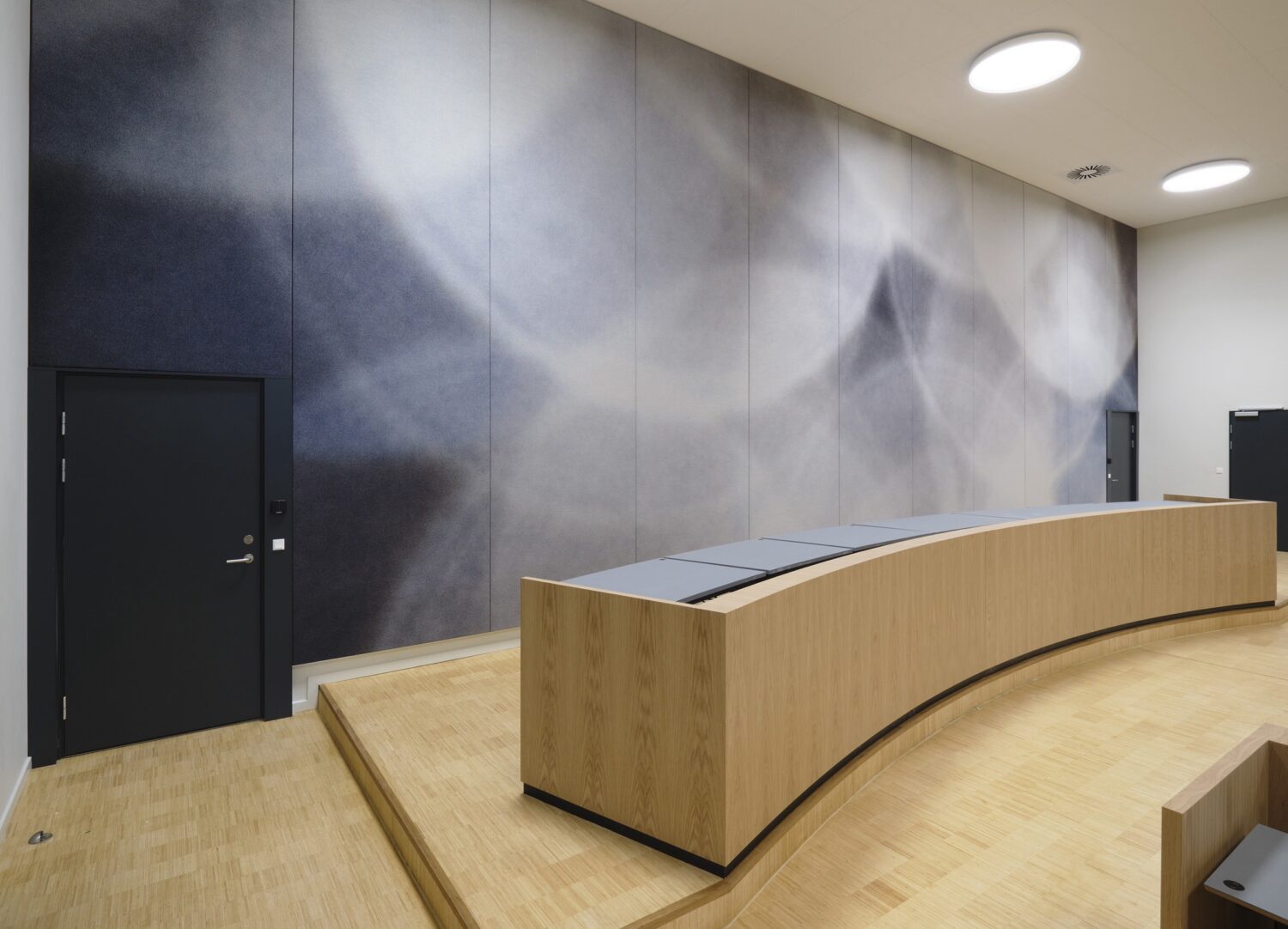
14: A backdrop that creates a sense of calm. Behind the judges’ bench in Copenhagen’s high-security courthouse, Grethe Sørensen has created the work ‘Transparency’.
The work consists of eleven panels, jacquard-woven at TextielLab in the Netherlands, ranging in colour from shades of black to shades of white. The work also serves as acoustic cladding, creating a sense of calm in a room where nerves can be on edge. (Read also the interview with Grethe Sørensen)
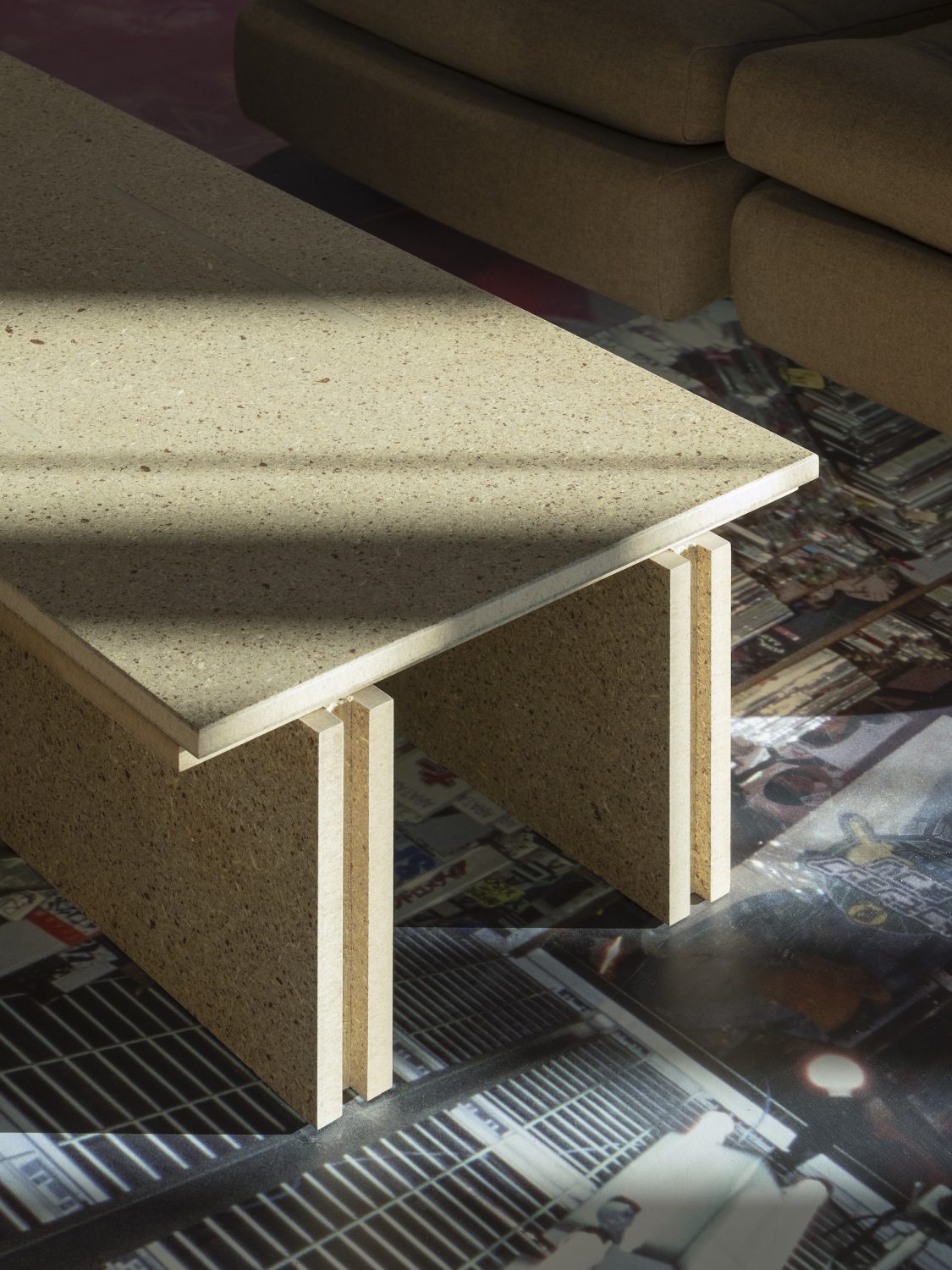
15: New furniture made from recycled materials. Furniture designer Sara Martinsen specialises in sustainable materials and production. As a consultant on the interior design of THORAVEJ 29 – known as the house that recycles itself – she has pushed the boundaries. For example, the building’s doors and door frames have been shredded and compressed into new panels, which have been used for tables, benches and shelving units. She is also behind the online materials library Phytophilia, which focuses on the use of plants.
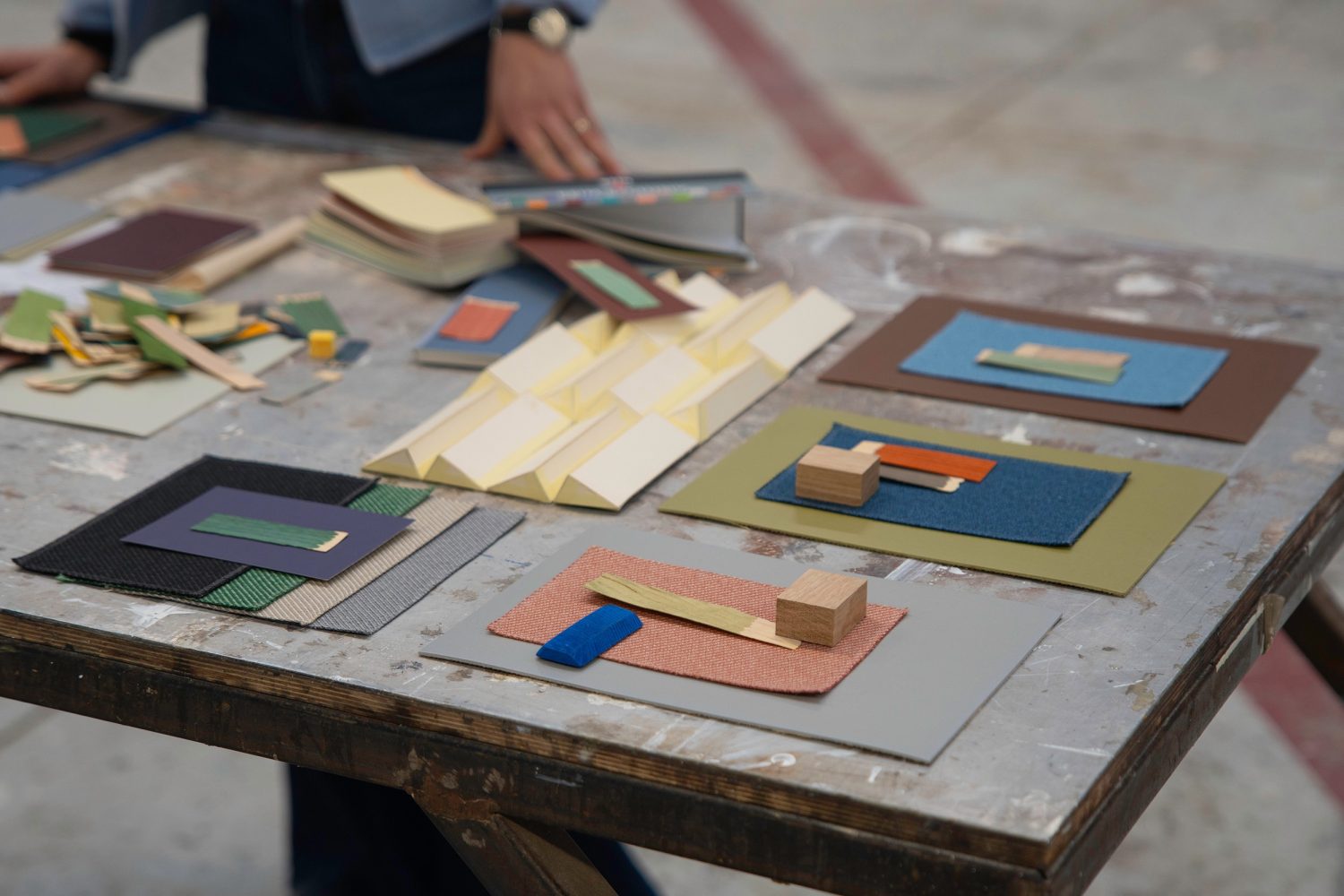
16: Colour schemes and material strategies. Through colour, textiles and material strategies, designers Fie Bjørch and Benjamin Rask work to create a sense of wholeness, coherence and sensory experience in architecture. At BJØRCH & RASK, they advise on site-specific colour schemes with the aim of anchoring spaces within their surroundings, creating a sense of orientation and spatial identity.
Works
Some craftspeople and designers pursue a career as practising artists. They bring an in-depth understanding of materials such as ceramics, glass, textiles, metal and wood to works that can complement the architecture. Works that bring nature indoors bring space, light and materials into play, adding warmth, texture and a human scale to modern buildings.
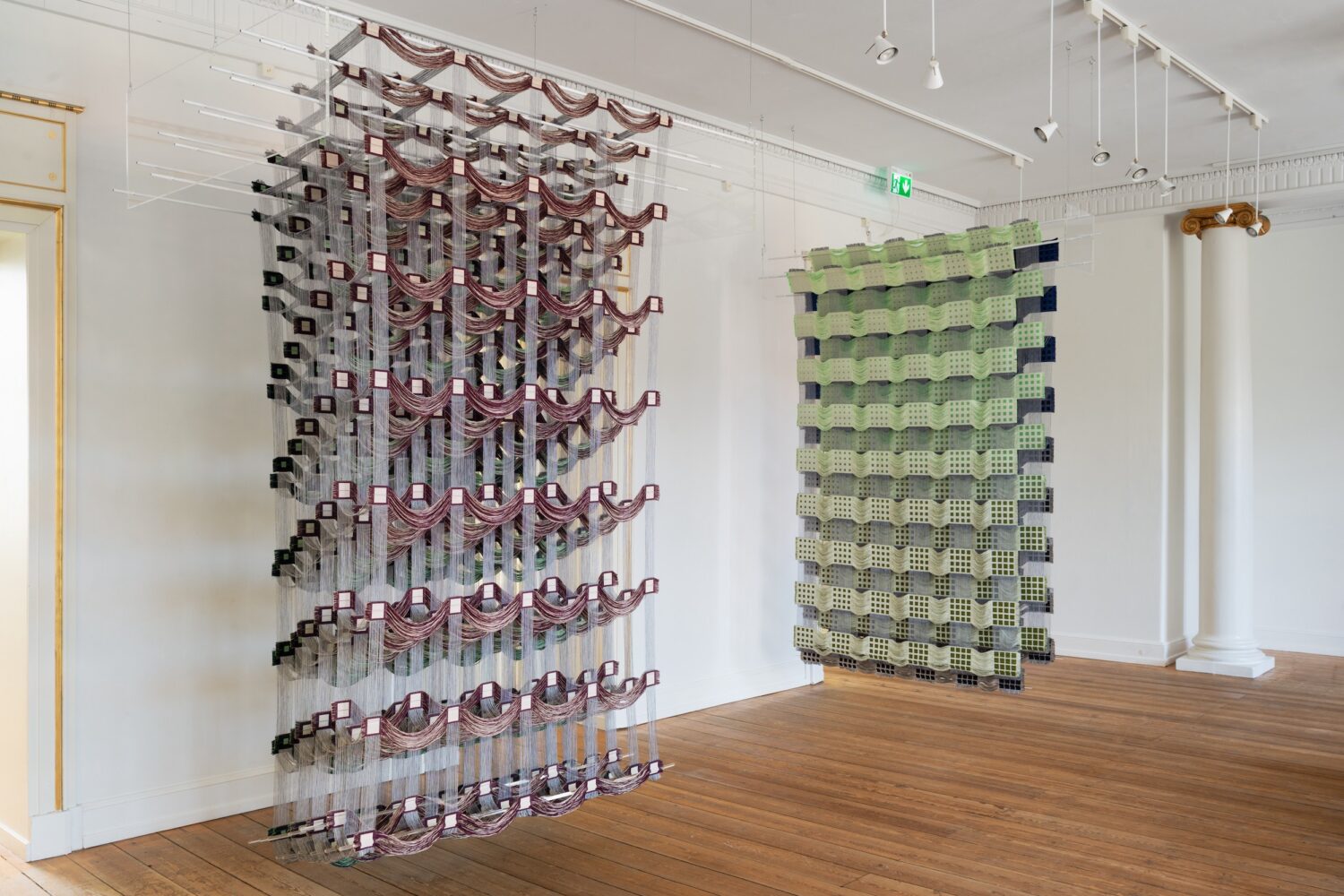
17: Three-dimensional weaving. In ‘Woven Voxel’, Emilie Palle Holm challenges the continuity of jacquard weaving by extending it into the third dimension and creating an almost digital grid structure.
In a high-ceilinged space with natural light, such as an atrium, the textile work will appear to float and allow the viewer to see through it, thus serving both as an eye-catcher and a filter.

18: Presence and nature in the living room. Weaver Sanne Ransby has contributed three site-specific works to the living room at Generationernes Hus in Aarhus: two large tapestries and a picture wall. The tapestries incorporate landscape elements from Aarhus Bay, whilst the art wall focuses on the transition between forest and sea. All the works are hand-woven, with a distinct sense of time and presence woven into them.

19: A reflection of the sky – and of ourselves. For the ‘Cloud Illusions’ installation at Nykøbing Cathedral School, Astrid Krogh has created a 12-metre-long aluminium artwork. Krogh has embossed and perforated the mirrored surface to create a vast cloudscape of ever-changing character. Reflections from the windows across the room bring daylight and the outside world into the auditorium. (See also the article ‘Atmospheric layers in human spaces’)
20: Captivating glass spheres. Glass artist Marie Retpen has contributed to the decoration of a waiting area at the local hospital in Middelfart, where her sensorial works serve as wayfinding features. These tactile glass works could also be incorporated into architecture as light sources or handholds, breaking up lines and lending character to a space. (Read about the project in Middelfart)

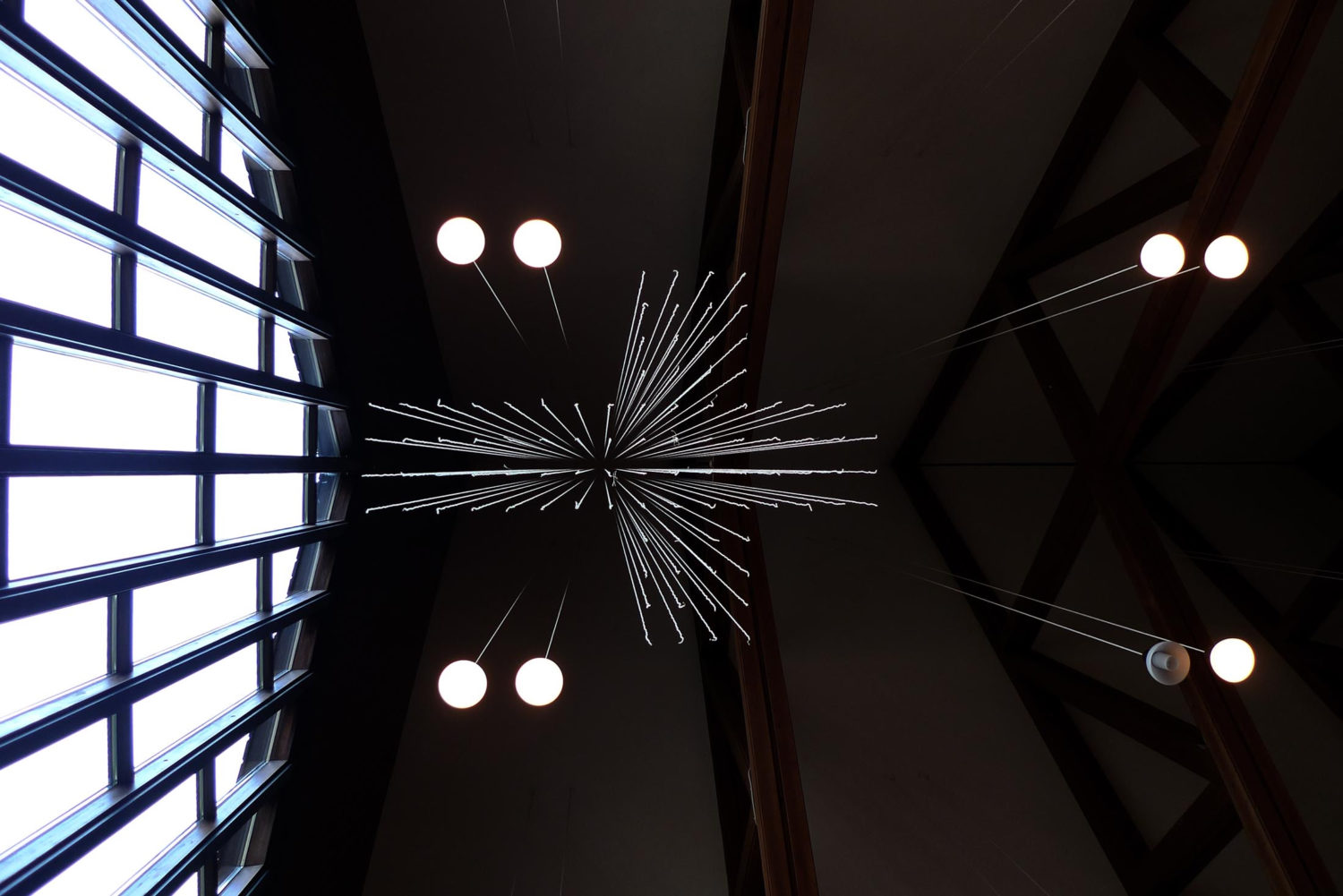
21: A cross made of beads. Maria Sparre-Petersen has created the artwork *Regnen* for Husumvold Church. 95 strings, each with thousands of tiny glass beads, form the cross shape that hangs down from the chancel. When you kneel at the communion rail and look up to receive communion, your gaze meets the crystal-clear cross, which glitters in the light streaming through the large window facing Utterslev Mose. (Read also the interview with Maria Sparre-Petersen)
Communities and learning
Craftspeople and designers have hands-on experience with materials, craftsmanship, product development and aesthetics. Some engage in processes where they invite others into a learning space and an artistic development process. Involving members of the public in aesthetic processes can foster new understandings of nature, communities and a sense of belonging to a place.
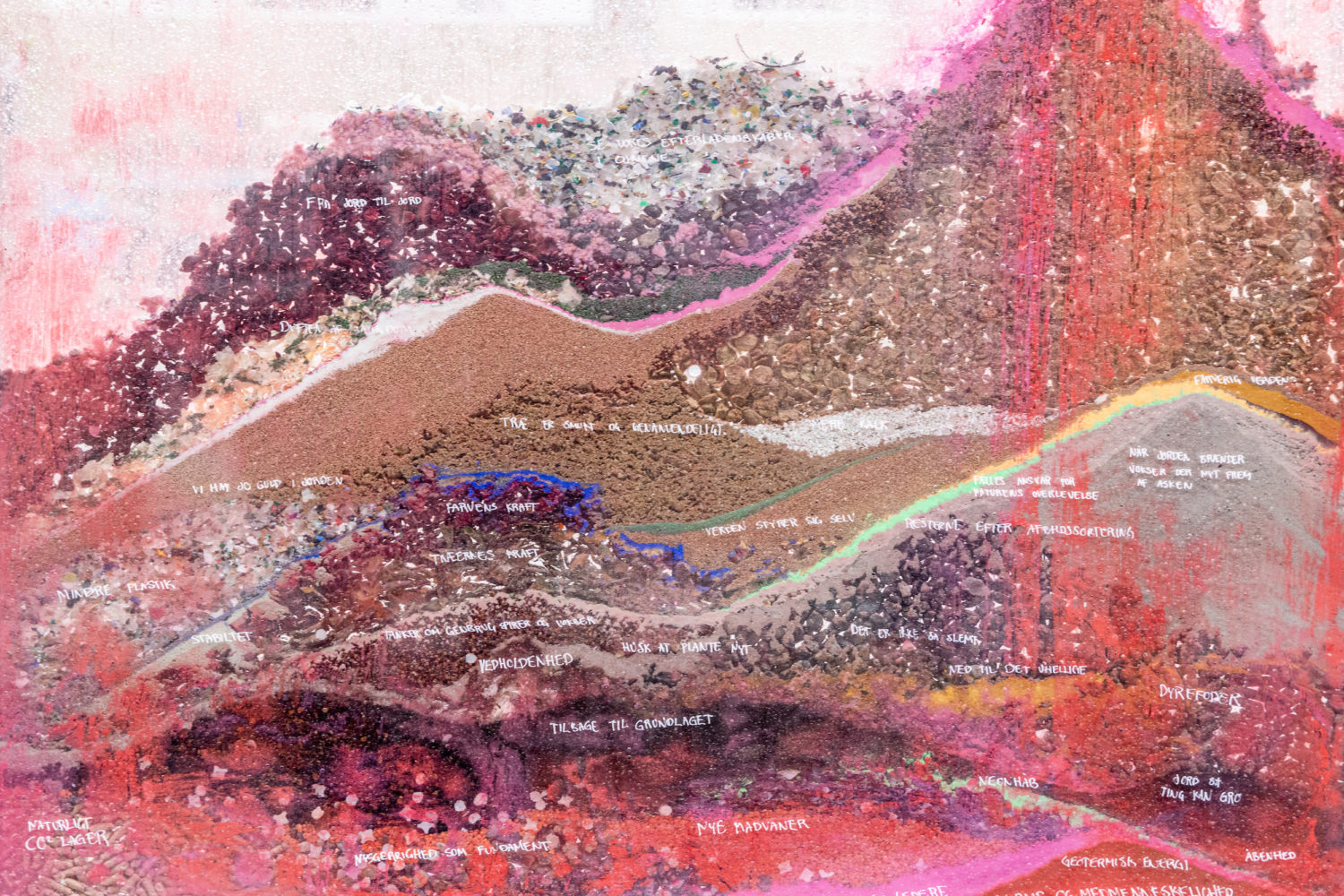
22: Critical dialogue about the future. Maria Viftrup’s work *Geofuturistic Experiment* for the 2020 Climate People’s Assembly was shaped by dialogue with participants. Here, Maria asked the participants: Which forces will shape the (geological) foundations of the future? Maria’s role as a designer was to create the concept and framework, develop the granular topics into materials, and invite critical dialogue about the future. (See also the article ‘Craft and design – a velvet revolution?’)
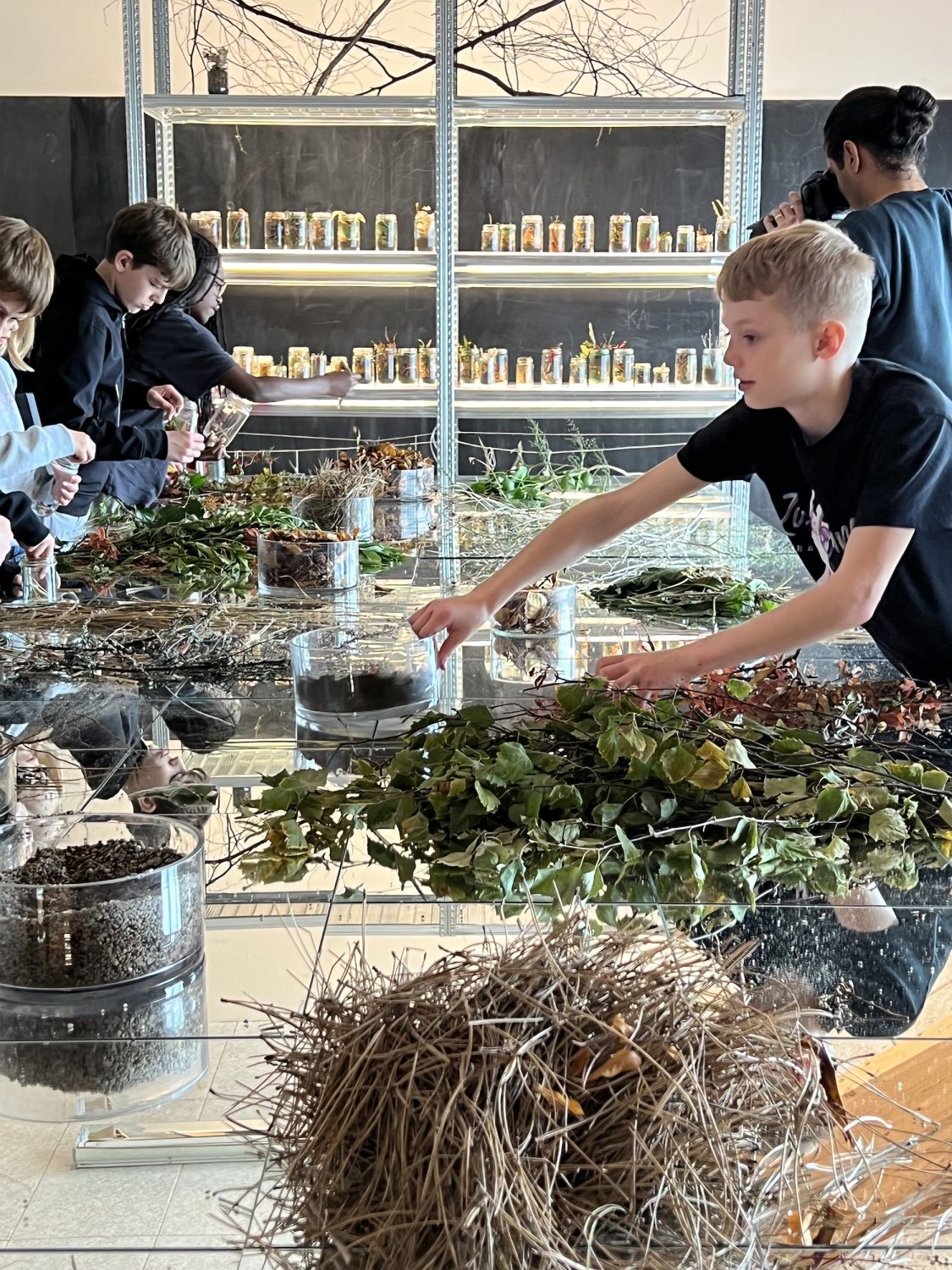
23: Nature as a learning space. In the ‘Jordforbindelser’ project, designer and visual artist Rune Fjord and visual artist Amanda Luna are exploring children’s and young people’s connection to nature. Through a series of in-house artist residencies, they invite children to collect materials from the city’s natural environment and create works together. In the installation at Copenhagen Contemporary, they encourage dialogue and contemplation, inviting visitors to embark on a sensory journey of discovery.

24: An artistic learning space. At Tippen in Copenhagen’s Sydhavn, weaver Tina Ratzer is collaborating with the strongly scented plant known as lobster bush (Coleus Neochilus) on the project ‘Co-creative Connections 1.1’. Rubble from the site has been arranged in the pattern formed when she measures the plant’s vibrations – a pattern that mirrors the rhythmic structure of Navajo weavers’ patterns. Over time, arrowhead and yarrow sprout up, and the work takes shape in dialogue with the weather, plants, animals and people. The work challenges the controlled creative process and opens up possibilities for co-creation with other species.
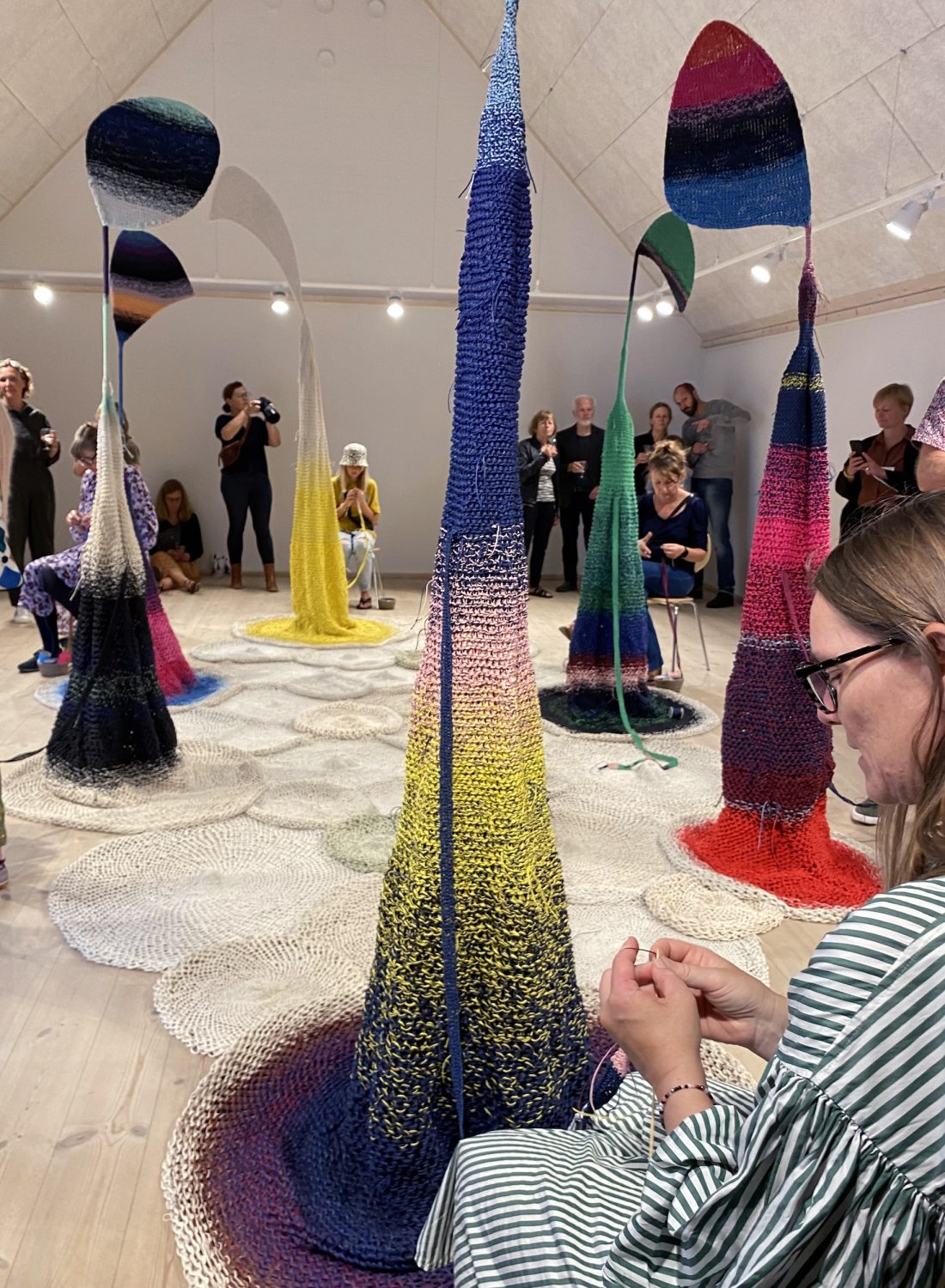
25: Collaborative and community-building works. Textile artist Isabel Berglund has on several occasions invited others to take part in creating works. The works are conceived and created by Berglund, but are influenced by the collaboration in a process that is both controlled and open.
Thus, Berglund’s works are not merely form, content and expression, but also bear the human imprint of recognition, shared ownership and community.
More knowledge
Crafts in public spaces
Ditte Vilstrup, Its about time. Read more
The Vessel: Craft in Public Space. Read more
Formkraft: Atmosphere: Crafts and design in the public Read more
A platform where artists can keep an eye on calls for proposals
KORO (Norway).Read more
Konstpool (Sweden). Read more
Source
Hartmut, Rosa, The Uncontrollability of the World, (Unverfügbarkeit), Eksistensen, 2020.
Theme: Places and the Agency of Materials
In this theme, Formkraft explores how craft and design can help shape our environments: from materials and architectural details to landscapes, raw materials and global power structures. What unites them is an interest in how materials, design and craft can forge connections between people and their surroundings.